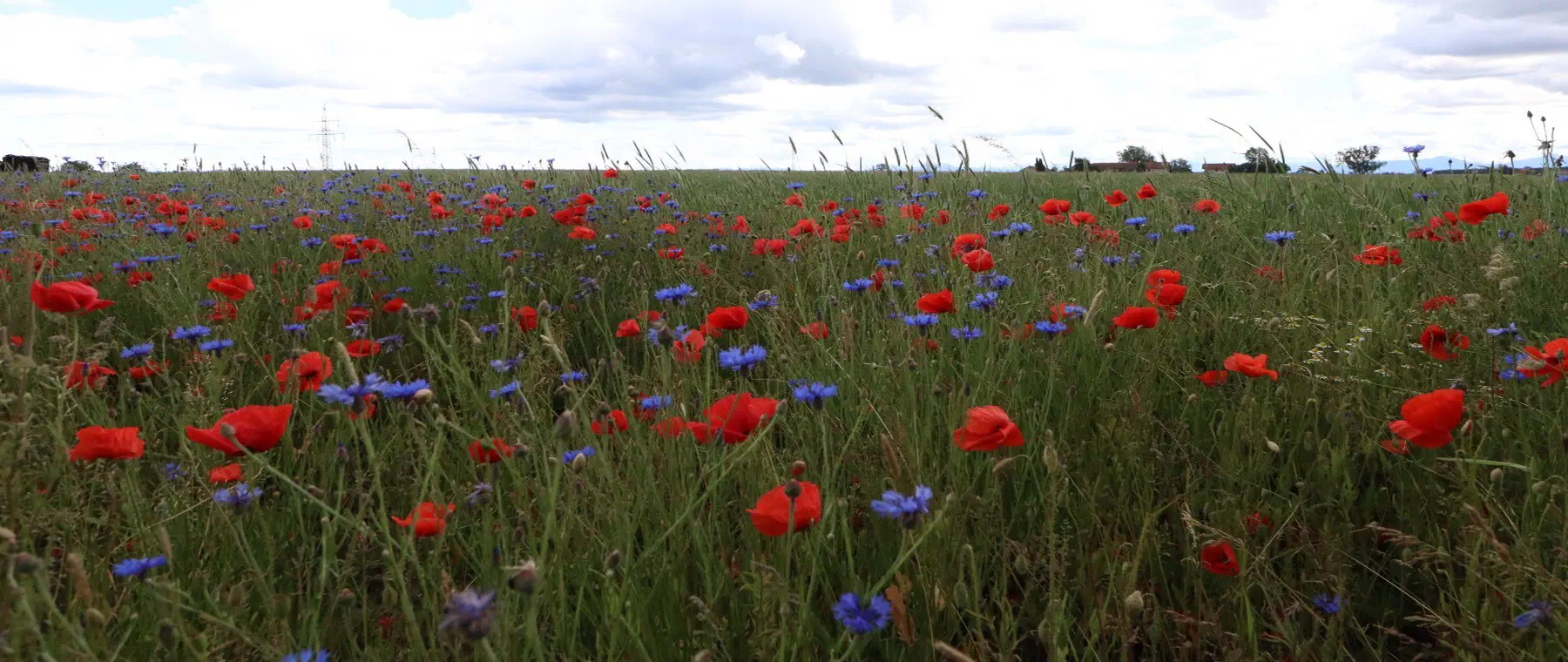
Eco-points and compensation areas
District of Helmstedt
Immediately available eco-points from authority-recognised eco-accounts. greeNature solutions is your full-service partner for compensation in Helmstedt District between the Elm, Lappwald and east Braunschweig lowlands, assessed according to the biotope value method and Lower Saxony nature conservation law (NAGBNatSchG).
The District of Helmstedt at a glance
Helmstedt District lies in eastern Lower Saxony on the border with Sachsen-Anhalt, between the independent city of Braunschweig to the west and Wolfsburg to the north. As Lower Saxony has no administrative regions, the district comes directly under state control. Defining is the alternation between the forested heights Elm and Lappwald to the south and the open, fertile loess plateau.
By natural region, the district has shares in two BfN major natural regions. The south with the Elm, Lappwald, Dorm and Helmstedt Depression belongs to the Northern Harz foothills (D33). The flatter northern section around Velpke and Grasleben belongs to the Weser-Aller lowlands (D31). On the loess soils of the plateau, arable farming predominates, while the chalk and muschelkalk ridges of the Elm support one of the largest contiguous beech forests in northern Germany.
Ecologically significant are the Elm-Lappwald Nature Park, the lowland bog at Rieseberg, the chalk semi-dry grasslands of Heeseberg and a rare inland salt site near Grasleben. Several of these areas are FFH sites as part of the European protected site network Natura 2000, complemented by ten designated nature reserves.
Economically, the district was shaped for decades by lignite surface mining around Helmstedt and Schöningen, whose reclaimed areas are now being restored and, with the emerging Lappwald lake, are forming a new landscape. In addition come proximity to the automotive region of Wolfsburg, commerce and logistics settlements, plus the Federal Motorway A2. Such projects regularly trigger compensation requirements under the impact mitigation regulation.
🗺️ Associated natural regions
Go to natural region D33 ›
Go to natural region D31 ›
📍 Selected municipalities
🌿 Ecological features
- Elm-Lappwald Nature Park with one of the largest contiguous beech forests in northern Germany
- FFH site Forests and molinia meadows in southern Lappwald, overlaid by the nature reserve Lappwald
- FFH site Rieseberg and Rieseberger Moor, a well-preserved lowland bog near Königslutter
- FFH site Heeseberg with chalk semi-dry grassland at the plateau margin
- Inland salt site and molinia meadows near Grasleben, a nationally rare habitat type
- Mining reclamation landscape of the surface mines Helmstedt and Schöningen with the emerging Lappwald Lake
✅ greeNature on the ground
greeNature operates nationally and works in Helmstedt District according to Lower Saxony nature conservation law. The basis is the impact mitigation regulation of §§ 13 to 15 BNatSchG in conjunction with NAGBNatSchG, plus the biotope value method, which expresses ecological upgrade gains in eco-points. We understand the requirements of the lower nature conservation authority in Helmstedt and NLWKN guidance materials and support your project from land acquisition through measure planning to long-term management and documentation.
Typical measures in the district of Helmstedt
Woodland conversion in Elm and Lappwald
Development of natural beech and oak-hornbeam forests, enrichment with old and dead wood and habitat trees. This strengthens habitats for bats, European wildcat and cavity-nesting bird species in the muschelkalk ridges.
Extensification in the loess plateau landscape
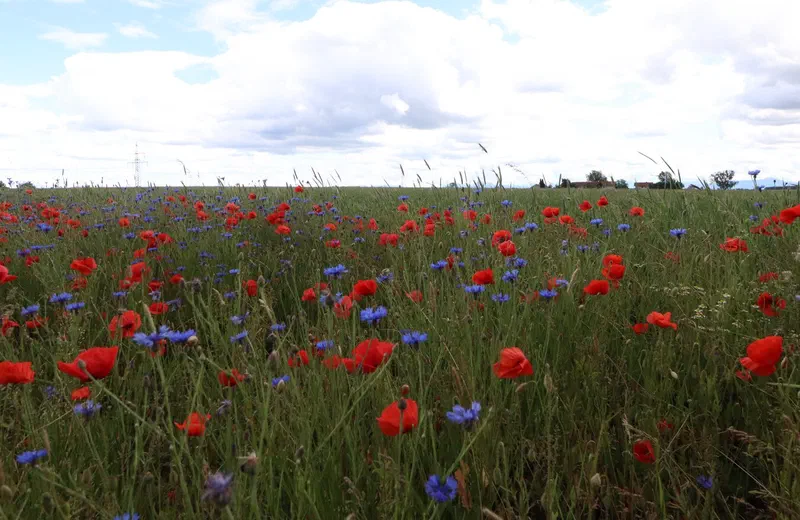
Conversion of intensively used arable land into species-rich grassland, field edge strips and flower areas. Skylark plots and fallow strips act as early compensation measures for skylark, northern lapwing and grey partridge.
Bog and wetland restoration
Rewetting of lowland bog remnants in the vicinity of Rieseberger Moor and creation of small waterbodies. These sites provide spawning and feeding habitat for great crested newts, amphibians and meadow birds.
Hedgerows and habitat networks
Creation of hedgerows, copses and margins in the open arable landscape as stepping stones between Elm, Dorm and Lappwald. The network serves hazel dormouse, red-backed shrike and numerous insect species.
Species protection CEF and FCS
Bespoke measures under § 44 BNatSchG, including bat roosts in old wood and buildings, replacement habitats for hazel dormouse and sunny slopes and stone ridges for sand lizards.
Develop mining reclamation areas
Ecological upgrade of reclaimed pit areas around Helmstedt and Schöningen, with bare-ground biotopes, succession areas and shore structures at the emerging Lappwald Lake as habitat for pioneer species.
Protected species in the Elm-Lappwald Nature Park and East Braunschweig uplands
Field birds of the plateau
In the open arable landscape, skylark, northern lapwing, grey partridge and corn bunting breed. As ground-nesting species, they must be checked regularly where land is taken in use. Skylark plots and fallow strips serve as early compensation measures.
About this species ›European wildcat in Elm and Lappwald
Large, contiguous deciduous forests of the Elm, Dorm and Lappwald provide habitat for the strictly protected European wildcat. As an umbrella species, other forest-linked species also benefit from undisturbed, structurally diverse forests.
About this species ›Bats in old wood stands
Several strictly protected species live in cavity-rich beech forests and old buildings, including Barbastelle, Bechstein's bat and greater mouse-eared bat. In forest and building impacts, roosts and hunting habitats must be checked early.
About this species ›Great crested newt and amphibians
Rieseberger Moor, small waterbodies and worked sites support great crested newts, common toads and other amphibians. The great crested newt as a species of Annex IV of the Habitats Directive frequently triggers early CEF measures in impacts.
About this species ›Hazel dormouse at forest margins
The hazel dormouse inhabits structurally diverse forest margins, hedgerows and understorey-rich forests with good fruit supply. As a strictly protected species under Habitats Directive Annex IV, it depends on well-networked woody structures.
About this species ›Sand lizard on reclaimed areas
Slopes, railway embankments and bare-ground sites of mining reclamation are habitat for the sand lizard. The Annex IV species must be regularly considered from a species protection perspective in infrastructure and commercial projects.
About this species ›Which projects trigger a compensation obligation?
Mining and reclamation
The exhausted surface mines of Helmstedt and Schöningen are being restored. Pit filling into the emerging Lappwald Lake. Reclamation, subsequent use and water balance require specialist nature conservation support plus compensation and replacement measures.
Transport and infrastructure
Federal Motorway A2 crosses the district in east-west direction. Expansion, bypass routes and bridge structures, plus measures on railway lines trigger impacts to be compensated under the impact mitigation regulation of §§ 13 to 15 BNatSchG.
Commerce and logistics
Proximity to the Wolfsburg automotive region and location on the A2 favour commerce and logistics settlements. New commercial and industrial areas generate land consumption and thus regular compensation requirements.
Energy and grid expansion
Wind energy on open upland areas, utility-scale photovoltaic installations on conversion and mining reclamation areas, plus transmission corridors require nature conservation compensation and species protection measures under § 44 BNatSchG.
From enquiry to monitoring
Contact and enquiry
Tell us your compensation requirement and the natural region. We check availability.
Offer and advice
A transparent offer covering measure types, scope and availability.
Coordination with authorities
Full coordination with the lower nature conservation authority. We handle everything.
Long-term monitoring
Permanent securing of the land, management and documentation across the contract term.
Eco-points in adjoining districts
All about eco-points
in the district of Helmstedt
Request eco-points in the district of Helmstedt
We will promptly prepare a transparent offer with matching eco-points held in stock in the district of Helmstedt.