Eco-points and compensation areas
City of Braunschweig
Eco-points and compensation areas for the independent city of Braunschweig, assessed using the Lower Saxon biotope value procedure. greeNature is your nationwide full-service partner for compensation of impacts in the urban and peri-urban area between Lower Saxon Loess Plains and Weser-Aller Lowlands.
The City of Braunschweig at a glance
Braunschweig is an independent city in south-eastern Lower Saxony and, after Hannover, the second-largest city in the state. Approximately 254,000 people live on around 192.7 square kilometres in 19 city districts. Since Lower Saxony ceased to be divided into administrative districts in 2004, the city performs the duties of the lower nature conservation authority itself. It is thus directly responsible for the impact mitigation regulation and recognition of compensation measures in the city area.
Geographically, Braunschweig is situated in the transition between the fertile loess belt of the Lower Saxon Loess Plains (BfN natural region D32) in the south and the gently rolling Weser-Aller Lowlands (D31) in the north. The valley of the Oker, which runs through the city area from south to north, is distinctive, supplemented by the tributary streams Schunter and Wabe. Between densely built-up districts, ring areas and commercial areas, significant near-natural spaces have been preserved.
Ecologically outstanding is the Riddagshausen nature reserve east of the city centre, a roughly 526-hectare pond and forest area, which is simultaneously an FFH site, as well as the Braunschweig Oker floodplain on the northern city edge with near-natural river course, floodplain forest remnants and dunes. This Natura 2000 framework determines decisively where impacts are permissible and how compensation must be adapted to natural regions.
Economically, Braunschweig is a significant finance, industry and research location. The city is home to Volkswagen Financial Services and a strong financial cluster, has in the Technical University, several non-university institutes and the research airport a dense scientific landscape. Housing, commercial and transport projects regularly trigger impacts, whose compensation in Lower Saxony must be provided via biotope value procedure with eco-points based on §§ 13 to 15 BNatSchG and NAGBNatSchG.
🗺️ Associated natural regions
Go to natural region D32 ›
📍 City districts
🌿 Ecological features
- Nature reserve and FFH site Riddagshausen, approximately 526 ha pond, forest and grassland area with internationally significant bird population east of the city centre
- Nature reserve and FFH site Braunschweig Oker floodplain, approximately 320 ha near-natural Oker course with floodplain forest remnants and dunes on the northern city edge
- The Oker runs through as a distinctive river the entire city area, supplemented by Schunter and Wabe as ecologically significant tributary streams
- Location in transition between the loess belt of the Lower Saxon Loess Plains (D32) and the Weser-Aller Lowlands (D31)
- Historic Oker bypass channel and extensive inner-city green and rampart areas as the green backbone of the city
- High sealing level in city centre, ring districts and commercial zones with corresponding need for land restoration and compensation in the hinterland
✅ greeNature on the ground
greeNature operates nationwide and is familiar with the Lower Saxon compensation system. We work with the lower nature conservation authority of Braunschweig city and NLWKN, know the biotope value procedure with eco-points, the relevant NLWKN working guidelines and the special characteristics of a densely populated city area between loess plains and lowlands. Especially in urban areas, land restoration, watercourse restoration and upgrading of grassland in the peri-urban hinterland are effective approaches. From requirements determination through land securing through to implementation, management and monitoring, we accompany your project consistently.
Typical measures in the city of Braunschweig
Land restoration and removal
Removal of sealed areas, such as abandoned operating, yard and traffic areas, and restoration of root-penetrable, living soils. In a densely built-up city like Braunschweig, land restoration in the biotope value procedure achieves high upgrades and simultaneously improves infiltration and city climate.
Restoration of Oker, Schunter and Wabe
Removal of riverbank defences, near-natural reshaping of watercourse courses and creation of watercourse buffer strips along urban flowing waters. Newly created shallow water zones and floodplain structures serve fish, dragonflies, amphibians and kingfisher as habitat.
Grassland upgrading in the peri-urban hinterland
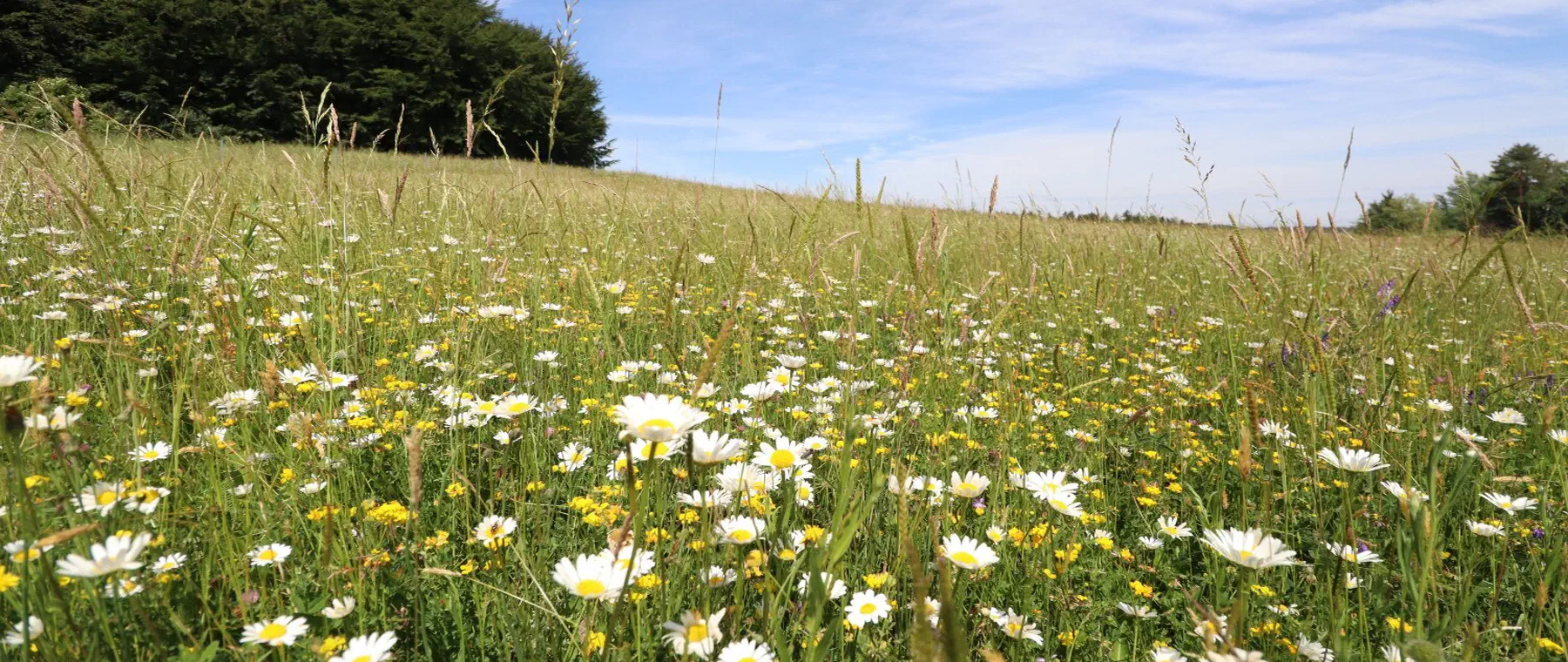
Extensification of intensively used areas to species-rich wet and fresh grassland in the floodplains of Oker and Schunter. Adapted mowing timing, no fertilisation and creation of shallow pools create breeding and feeding habitats for meadow-breeding birds and insects.
Floodplain forest and site-appropriate vegetation
Development and replacement afforestation of floodplain forest and field copse structures with pedunculate oak, hornbeam, black alder and willows on suitable floodplain and lowland locations. They replace felled stands and network habitats along flowing waters.
Sand dry grassland and dunes
Management and new development of poor sandy habitats in the vicinity of the Oker floodplain, for example through de-scrubbing, sod-stripping and extensive grazing. These open, warm locations are habitat for sand lizard, wild bees and light- and heat-loving plant species.
Species protection CEF and FCS
Advance compensatory measures under § 44 BNatSchG, such as replacement roosts for bats in buildings and in old tree stands, replacement spawning waters for amphibians and habitat structures for sand lizard, adapted to the respective construction project.
Protected species in the East Braunschweig uplands and Oker valley
Water and wading birds in Riddagshausen
The Riddagshausen pond area is an important breeding and roosting site for waterbirds, including ducks, rails and northern lapwing in the surrounding wet meadows. Rewetting, shallow pool creation and grassland extensification are proven measures for securing these habitats.
About this species ›Sand lizard at railway and sand locations
Slopes, dunes and poor ruderal areas in the city and Oker floodplain provide habitat for strictly protected sand lizard (Annex IV Habitats Directive). In impacts, relocation and creation of replacement habitats as an advance CEF measure are required.
About this species ›Bats in city and parks
Old buildings, cellar structures, parks and tree stands provide roosts for strictly protected bat species (Annex IV Habitats Directive). In demolition, renovation or tree felling, advance replacement roosts must be provided as a CEF measure under § 44 BNatSchG.
About this species ›Kingfisher on Oker and Schunter
Near-natural bank sections and vertical walls on Oker, Schunter and the Riddagshausen ponds offer the kingfisher breeding opportunities. Cliff modelling and riverbank restoration are typical measures in watercourse impacts.
About this species ›Amphibians in ponds and small water bodies
Grass frog, common toad and newts inhabit the ponds, ditches and fluctuating wet hollows in the city area. New or restored spawning waters in spatial connection secure breeding sites in impacts.
About this species ›Great crested newt in Riddagshausen ponds
The richly structured still waters in eastern Braunschweig offer the strictly protected great crested newt (Annexes IV and II Habitats Directive) suitable spawning habitats. Creation and networking of sunny, fish-free small waters are effective CEF measures.
About this species ›Which projects trigger a compensation obligation?
Housing and neighbourhood development
As a growing major city, Braunschweig develops new residential neighbourhoods and intensifies existing areas, such as in the ring districts and on the city edge. Such projects trigger impacts whose compensation can be efficiently covered via stockpiled eco-points.
Commercial and industrial sites
Extensions of commercial and industrial areas, amongst others in the vicinity of automotive and financial industries, lead to land sealing with compensation requirements. greeNature determines the compensation scope and secures suitable land in the natural region.
Transport and infrastructure
Braunschweig is a junction of motorways A2 and A39 as well as several federal roads and railway lines. Expansion and new construction, bridge structures and cycle paths regularly trigger compensation and replacement obligations, which are covered via the biotope value procedure.
Research and university areas
Expansion of the Technical University, research airport and scientific institutions binds land and creates impacts. Compensation can be implemented in a natural-region-appropriate way via peri-urban compensation areas and eco-accounts.
From enquiry to monitoring
Contact and enquiry
Tell us your compensation requirement and the natural region. We check availability.
Offer and advice
A transparent offer covering measure types, scope and availability.
Coordination with authorities
Full coordination with the lower nature conservation authority. We handle everything.
Long-term monitoring
Permanent securing of the land, management and documentation across the contract term.
Eco-points in adjoining districts
All about eco-points
in the city of Braunschweig
Request eco-points in the city of Braunschweig
We will promptly prepare a transparent offer with matching eco-points held in stock in the city of Braunschweig.