Eco-points and compensation areas
District of Werra-Meißner-Kreis
Immediately available eco-points from officially recognised eco-accounts. greeNature solutions, your full-service partner for compensation under the Hessian compensation ordinance in Werra-Meißner district.
The District of Werra-Meißner-Kreis at a glance
Werra-Meißner district lies in north-eastern Hesse at the border with Lower Saxony and Thuringia and belongs to the administrative region Kassel. The administrative seat is the district town of Eschwege. Geographically the Werra valley, Hoher Meißner and Kaufunger Forest are dominant.
Geologically the district is a Buntsandstone and chalk upland from which individual basalt domes rise. The Hoher Meißner reaches just over 750 metres and forms with its mountain meadows, block fields and old beech forests the centrepiece of the Frau-Holle-Land Geo-Nature Park.
Ecologically the district carries the largest Natura 2000 share of all Hessian districts. The FFH site Werra and Wehre valley (4825-302) is a nationally significant habitat for bats. The EU bird protection site Meißner (4725-401) covers around 3,720 hectares of forest and openland.
The district is predominantly rural in character. Completion of the motorway A44 gap between Kassel and Herleshausen, wind energy expansion in the uplands and local construction and commercial projects regularly create compensation requirements under the Hessian compensation ordinance (KV).
🗺️ Associated natural regions
Go to natural region D47 ›
Go to natural region D18 ›
📍 Selected municipalities
🌿 Ecological features
- FFH site Werra and Wehre valley (4825-302), nationally significant habitat for large mouse-eared bat and Bechstein's bat
- EU bird protection site Meißner (4725-401), around 3,720 hectares of forest and mountain meadows
- Hoher Meißner, striking basalt dome in Frau-Holle-Land Geo-Nature Park
- Kaufunger Forest, large contiguous forest area and wildcat habitat
- Werra valley as a regional habitat network along the river
- Largest Natura 2000 share of all districts in Hesse with around 24,000 hectares
✅ greeNature on the ground
greeNature operates nationwide and manages compensation projects in north Hesse. We work under the Hessian compensation ordinance (KV), know the requirements of the lower nature conservation authority of Werra-Meißner district and develop nature-appropriate eco-accounts for Werra-Meißner Bergland, from site securing through implementation to permanent management and monitoring.
Typical measures in the district of Werra-Meißner-Kreis
Stream and floodplain restoration
Removal of pipes, establishment of near-natural banks and floodplain vegetation on Werra, Wehre and tributaries in the upland to upgrade flowing water habitats for fish, kingfisher and amphibians.
Mountain meadows and grassland extensification
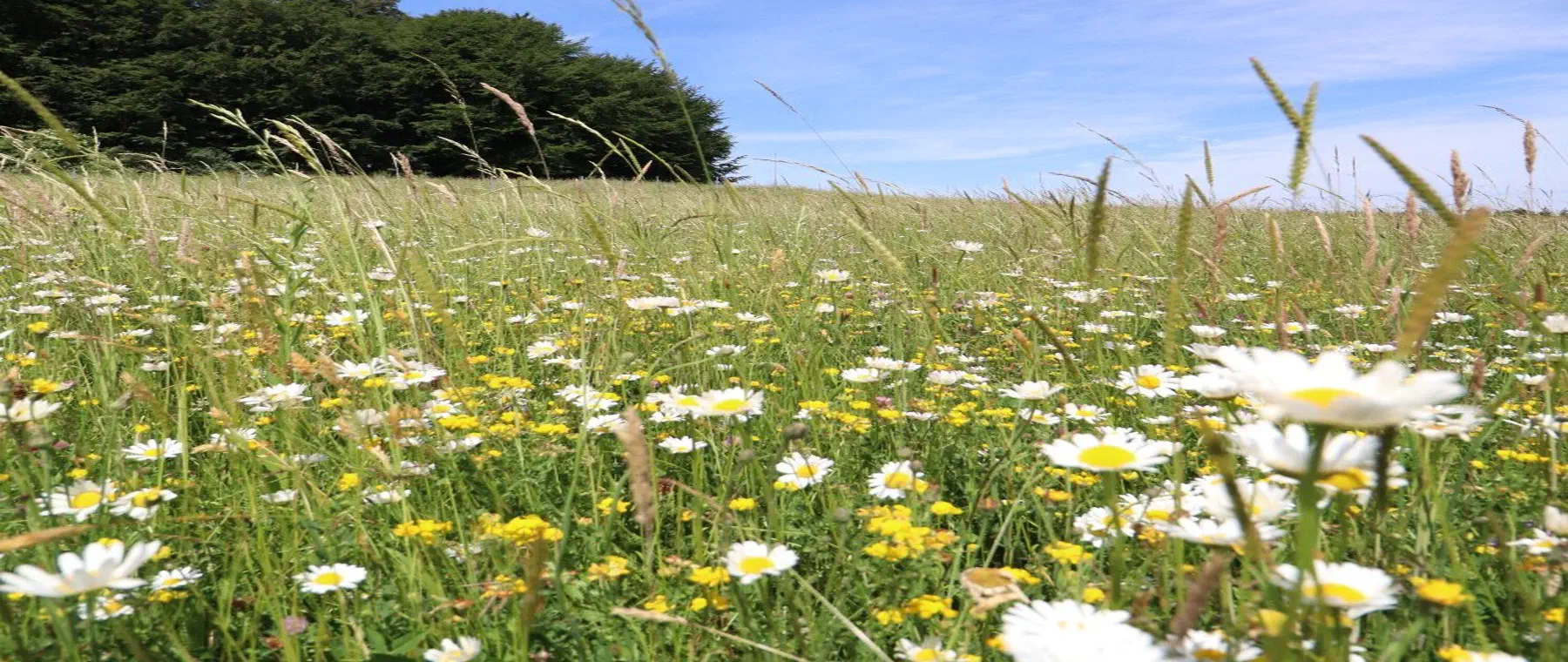
Restoration of species-rich mountain meadows and grassland extensification on Hoher Meißner and chalk slopes, habitat for meadow-breeding birds, butterflies and wild bees.
Traditional orchards
Establishment and management of traditional orchard stands at settlement edges and slope locations of the Werra valley, valuable habitat for cavity-breeding birds, bats and insects.
Near-natural forest conversion
Conversion of low-structure conifer plantations to site-appropriate beech and oak mixed forests on Buntsandstone, promotion of deadwood and veteran trees for woodpecker, hazel dormouse and forest-bound bat species.
Species protection CEF and FCS
Tailored measures for bat roosts, wildcat corridors and amphibian waters, coordinated with special species protection requirements under Section 44 BNatSchG.
Hedgerows and habitat networks
Establishment of hedgerows, copses and borders for networking chalk grassland and forest edges, stepping-stone habitats for reptiles, brown hare and small game in open upland.
Protected species in the Werra-Meißner Bergland with Hoher Meißner and Werra valley
Bats in Werra and Wehre valley
The FFH site Werra and Wehre valley is designated as habitat for large mouse-eared bat and Bechstein's bat. Old beech forests, cavity trees and tunnels provide nursing colonies and winter quarters. Roost securing and forest edge upgrade are typical CEF measures.
About this species ›Wildcat in Kaufunger Forest
The large contiguous forest areas of Kaufunger Forest and Meißner are among core habitats of the European wildcat. Forest networking, structured forest edges and undisturbed refuges secure the population.
About this species ›Black stork
The black stork breeds in the disturbance-free broadleaf forests of the upland and uses near-natural stream valleys for foraging. Forest quiet and intact watercourses are essential, frequent target species for forest and wind projects.
About this species ›Hazel dormouse
The hazel dormouse inhabits structured forest edges, hedgerows and scrub with good fruit supply. For vegetation impacts, relocation, connecting plantations and replacement habitat establishment are standard species protection measures.
About this species ›Amphibians of the stream valleys
Fire salamander, yellow-bellied toad and grass frog use spring-near stream valleys and forest pools of the upland. Newly created small waters and restoration of spring areas count among the most effective compensation measures.
About this species ›Kingfisher on Werra and Wehre
The kingfisher breeds on near-natural sections of Werra and Wehre in bank collapses. Creation of steep banks and structured shorelines links watercourse development with targeted species protection.
About this species ›Which projects trigger a compensation obligation?
Motorway A44 Kassel to Herleshausen
Completion of the A44 gap between Kassel and A4 at Herleshausen runs through the district and is one of north Hesse's largest infrastructure projects. Route construction, bridges and tunnels in rolling upland trigger extensive compensation and replacement obligations.
Wind energy in the upland
Wind energy expansion on the ridges of Werra-Meißner Bergland requires nature conservation compensation as well as CEF and FCS measures for wind-sensitive species such as black stork, red kite and bats.
Settlement and commercial development
Residential and commercial areas in Eschwege, Witzenhausen and other towns require compensation measures. Owners of agricultural and forestry land can participate as site providers.
Transport and utility expansion
Bypasses, expansion of state and local roads as well as network and utility projects create impacts on vegetation, watercourses and openland creating compensation requirements under the Hessian KV.
From enquiry to monitoring
Contact and enquiry
Tell us your compensation requirement and the natural region. We check availability.
Offer and advice
A transparent offer covering measure types, scope and availability.
Coordination with authorities
Full coordination with the lower nature conservation authority. We handle everything.
Long-term monitoring
Permanent securing of the land, management and documentation across the contract term.
Eco-points in adjoining districts
All about eco-points
in the district of Werra-Meißner-Kreis
Request eco-points in the district of Werra-Meißner-Kreis
We will promptly prepare a transparent offer with matching eco-points held in stock in the district of Werra-Meißner-Kreis.