Eco-points and compensation areas
District of Waldeck-Frankenberg
Immediately available eco-points from officially recognised eco-accounts. greeNature is your full-service partner for compensation under the Hessian compensation ordinance (KV) between Kellerwald, Edersee and Waldecker Plateau.
The District of Waldeck-Frankenberg at a glance
Waldeck-Frankenberg district lies in north-western Hesse and belongs to the administrative region Kassel. At around 1,849 square kilometres it is Hesse's largest district by area. The district seat is the Hanseatic city of Korbach. A forested upland landscape with extensive beech forests, open plateaus and the valleys of Eder, Diemel and Twiste is dominant.
Naturally the district is distributed across two BfN major landscapes. The majority belongs to West Hessian Bergland (D46) with the Waldeck Plateau, Kellerwald, Burgwald and Ederbergland. The west around Willingen and the Upland extends into Southern Bergland (D38) with Hesse's extensions of the Rothaar Mountains, where Langenberg at 843 metres is the highest point. From this diversity of Buntsandstone, graywacke and slate soils emerges a mosaic of forests, mountain meadows and floodplains.
Ecologically the district is of outstanding significance. The centrepiece is the Kellerwald-Edersee National Park, Hesse's only national park, whose old beech forests are recognised as a UNESCO World Heritage Site. Large parts of the district are registered as Natura 2000 sites, including three bird protection sites at Twistesee, in the Hessian Rothaar Mountains and in Kellerwald, as well as numerous FFH sites. The Edersee is among Germany's largest reservoirs and links the landscape to the Eder watercourse system.
Economically the district combines strong industry with forestry, agriculture and tourism. Major employers such as Viessmann in Allendorf (Eder), the Continental tyre plant in Korbach and Thonet in Frankenberg stand alongside wind energy expansion on the ridges and tourism at Edersee and Willingen. Business expansions, transport and energy projects regularly create impacts requiring compensation in eco-points under the Hessian compensation ordinance (KV).
🗺️ Associated natural regions
Go to natural region D46 ›
Go to natural region D38 ›
📍 Selected municipalities
🌿 Ecological features
- Kellerwald-Edersee National Park, Hesse's only national park
- UNESCO World Heritage Site old beech forests in Kellerwald
- Three bird protection sites (Twistetalsperre, Hessian Rothaar Mountains, Kellerwald) covering around 3,827 hectares
- Numerous FFH sites, including at Upper Eder
- Edersee, among Germany's largest reservoirs, in the Eder valley
- Hessian extensions of the Rothaar Mountains in the Upland with Langenberg (843 m)
- Extensive mountain meadows, bristle grass grassland and near-natural floodplains on Eder and Diemel
✅ greeNature on the ground
greeNature operates nationwide for compensation projects and manages impacts in north Hessian upland under the Hessian compensation ordinance. We know the requirements of the lower nature conservation authority in Korbach, assessment in eco-points and the natural specialties of West Hessian Bergland (D46) and Southern Bergland (D38) between Kellerwald, Waldeck Plateau and Rothaar Mountains.
Typical measures in the district of Waldeck-Frankenberg
Floodplain and flowing water restoration
Removal of bank structures, reconnection of oxbows and development of near-natural banks on Eder, Diemel and Twiste. This creates gravel bars, steep banks and riparian woodland as habitat for fish, amphibians and kingfisher.
Near-natural forest conversion and beech forest development
Conversion of low-structure conifer plantations to site-appropriate broadleaf and beech mixed forests as well as promotion of deadwood and veteran trees. Such measures upgrade the forest habitats typical of Kellerwald and create habitats for cavity breeders, bats and wildcat.
Extensification of mountain and wet meadows
Maintenance and development of species-rich mountain meadows and bristle grass grassland of the Rothaar Mountains through adapted cutting, fertiliser avoidance and extensive grazing. These grassland types are protected FFH habitat types of the higher elevations.
Species protection CEF and FCS
Pre-implemented CEF measures and population-supporting FCS measures under Sections 44 and 45 BNatSchG, such as bat roosts in forests and buildings, replacement habitats for sand lizard on slopes and nest and feeding habitat protection for black stork.
Hedgerows and habitat networks
Establishment of hedgerows, copses and borders in the fields of the Waldeck Plateau. These structures link forest and openland habitats and serve as stepping stones for hazel dormouse, red-backed shrike and wild bees.
Traditional orchards and structured edges
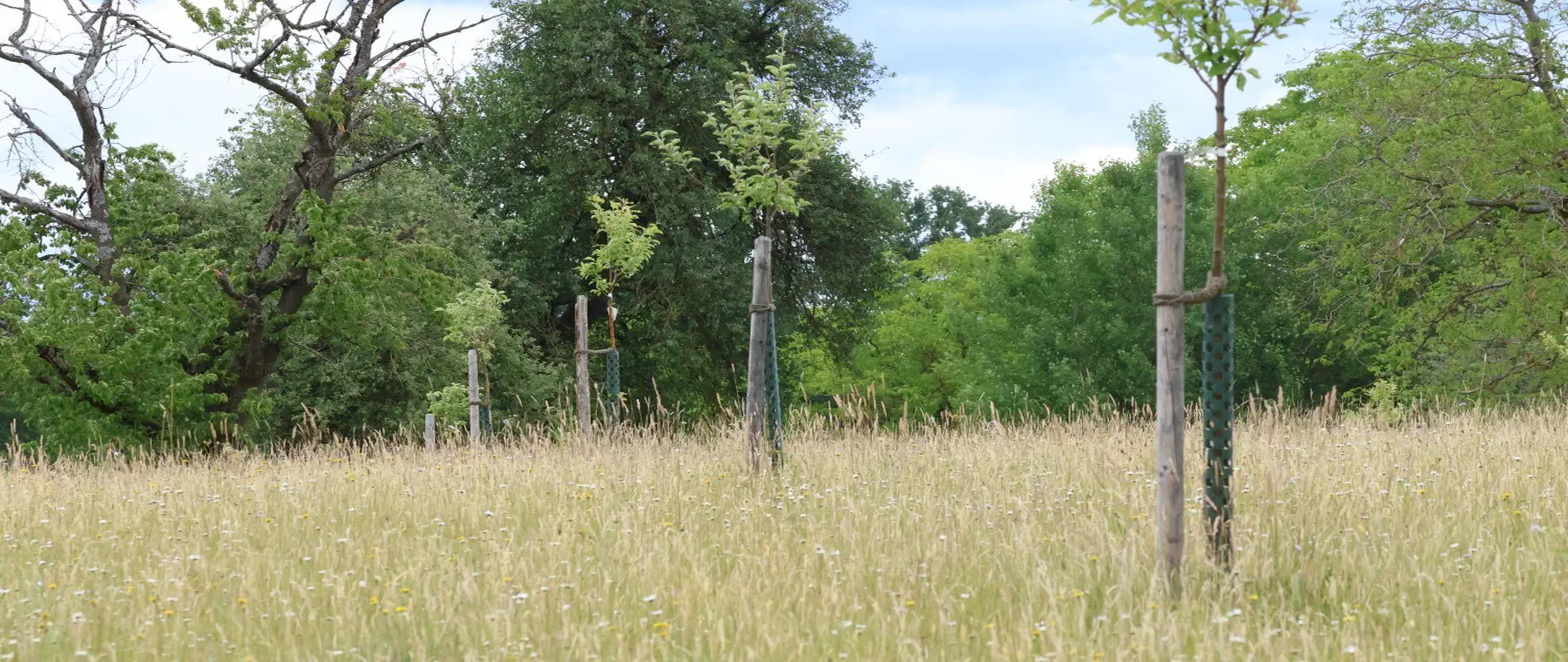
Establishment and management of traditional orchard meadows and staggered forest edges at settlement margins and valley slopes. Such stands provide food and breeding places for little owl, redstart and numerous insect species.
Protected species in the Kellerwald, Edersee and Waldeck Land
Wildcat
The large contiguous beech forests of Kellerwald are among the core habitats of the European wildcat. Forest conversion, deadwood enrichment and habitat networking via hedgerows and forest edges are typical protective measures.
About this species ›Black stork
Old, disturbance-free forest stands with near-natural streams offer the black stork breeding and feeding habitats. In wind and infrastructure projects in forest areas, nest protection and securing of feeding waters are frequent FCS measures.
About this species ›Kingfisher
The kingfisher breeds on Eder, Diemel and Twiste in natural steep banks. Restored bank collapses and installed breeding aids are proven compensation measures on the district's watercourses.
About this species ›Forest bats
Bechstein's bat, Barbastelle and other species use the old beech forests as roosts and hunting areas. Retention of cavity trees and roost networks as well as replacement roosts are typical CEF measures for forest impacts.
About this species ›Amphibians in forest and floodplain
Fire salamander in seepage forest streams and great crested newt and other newt species in floodplain waters are characteristic species. Newly created breeding waters and networking of small water bodies secure their populations.
About this species ›Hazel dormouse
The hazel dormouse lives in structured forests, forest edges and hedgerows, a strictly protected species under FFH Annex IV. Retention and establishment of networked woodland structures are effective protective measures.
About this species ›Which projects trigger a compensation obligation?
Industry and commerce
Major employers such as Viessmann in Allendorf (Eder), the Continental tyre plant in Korbach and Thonet in Frankenberg characterise the economy. Business expansions and new commercial sites regularly create compensation requirements, to be met in eco-points under the Hessian compensation ordinance.
Wind energy
The ridges of the Rothaar Mountains and Waldeck Plateau are preferred locations for wind energy. Such projects create impacts and often require species protection CEF and FCS measures, such as for black stork, red kite and bats.
Infrastructure and transport
Expansion and renewal of federal and state roads, bypasses as well as bridge and pipeline projects in Eder and Diemel valleys trigger compensation and replacement obligations under Sections 13 to 15 BNatSchG.
Settlement and tourism
Residential and commercial development in towns as well as tourism projects at Edersee and Willingen require nature conservation compensation. Owners of suitable land can offer them as compensation areas.
From enquiry to monitoring
Contact and enquiry
Tell us your compensation requirement and the natural region. We check availability.
Offer and advice
A transparent offer covering measure types, scope and availability.
Coordination with authorities
Full coordination with the lower nature conservation authority. We handle everything.
Long-term monitoring
Permanent securing of the land, management and documentation across the contract term.
Eco-points in adjoining districts
All about eco-points
in the district of Waldeck-Frankenberg
Request eco-points in the district of Waldeck-Frankenberg
We will promptly prepare a transparent offer with matching eco-points held in stock in the district of Waldeck-Frankenberg.