Eco-points and compensation areas
District of Odenwaldkreis
Readily available eco-points from officially recognised eco-accounts. greeNature is your full-service partner for compensation under the Hessian Compensation Regulation (KV) in Odenwaldkreis
The District of Odenwaldkreis at a glance
Odenwaldkreis lies in southern Hesse in the Darmstadt administrative region and belongs entirely by natural region to BfN natural region D55 (Odenwald, Spessart and Südrhön). As a forested upland, it lies between the conurbations Rhine-Main and Rhine-Neckar, the district seat and administrative centre is Erbach
Geologically, the landscape divides into the crystalline Odenwald in the west with granites and gneisses and the sandstone Odenwald in the east. This creates extensive beech and beech mixed forests, deeply cut stream valleys and a small-scale mosaic of grassland, traditional orchards and forest margins
Ecologically significant are the ecologically sound floodplain valleys of Mümling and Gersprenz, large uncut forest complexes and the Geo-Nature Park Bergstraße-Odenwald (UNESCO Global Geopark). The district is a core area for the European wildcat and harbours numerous nature reserves and several FFH areas of the Natura-2000 network
The economy is characterised by medium-sized enterprises, with industrial locations such as Breuberg (Pirelli) and operations in Michelstadt and Erbach. Expansion of transport routes, wind energy and photovoltaic projects, commercial areas and raw material extraction regularly generate compensation requirements under the impact mitigation regulation of sections 13 to 15 of the Federal Nature Conservation Act (BNatSchG) and the Hessian Compensation Regulation
🗺️ Associated natural regions
Go to natural region D55 ›
📍 Selected municipalities
🌿 Ecological features
- Geo-Nature Park Bergstraße-Odenwald (UNESCO Global Geopark), landscape-defining throughout the district
- Extensive beech and beech mixed forests, core area for the European wildcat
- Ecologically sound floodplain valleys of Mümling and Gersprenz with wet and floodplain habitats
- Numerous nature reserves and several FFH areas of the Natura-2000 network
- Crystalline Odenwald (granite, gneiss) and sandstone Odenwald with dry locations and block fields
- Traditional orchard areas on settlement edges and slopes
✅ greeNature on the ground
greeNature works nationwide and is familiar with the Hessian Compensation Regulation (KV) and the state's eco-point system. We know the coordination practice with the lower nature conservation authority of Odenwaldkreis, the natural region characteristics of the Odenwald (D55) and the requirements for eco-accounts and land pools in the region
Typical measures in the district of Odenwaldkreis
Ecological woodland conversion
Conversion of structurally poor coniferous forests into site-appropriate beech and beech mixed forests with oak, hornbeam and wild cherry. Enrichment with old and dead wood, retention of cavity trees and forest edge design as habitat for bats, hazel dormouse and European wildcat
Flowing water restoration
Reconnection of floodplains, removal of bank defences and creation of ecologically sound water structures on Mümling, Gersprenz and their tributaries. Spawning and breeding habitat for amphibians, fish and kingfisher
Traditional orchards
Creation and reactivation of traditional orchards on slopes and settlement edges, high-stemmed regional varieties with extensive meadow management. Habitat for little owl, wryneck, cavity-nesting birds and rare wild bees
Grassland extensification
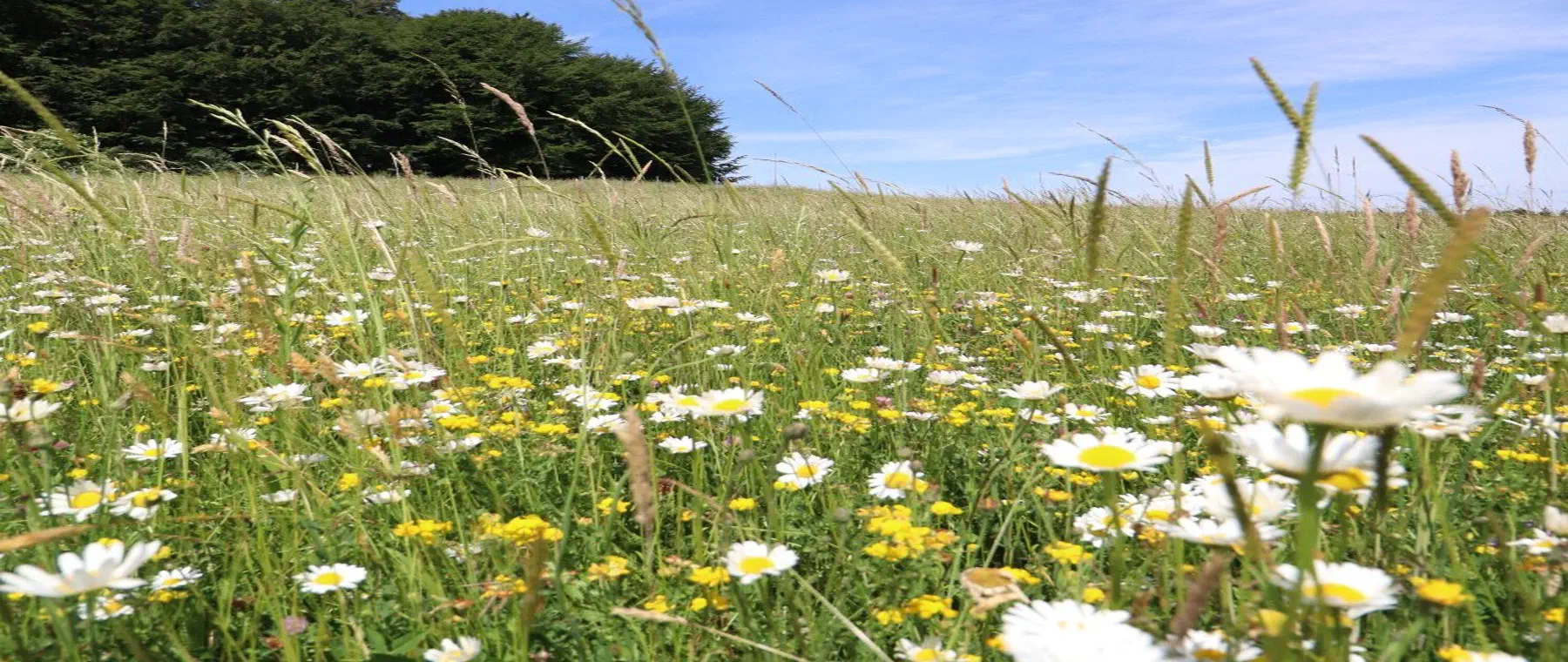
Conversion of intensively used meadows and pastures into species-rich extensive grassland and mountain meadows. Adapted mowing and no fertiliser application promote meadow birds, butterflies and flower-rich margins
Species protection CEF/FCS
Advanced compensation measures and measures to secure favourable conservation status under section 44 of the Federal Nature Conservation Act (BNatSchG), such as bat roosts, forest networking for the European wildcat, replacement breeding waters for amphibians and sand lizard habitats on dry locations
Hedgerows, margins and dry stone walls
Creation of hedgerows, woodland copses and flower-rich margins plus retention and restoration of dry stone walls and scree barriers. Stepping-stone habitats and habitat networking for hazel dormouse, reptiles and insects
Protected species in the Hessian Odenwald
European wildcat
The Odenwald is one of the core areas for the European wildcat. Large uncut forest complexes, structured forest margins and green bridges secure its distribution. Typical measures are forest networking and habitat linking to maintain favourable conservation status (FCS)
About this species ›Black stork
The black stork breeds in quiet, undisturbed old growth stands of the Odenwald and uses ecologically sound stream valleys as feeding habitat. Retention of nesting sites, disturbance reduction and water restoration are effective protection measures
About this species ›Forest bats
Bechstein's bat, brown long-eared bat and greater mouse-eared bat inhabit beech forests as hunting and roost habitat. Retention of cavity and old trees and provision of roosts are among the frequent CEF measures in impacts
About this species ›Hazel dormouse
The hazel dormouse lives in structurally diverse forest margins, hedgerows and low forests with abundant hazel and berry shrubs. Advanced CEF measures connect tree structures and secure hazel-rich margins before impact begins
About this species ›Stream valley amphibians
Fire salamander inhabit spring-fed forest streams, yellow-bellied toad and great crested newt use small water bodies, ponds and excavations. Newly created breeding waters and networking of wet habitats are proven compensation measures
About this species ›Kingfisher
On Mümling, Gersprenz and their tributaries, the kingfisher breeds in natural steep banks. Restored water sections with bank undercuts and clear, fish-rich water create new breeding opportunities
About this species ›Which projects trigger a compensation obligation?
Infrastructure and transport
Expansion and conversion of federal and state roads (such as B45 and B47), bypass roads, bridge structures and measures on the Odenwald railway trigger compensation and replacement obligations under sections 13 to 15 of the Federal Nature Conservation Act (BNatSchG). greeNature provides suitable eco-points and undertakes authority coordination
Energy and renewables
Wind energy projects on forested heights and free-space photovoltaic systems require nature conservation compensation and species protection assessments, particularly for bats, raptors and the black stork
Settlement and commerce
New residential and commercial areas in Erbach, Michelstadt, Breuberg and surrounding municipalities result in impacts on nature and landscape. Landowners can contribute their land as compensation areas
Raw material extraction
Quarries and excavations in crystalline and sandstone Odenwald require restoration and compensation concepts. Abandoned extraction sites equally offer potential for secondary habitats of yellow-bellied toad and sand lizard
From enquiry to monitoring
Contact and enquiry
Tell us your compensation requirement and the natural region. We check availability.
Offer and advice
A transparent offer covering measure types, scope and availability.
Coordination with authorities
Full coordination with the lower nature conservation authority. We handle everything.
Long-term monitoring
Permanent securing of the land, management and documentation across the contract term.
Eco-points in adjoining districts
All about eco-points
in the district of Odenwaldkreis
Request eco-points in the district of Odenwaldkreis
We will promptly prepare a transparent offer with matching eco-points held in stock in the district of Odenwaldkreis.