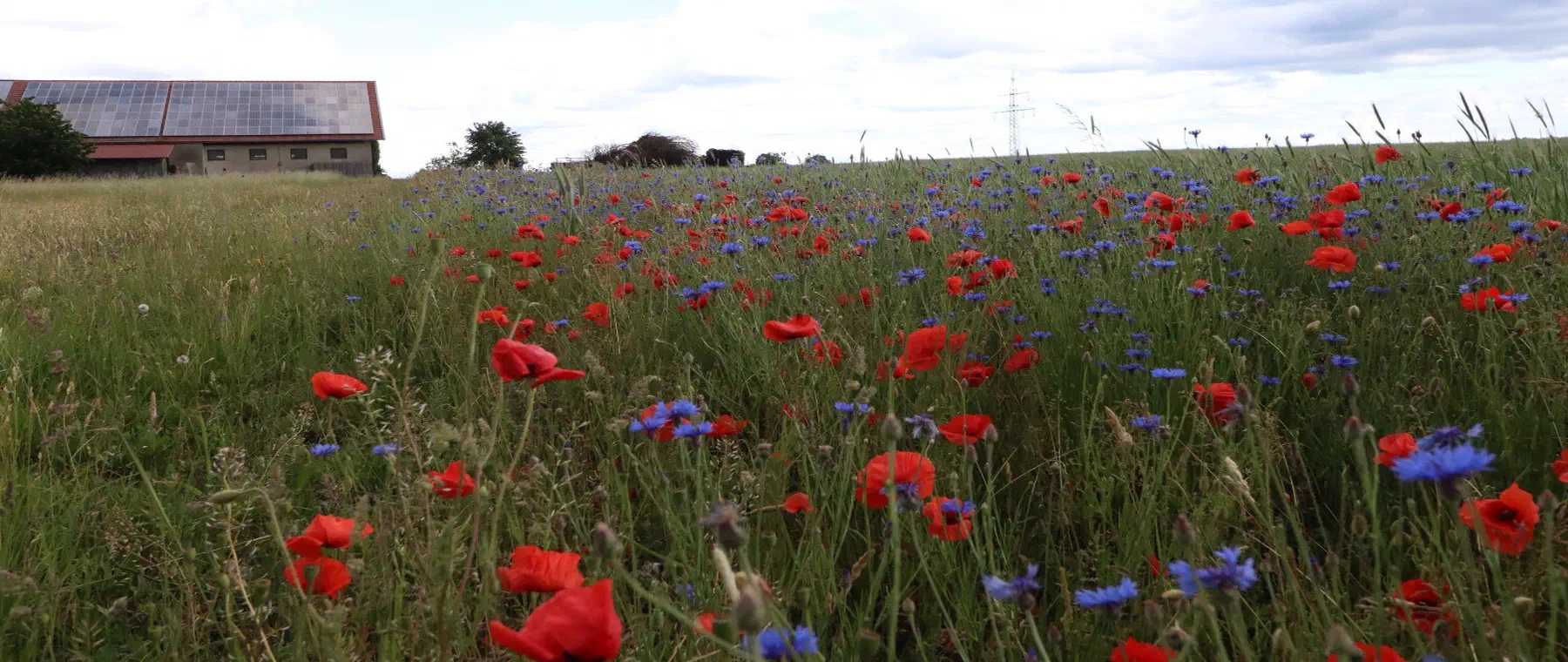
Eco-points and compensation areas
District of Main-Taunus-Kreis
Main-Taunus district lies at the heart of the Rhine-Main conurbation between Frankfurt and Wiesbaden. Dense settlement and commercial areas, gravel pits of the lower Main plain and wooded slopes of the front Taunus meet in a confined space. For impacts under sections 13 to 15 of the Federal Nature Conservation Act (BNatSchG), compensation under the Hessian Compensation Regulation (KV) is assessed in eco-points. greeNature accompanies project developers and municipalities in impact regulation, species protection and eco-accounts
The District of Main-Taunus-Kreis at a glance
Main-Taunus district belongs to Darmstadt administrative region and, despite its small area, is one of the most densely populated districts in Germany. The location between major cities Frankfurt and Wiesbaden leads to high usage pressure from residential, commercial and transport
By natural region, the district extends from the lower Main plain, which belongs to the major landscape of Upper Rhine Plain and Rhine-Main Lowland (D53), into the forested front Taunus as part of the major landscape Taunus (D41). The Main forms the southern boundary over much of its length
Characteristic are the gravel pits of the lower Main plain, traditional orchard stands on Taunus slopes and wine-growing areas on Main slopes at Hochheim and Flörsheim. These structures provide valuable habitats for protected species despite dense settlement
The lower nature conservation authority at Main-Taunus district is responsible for nature conservation support for impacts. Compensation and replacement are determined under the Hessian Compensation Regulation and assessed in eco-points
🗺️ Associated natural regions
Go to natural region D53 ›
📍 Selected municipalities
🌿 Ecological features
- One of Germany's smallest districts by area but with very high population density, which increases pressure on remaining open land
- Gravel pits of the lower Main plain such as Weilbach and Massenheim gravel pits are important secondary habitats and partly designated as nature reserves
- Transition from the open lower Main plain into the forested front Taunus with traditional orchards on slopes around Kelkheim and Eppstein
- Wine growing on Main slopes at Hochheim am Main and Flörsheim am Main characterises landscape and microclimate
- Despite significant fragmentation, several Natura-2000 and nature reserves exist, whose conservation objectives must be observed in impacts
- High proportion of commercial and transport areas, such as Eschborn office location and motorways A66, A3 and A5 in the surroundings
✅ greeNature on the ground
greeNature operates nationwide and supports project developers, municipalities and planning offices also in Main-Taunus district. In the densely used Rhine-Main conurbation, compensation areas are scarce, so proper assessment under the Hessian Compensation Regulation and early land securing are of particular importance. We undertake impact and compensation assessment in eco-points, species protection assessment under section 44 of the Federal Nature Conservation Act (BNatSchG) including CEF measures, and coordination with the lower nature conservation authority. Where necessary, we develop and manage eco-account measures and undertake creation, management and monitoring of compensation areas
Typical measures in the district of Main-Taunus-Kreis
Create and maintain traditional orchards
New planting and extensive management of traditional orchards on Taunus slopes around Kelkheim and Eppstein. High-stemmed fruit trees create habitat for cavity-nesting birds, bats and insects and enhance the landscape
Develop waters and floodplains
Restoration of streams such as Schwarzbach and Wickerbach and floodplain development along the Main. Structured banks and connected floodplain areas improve connectivity and retention
Restore gravel pits
Creation of steep walls, shallow water zones and raw soil areas in exhausted gravel pit sites of the lower Main plain. Such secondary habitats benefit amphibians, reptiles and wading birds
Unseal land
Removal and unsealing of unused transport and commercial areas in the densely built conurbation. Unsealing creates new soil for vegetation and improves infiltration and microclimate
Extend arable land and vineyards extensively
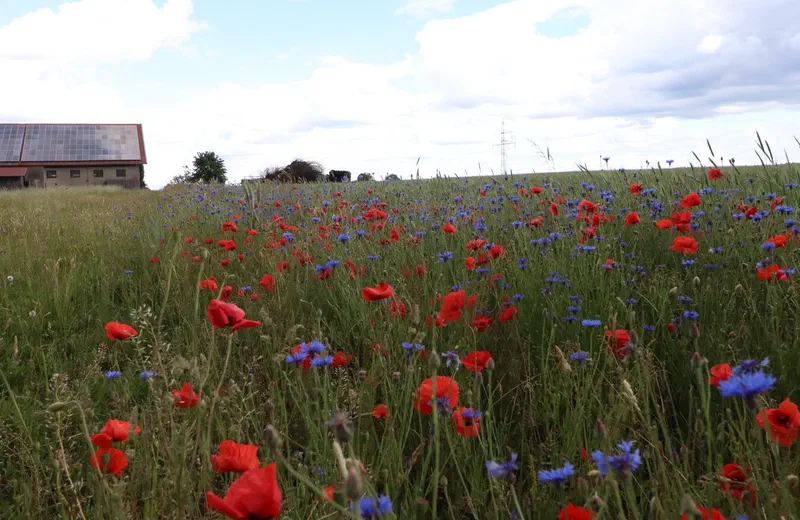
Creation of flower and field margins, skylark access windows and extensively used edge structures on arable and vineyard areas near Hochheim and Flörsheim. This promotes field birds and arable wild plants
Secure species protection habitats (CEF)
Advanced compensation measures under section 44 of the Federal Nature Conservation Act (BNatSchG), such as creating sunny scree piles and sand lenses for sand lizards. CEF measures secure the function of affected habitats before impact occurs
Protected species in the Lower Main plain and front Taunus in the Rhine-Main conurbation
Sand lizard
Inhabits gravel pits, railway embankments and warm, dry margins of the lower Main plain. In impacts, habitats frequently need to be secured via advanced CEF measures
About this species ›Northern lapwing
Uses open wet areas and raw soils in gravel pits, such as Weilbach and Massenheim gravel pits. The population depends on undisturbed, damp open land areas
About this species ›Bats
Several species hunt over waters, traditional orchards and forest margins of the front Taunus and use roosts in trees and buildings. Roost trees and guiding structures must be considered in projects
About this species ›Skylark
Breeds on arable and vineyard areas of the open lower Main plain at Hochheim and Flörsheim. The ground-breeding species benefits from extensive margin strips and skylark access windows
About this species ›Amphibians
Waters in gravel pits and floodplain areas offer spawning habitat for newts, toads and frogs. Newly created, sunny small water bodies are suitable compensation
About this species ›Kingfisher
Occurs on structured sections of Main, Schwarzbach and Wickerbach and requires steep banks for breeding holes. Ecologically sound water development supports the species
About this species ›Which projects trigger a compensation obligation?
Commercial and office areas
Expansions and densifications at commercial locations such as Eschborn regularly trigger impacts for which compensation must be provided in eco-points under the Hessian Compensation Regulation
Transport infrastructure
Road and rail projects in the conurbation, for example around A66 and A3 plus planned rail projects, require impact and compensation assessment and species protection assessments
Residential development
Ongoing settlement pressure in the Rhine-Main area leads to new residential areas. Land scarcity makes early securing of compensation areas and eco-account measures important
Raw material extraction
Gravel extraction in the lower Main plain impacts nature and landscape. Restored extraction sites can equally be designed as high-quality compensation and secondary habitat areas
From enquiry to monitoring
Contact and enquiry
Tell us your compensation requirement and the natural region. We check availability.
Offer and advice
A transparent offer covering measure types, scope and availability.
Coordination with authorities
Full coordination with the lower nature conservation authority. We handle everything.
Long-term monitoring
Permanent securing of the land, management and documentation across the contract term.
Eco-points in adjoining districts
All about eco-points
in the district of Main-Taunus-Kreis
Request eco-points in the district of Main-Taunus-Kreis
We will promptly prepare a transparent offer with matching eco-points held in stock in the district of Main-Taunus-Kreis.