Eco-points and compensation areas
District of Main-Kinzig-Kreis
Eco-points and compensation areas in Main-Kinzig district, assessed under the Hessian Compensation Regulation (KV). We support impacts between the Rhine-Main border, Kinzig valley and Spessart from assessment through to permanently secured measures.
The District of Main-Kinzig-Kreis at a glance
Main-Kinzig district lies in the east of Darmstadt administrative region and extends from the densely populated Rhine-Main border at Maintal and Nidderau via Kinzig valley into the beech and oak forests of Hessian Spessart. As of 1 January 2026, the city of Hanau has left the district and become independent again.
The natural region diversity ranges from Rhine-Main Lowland via the rolling and traditional orchard areas of Büdinger Land to the closed forest areas of Spessart and the foothills of Vogelsberg. This diversity characterises both the species that occur and the requirements for proper compensation.
For impacts on nature and landscape, sections 13 to 15 of the Federal Nature Conservation Act (BNatSchG) apply together with the Hessian Compensation Regulation (KV). The compensation requirement is assessed in eco-points. We assume responsibility for determining requirements, measure planning and long-term land security.
🗺️ Associated natural regions
Go to natural region D55 ›
Go to natural region D53 ›
Go to natural region D47 ›
📍 Selected municipalities
🌿 Ecological features
- Extensive beech and oak forests of Hessian Spessart, including in the FFH area High Spessart with very ancient oak stands
- The Kinzig as a defining river axis with floodplains that play an important role in water restoration and flood retention
- European wildcat occurrence in the contiguous forest areas of Spessart and Büdinger forest
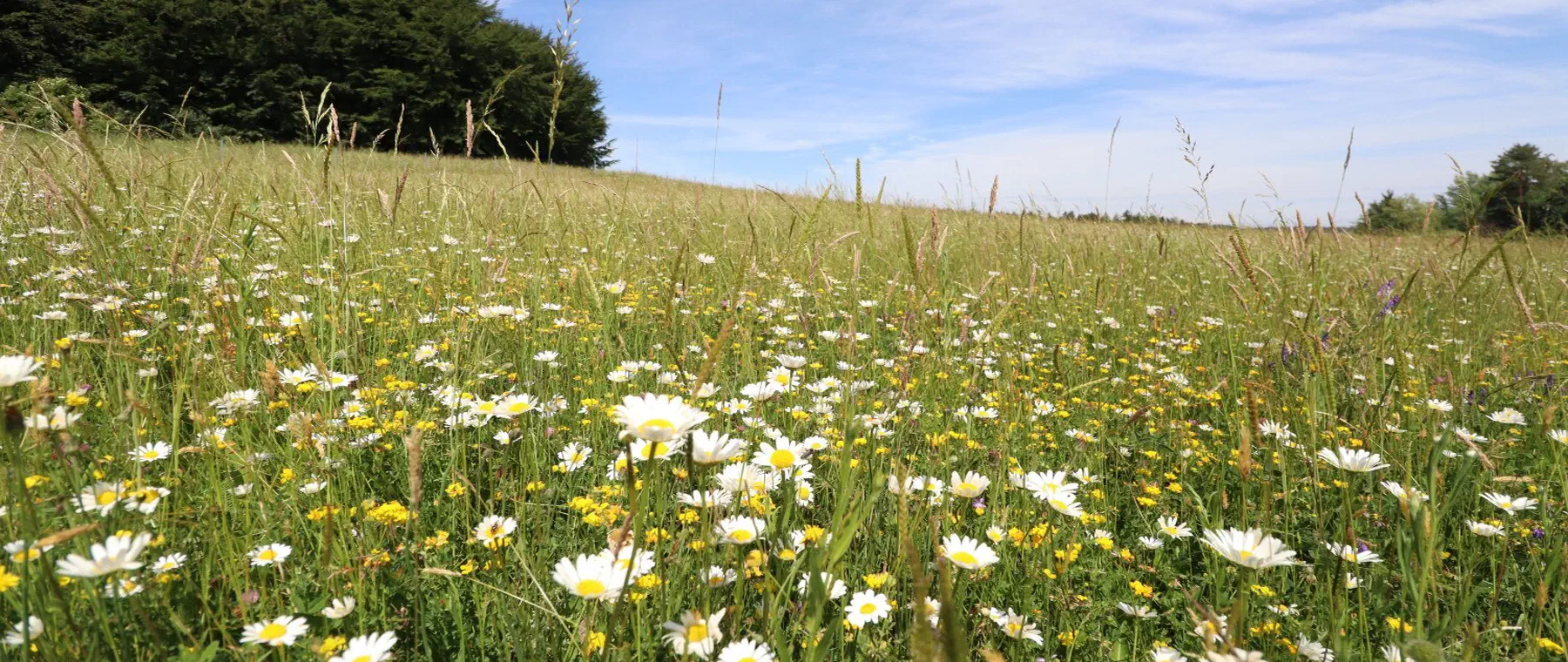
- Traditional orchards and extensively managed grassland in Ronneburger Upland and Büdinger Land
- Hessian Spessart Nature Park as a large-scale protected and recreation area
- Clear transition from the dense Rhine-Main area around Maintal and Nidderau to the rural upland locations in the east
✅ greeNature on the ground
greeNature operates nationwide and manages compensation projects in Main-Kinzig district taking local conditions into account. We coordinate measures with the lower nature conservation authority of the district, assess impacts under the Hessian Compensation Regulation in eco-points and secure compensation areas legally and for long-term management. Whether ecological woodland development in Spessart, floodplain measures on the Kinzig or open land upgrading in Büdinger Land, we select measures that suit the respective natural region and affected species.
Typical measures in the district of Main-Kinzig-Kreis
Ecological woodland development
Conversion of structurally poor stands into site-appropriate broadleaf forests and stepped forest edge design, following the beech and oak forests of Spessart
Floodplain and water restoration
Removal of bank defences, reconnection of oxbows and ecological development of floodplains along the Kinzig and its tributaries
Create and maintain traditional orchards
New planting and restoration of high-stemmed traditional orchards in Ronneburger Upland and Büdinger Land as habitat for birds and insects
Grassland extensification
Conversion of intensive grassland and arable land into species-rich, extensively used meadows with adapted mowing regimes
Small water bodies and amphibian breeding waters
Creation of sunny ponds and wetland biotopes for amphibians, among other things in the area of Kinzig floodplain and damp forest locations
Special sites for reptiles and open land
Dry stone walls, scree piles and flower strips for sand lizards and open land species on sunny slopes and marginal areas
Protected species in the Spessart, Kinzig valley and eastern Rhine-Main
European wildcat
The contiguous forests of Spessart and Büdinger forest are among the important refuges for the European wildcat in Hesse. Forest networking and undisturbed stands are crucial for it
About this species ›Black stork
The black stork breeds in quiet, old forest stands and uses ecologically sound streams and floodplains as feeding habitat. Forest edge design and good water quality benefit it
About this species ›Forest bats (including Bechstein's bat)
The old broadleaf forests of High Spessart offer cavity-rich roost trees for forest-dependent bat species such as Bechstein's bat and brown long-eared bat
About this species ›Hazel dormouse
The hazel dormouse inhabits structurally diverse forests, forest margins and hedgerows. Continuous tree structures are important for its distribution
About this species ›Kingfisher
On ecologically sound sections of the Kinzig and its tributaries, the kingfisher finds steep banks for nesting and clear, fish-rich waters as hunting grounds
About this species ›Sand lizard
Warm, sunny slopes, railway embankments and forest margins provide habitat for the sand lizard. It is frequently relevant to species protection in impact assessments
About this species ›Which projects trigger a compensation obligation?
Transport infrastructure
Expansion and maintenance measures on motorways A45 and A66 as well as on federal and state roads regularly generate compensation requirements in the district
Commercial and logistics areas
New commercial and logistics locations along motorway axes, for example around Gelnhausen and Erlensee, lead to impacts on soil and open land
Residential development on the Rhine-Main border
Demand for housing in Maintal, Nidderau and Bruchköbel drives land releases for building with corresponding compensation requirements
Energy and network infrastructure
Wind energy projects in forest areas and the expansion of electricity and rail routes trigger compensation and species protection measures
From enquiry to monitoring
Contact and enquiry
Tell us your compensation requirement and the natural region. We check availability.
Offer and advice
A transparent offer covering measure types, scope and availability.
Coordination with authorities
Full coordination with the lower nature conservation authority. We handle everything.
Long-term monitoring
Permanent securing of the land, management and documentation across the contract term.
Eco-points in adjoining districts
All about eco-points
in the district of Main-Kinzig-Kreis
Request eco-points in the district of Main-Kinzig-Kreis
We will promptly prepare a transparent offer with matching eco-points held in stock in the district of Main-Kinzig-Kreis.