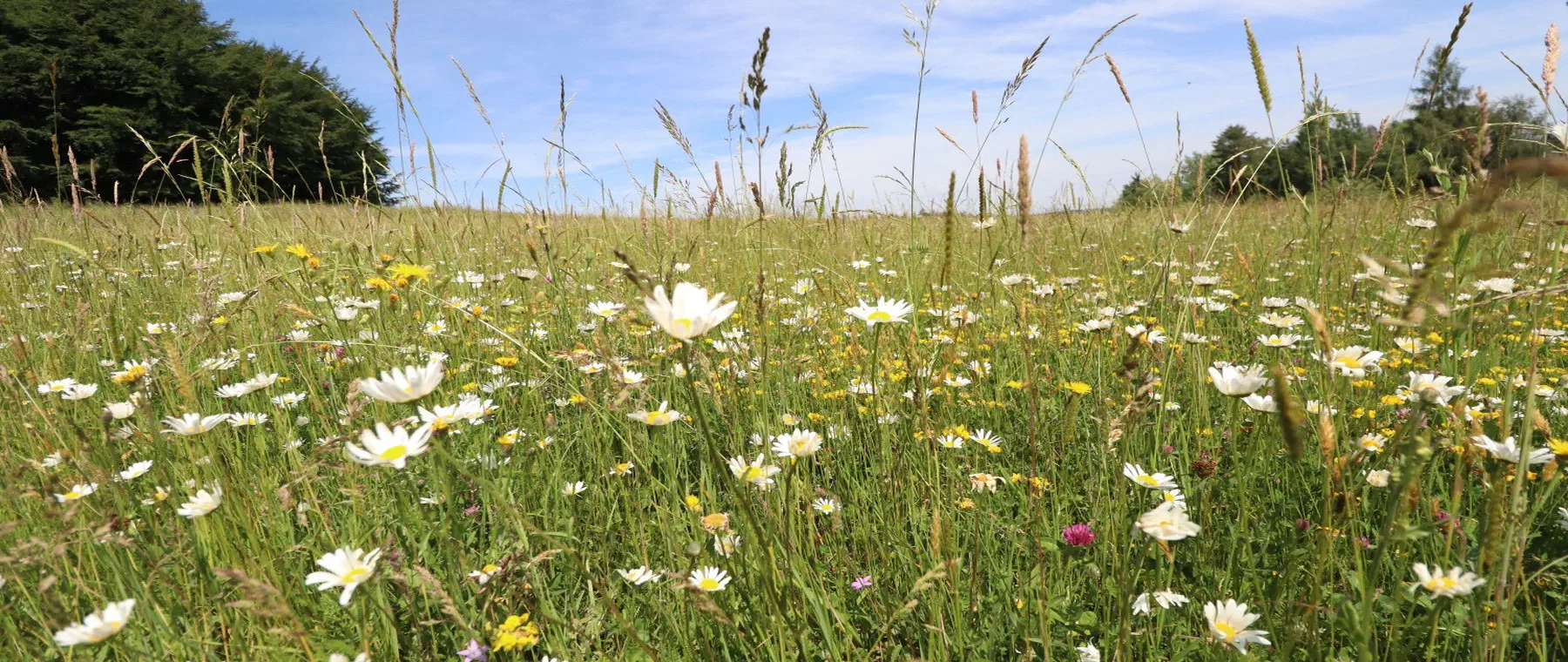
Eco-points and compensation areas
District of Limburg-Weilburg
Eco-points and compensation areas in Limburg-Weilburg district, assessed in biotope value points under the Hessian Compensation Regulation (KV) and recorded in eco-accounts. greeNature operates nationwide and is your full-service partner for impact regulation, species protection and CEF measures in Lahn valley, Westerwald and Taunus
The District of Limburg-Weilburg at a glance
Limburg-Weilburg district lies in Central Hesse between uplands Taunus in the south and Westerwald in the north and belongs to Gießen administrative region. On approximately 738 square kilometres live approximately 173,000 people in 19 cities and municipalities. The district administration's seat and largest municipality is district seat Limburg an der Lahn. Approximately one-third of the district area is forested
Characteristic is Lahn valley, which runs through the district from east to west and is assigned to BfN natural region D40 (Lahn valley and Limburg basin). To the north is Westerwald (D39), to the south-east Taunus (D41). The open, climatically favoured Limburg basin with its traditional orchards, calcareous locations and floodplains contrasts with the forested, cooler uplands of the two uplands
Under sections 13 to 15 of the Federal Nature Conservation Act (BNatSchG), avoidable impacts on nature and landscape must be avoided and unavoidable impacts compensated or replaced. The decisive basis for assessment and accounting in Hesse is the Compensation Regulation (KV), which measures compensation requirement and land upgrading in biotope value points (eco-points). Advanced measures can be secured via eco-accounts and later assigned to an impact
Economically, the region has always been shaped by extraction and processing of limestone and basalt, plus commerce, logistics along A3 and the ICE stop Limburg South. Road construction projects such as four-lane expansion of B49, raw material extraction, settlement and commercial development plus wind energy on Westerwald and Taunus uplands regularly trigger impacts whose compensation under the KV must be provided
🗺️ Associated natural regions
📍 Selected municipalities
🌿 Ecological features
- Lahn valley as landscape-defining river axis with ecologically sound sections and FFH area Lahn valley and its slopes
- Lahn as part of the European Natura-2000 network with significance among other things for kingfisher
- Forested uplands of Westerwald and Taunus as habitat for black stork and European wildcat
- Limestone and basalt locations with active quarries, such as limestone quarry at Schneelsberg and basalt quarries in Westerwald
- Traditional orchards and calcareous grasslands in the climatically favoured Limburg basin
- Former pits and quarries of the Lahnmarmor region as secondary habitats and bat roosts
- Transition area between three BfN natural regions (D40, D39, D41) with correspondingly high habitat diversity
✅ greeNature on the ground
greeNature operates nationwide for project developers, municipalities and planning offices and manages compensation projects also in Limburg-Weilburg district. We know the Hessian-applicable Compensation Regulation (KV) procedure with assessment in biotope value points, eco-account management and authority coordination with the lower nature conservation authority of the district. For impacts in Lahn valley, Westerwald and Taunus, we develop tailored compensation, replacement and CEF measures that suit the natural region characteristics of natural regions D40, D39 and D41 and secure them permanently legally and practically
Typical measures in the district of Limburg-Weilburg
Floodplain restoration on Lahn
Removal of bank defences, reconnection of oxbows and ecological development of Lahn and its tributaries. This creates steep banks, shallow water zones and floodplain forest as habitat for kingfisher, fish and amphibians, simultaneously regaining retention space
Traditional orchards and extensive grassland
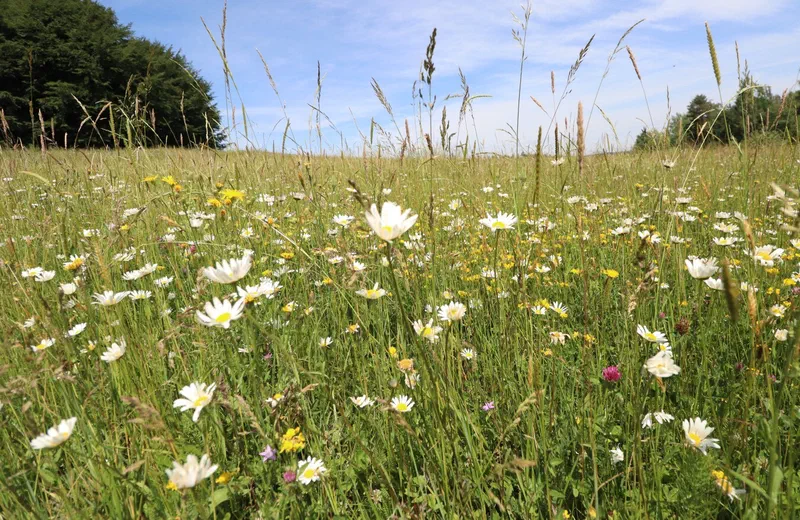
New creation and management of traditional orchards plus conversion of intensively managed land into species-rich extensive grassland in the climatically favoured Limburg basin. These measures significantly upgrade biotope value and create habitat for insects, birds and bats
Ecological woodland conversion
Conversion of structurally poor coniferous forests into site-appropriate broadleaf and mixed forests from beech, oak and hornbeam in Westerwald and Taunus, combined with promotion of old and dead wood. Such forests provide habitat for black stork, European wildcat and forest-dwelling bats
Restoration of quarries
Ecologically appropriate design of exhausted areas and restoration of limestone and basalt quarries with sunny small water bodies, raw soil areas and rock faces. These secondary habitats are valuable for yellow-bellied toad and further amphibians, sand lizards and wild bees
Calcareous grasslands and edge biotopes
Scrub clearance and extensive grazing or mowing of calcareous grasslands on calcareous locations of Limburg basin plus development of species-rich edges. Such dry habitats harbour rare plants, insects and reptiles
Species protection CEF and FCS
Advanced and population-supporting measures under sections 44 and 45 of the Federal Nature Conservation Act (BNatSchG), such as replacement habitats for sand lizards on railway embankments and in quarries, bat roosts in buildings and shafts plus sunny replacement breeding waters for amphibians
Protected species in the Lahn valley between Taunus and Westerwald
Black stork in forest areas
The contiguous, water-rich forests of Westerwald and Taunus provide the disturbance-sensitive black stork breeding habitat. For impacts on forest areas, nesting protection zones, disturbance-free periods and securing of feeding waters are important planning components
About this species ›Kingfisher on Lahn
Ecologically sound bank sections of Lahn with steep walls provide the strictly protected kingfisher breeding sites. Lahn is here part of the European Natura-2000 network. For water impacts, steep bank modelling and bank restoration are typical CEF measures
About this species ›Bats in caves and forests
Old shafts and caves of the limestone and Lahnmarmor region plus broadleaf forests of the uplands are roost and hunting ground for greater mouse-eared bat, Bechstein's bat and other species. All are strictly protected (Annex IV FFH Directive). For demolition and renovation, replacement roosts are required as CEF measures
About this species ›Sand lizard in quarries and on railway embankments
Sunny slopes, quarries, basalt areas and railway embankments are habitat for the strictly protected sand lizard. For infrastructure and settlement projects, replacement habitats with sunny, egg-laying and shelter sites are standard in species protection compensation
About this species ›Amphibians in quarry waters
Yellow-bellied toad, natterjack toad and great crested newt inhabit seasonal small water bodies in limestone and basalt quarries plus Lahn floodplain depressions. Newly created, sunny breeding waters in spatial context secure breeding sites in construction and raw material projects
About this species ›European wildcat in upland forests
The extensive, structurally diverse forests of Taunus and Westerwald are part of the European wildcat distribution area. Forest edge design, dead wood and networking of forest habitats via corridors support populations and serve habitat connectivity
About this species ›Which projects trigger a compensation obligation?
B49 expansion
Four-lane expansion of B49 between Limburg and Wetzlar is a large-scale road construction project with substantial compensation requirements. Section-wise, water construction measures such as Lahn section relocation are also envisaged, to be ecologically compensated
Raw material extraction
Extraction of limestone and basalt, such as at Schneelsberg and basalt quarries of Westerwald, impacts soil, relief and habitats. Restoration and accompanying compensation can create new secondary habitats at extraction waters and rock faces
Settlement, commerce and transport
Residential and commercial areas in Limburg, Weilburg and other municipalities, the surroundings of ICE stop Limburg South on the high-speed line Cologne,Rhine/Main plus bypass roads lead to land sealing and require compensation under the KV. Landowners can benefit as area providers
Wind energy on the uplands
Wind energy systems are developing on the forested uplands of Westerwald and Taunus. New installation and repowering trigger impacts and frequently require species protection assessment plus FCS measures for wind-sensitive species such as red kite and bats
From enquiry to monitoring
Contact and enquiry
Tell us your compensation requirement and the natural region. We check availability.
Offer and advice
A transparent offer covering measure types, scope and availability.
Coordination with authorities
Full coordination with the lower nature conservation authority. We handle everything.
Long-term monitoring
Permanent securing of the land, management and documentation across the contract term.
Eco-points in adjoining districts
All about eco-points
in the district of Limburg-Weilburg
Request eco-points in the district of Limburg-Weilburg
We will promptly prepare a transparent offer with matching eco-points held in stock in the district of Limburg-Weilburg.