Eco-points and compensation areas
District of Lahn-Dill-Kreis
Eco-points and compensation under the Hessian Compensation Regulation in Lahn-Dill district. greeNature is your full-service partner for compensation and replacement measures in Lahn-Dill upland between Westerwald, Lahn valley and Taunus
The District of Lahn-Dill-Kreis at a glance
Lahn-Dill district lies in Central Hesse and belongs to Gießen administrative region. It comprises 23 cities and municipalities on approximately 1,066 km² with approximately 253,000 inhabitants. Administrative seat and district seat is the special-status city Wetzlar on the Lahn; further economic focal points are Dillenburg, Herborn and Haiger in Dill valley. The district extends from the broad Lahn valley in the south to the forested upland areas of Westerwald and Rothaar upland in the north
By landscape, the district is shaped by three BfN natural regions. The largest part, the Gladenbach upland with the valleys of Dill and Dietzhölze, belongs to natural region D39 (Westerwald). Lahn valley around Wetzlar, Leun and Solms belongs to natural region D40 (Lahn valley and Limburg basin), whilst the south around Braunfels and Waldsolms transitions into high Taunus and thus into natural region D41 (Taunus). Geologically, slate, greywacke, diabase and basalt characterise the upland ridges, where the well-known Lahn-Dill ore was mined for centuries
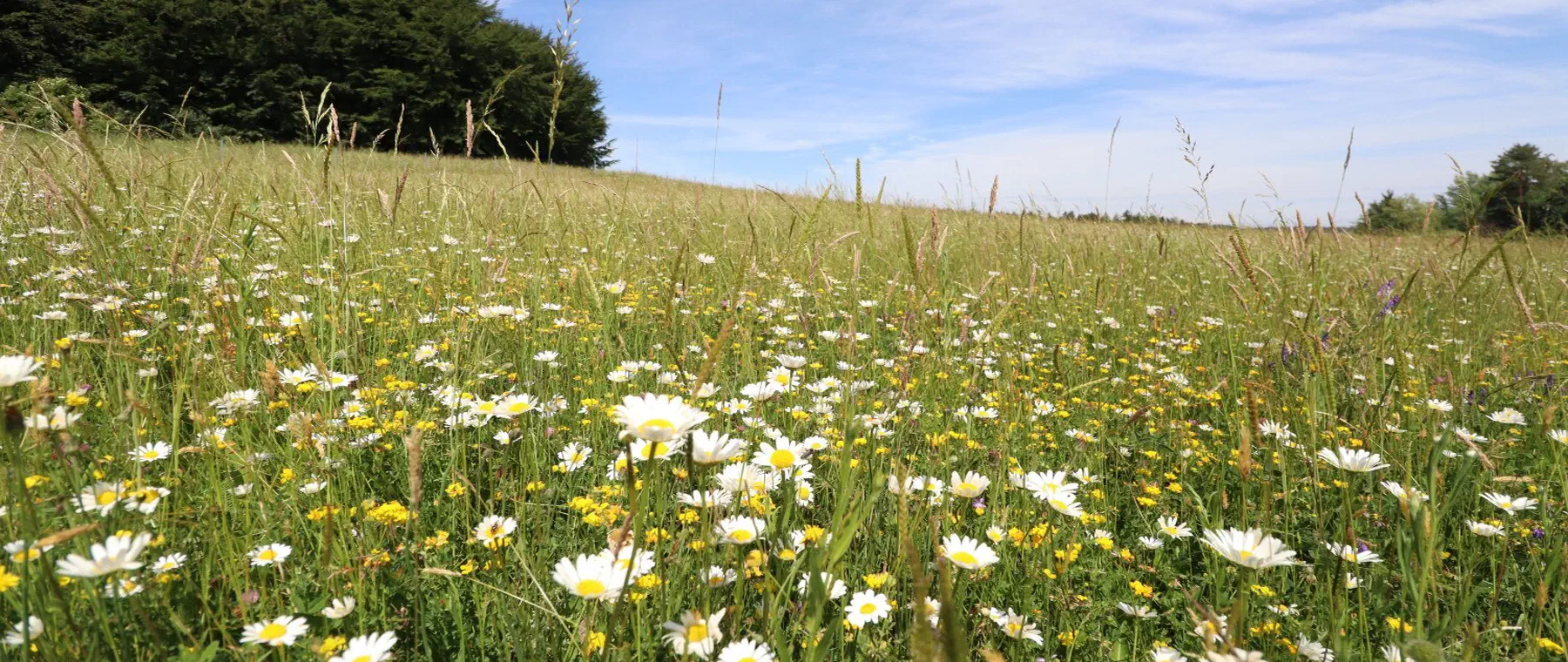
Ecologically, extensive beech and oak forests, structured stream valleys and extensively managed mountain, wet and lean meadows characterise the landscape. Large parts of the district lie in the Lahn-Dill upland Nature Park. The Natura-2000 network protects, among other things, the Hörre bird protection area near Herborn and Lemptal plus numerous FFH areas such as orchid meadows near Haiger-Seelbach. The forested heights and quiet stream floodplains offer habitat for black stork, European wildcat and numerous bat species, which use old mine shafts as winter roosts
Economically, Lahn-Dill district is a traditional industrial location with metal processing, mechanical engineering and optics and fine mechanics in Wetzlar area. Motorway A45 (Sauerland line) runs through the district with its numerous renovation-requiring valley bridges. Transport projects, commercial and residential development, raw material extraction and wind energy expansion in forested uplands regularly trigger impacts whose compensation under the Hessian Compensation Regulation must be provided in eco-points
🗺️ Associated natural regions
Go to natural region D39 ›
Go to natural region D46 ›
Go to natural region D38 ›
📍 Selected municipalities
🌿 Ecological features
- Lahn-Dill upland Nature Park as a large-scale, forested upland landscape
- Hörre bird protection area near Herborn and Lemptal with floodplains and wet habitats
- FFH area orchid meadows near Haiger-Seelbach in Dill valley
- Dill, Dietzhölze and Lahn as defining watercourses with ecologically sound sections
- Former ore mining shafts of Lahn-Dill area as important bat roosts
- Basalt, diabase and greywacke locations with quarries as secondary habitats
- Species-rich mountain, wet and lean meadows in Gladenbach upland
✅ greeNature on the ground
greeNature develops and secures compensation throughout Lahn-Dill district under the Hessian Compensation Regulation and supports project developers nationwide from assessment through permanent securing. We know lower nature conservation authority requirements in Wetzlar, natural region-based assessment in natural regions D39, D40 and D41 and typical habitats of Lahn-Dill upland, from stream valleys on Dill and Lahn to meadows and forests of Westerwald and high Taunus
Typical measures in the district of Lahn-Dill-Kreis
Flowing water restoration on Dill and Lahn
Removal of bank defences, reconnection of oxbows and development of self-evolving water sections on Dill, Dietzhölze and Lahn. This creates steep banks, gravel bars and floodplain forest as habitat for kingfisher, fish and amphibians, combined with clear water structure upgrading
Extension of mountain and wet meadows
Retention and development of species-rich mountain, wet and lean meadows through adapted mowing times, no fertiliser application and extensive grazing. Such grassland measures secure protected meadow habitats and insect and plant diversity of Lahn-Dill upland
Woodland conversion and old and dead wood promotion
Conversion of structurally poor coniferous forests to site-appropriate broadleaf mixed forests from beech, oak and hornbeam plus promotion of old, cavity and dead wood trees. Ecologically sound forests upgrade habitat for black stork, European wildcat, bats and hazel dormouse
Hedgerows, traditional orchards and habitat networking
Creation of hedgerows, woodland copses and traditional orchards on slopes and in open fields. These structures network habitats, create stepping-stone biotopes and upgrade the open cultural landscape in transition between valleys and uplands
Species protection CEF and FCS
Securing and creation of bat roosts in mine shafts and buildings, replacement habitats for sand lizards on railway embankments and slopes and measures for water-dependent species, each as advanced CEF or population-supporting FCS measure under sections 44 and 45 of the Federal Nature Conservation Act (BNatSchG)
Restoration of former extraction sites
Development of abandoned basalt, diabase and greywacke quarries into structured secondary habitats with ponds, raw soil areas and rock faces. Such areas provide habitat for amphibians, reptiles and heat-loving species and can be recognised as high-value compensation
Protected species in the Lahn-Dill upland between Westerwald, Lahn valley and Taunus
Black stork in forest valleys
The shy, strictly protected black stork breeds in the extensive, quiet forests of Lahn-Dill upland and uses stream valleys and wet meadows as feeding habitat. For impacts on forest and water habitats, disturbance radii must be observed and suitable feeding habitats secured
About this species ›European wildcat in upland forests
The European wildcat (Annex IV of the FFH Directive) inhabits the contiguous, structurally diverse broadleaf forests of Central Hesse. Woodland conversion, retention of old and dead wood and networking of forest habitats via corridors are important protection measures
About this species ›Bats in shafts and forests
Numerous strictly protected bat species use old ore mining shafts of Lahn-Dill area as winter roosts and forests and buildings as summer habitat. For demolition, renovation or shaft closure, replacement roosts are required as CEF measures
About this species ›Kingfisher on Dill and Lahn
Ecologically sound bank sections of Dill and Lahn offer steep banks as breeding sites and fish-rich waters as feeding grounds. For impacts on watercourses, steep bank modelling and bank restoration are typical CEF measures for the strictly protected kingfisher
About this species ›Hazel dormouse in hedgerows and forest margins
The strictly protected hazel dormouse inhabits structurally diverse forest margins, hedgerows and shrubs of the upland. For felling, section-by-section, technically supervised tree removal and networking of replacement habitats are required
About this species ›Amphibians in streams and extraction waters
Fire salamander, grass frog and midwife toad inhabit the spring streams, ponds and water-filled quarries of the region. Replacement breeding waters and land habitats in spatial context secure breeding sites in construction and infrastructure projects
About this species ›Which projects trigger a compensation obligation?
Motorway A45 and valley bridges
Renewal of the numerous A45 (Sauerland line) valley bridges plus expansion and renovation measures on federal and state roads affect forest, water and open land habitats and trigger extensive compensation and replacement obligations under the Hessian Compensation Regulation
Commerce and industry
The traditional industrial location with metal processing, mechanical engineering and optics in Wetzlar, Dillenburg and Herborn area further develops commercial and residential areas. Land sealing and development regularly require nature conservation compensation
Wind energy and photovoltaics
Wind energy expansion in the forested uplands of Westerwald and Lahn-Dill upland plus free-space photovoltaic systems generate compensation requirements and frequently trigger special species protection assessment for bats, red kite and black stork
Raw material extraction
Extraction of basalt, diabase and greywacke in the region's quarries impacts soil, relief and habitats. Expansion and restoration of extraction sites require compensation measures and equally offer opportunities for high-value secondary habitats
From enquiry to monitoring
Contact and enquiry
Tell us your compensation requirement and the natural region. We check availability.
Offer and advice
A transparent offer covering measure types, scope and availability.
Coordination with authorities
Full coordination with the lower nature conservation authority. We handle everything.
Long-term monitoring
Permanent securing of the land, management and documentation across the contract term.
Eco-points in adjoining districts
All about eco-points
in the district of Lahn-Dill-Kreis
Request eco-points in the district of Lahn-Dill-Kreis
We will promptly prepare a transparent offer with matching eco-points held in stock in the district of Lahn-Dill-Kreis.