Eco-points and compensation areas
District of Gießen
Eco-points and compensation in Gießen district: greeNature develops compensation and replacement measures under the Hessian Compensation Regulation (KV), assesses them in biotope value points and supports project developers from impact assessment through eco-account to permanent security. We work nationwide and know administrative structures in Central Hesse
The District of Gießen at a glance
Gießen district lies in Central Hesse and connects two very different landscapes. In the west and centre, Gießen basin with the Lahn floodplain characterises the picture. In the east, the land rises into front Vogelsberg. By natural region, the district predominantly belongs to West Hessian upland (BfN major landscape D46) and with its eastern parts to East Hessian upland and Vogelsberg (D47)
With Gießen university city as centre, the district is densely populated and economically diverse. Metal processing, mechanical engineering, optics plus health and IT sectors characterise the business landscape. Motorways A5, A45, A480 and A485 run through the district, bringing settlement, commercial and transport projects and thus impacts on nature and landscape
In Hesse, compensation for impacts under sections 13 to 15 of the Federal Nature Conservation Act (BNatSchG) is combined with the Hessian Compensation Regulation (KV). Impacts and upgrading measures are assessed in biotope value points (eco-points). Advanced reserve measures can be recorded in an eco-account, maintained with the responsible nature conservation authority and recognised
Species protection under section 44 of the Federal Nature Conservation Act (BNatSchG) must be assessed separately. Where European protected species are affected, advanced compensation measures (CEF) may be required to permanently secure ecological function of habitats. greeNature brings together impact assessment, compensation and species protection into a proven overall concept
🗺️ Associated natural regions
Go to natural region D46 ›
Go to natural region D53 ›
Go to natural region D47 ›
Go to natural region D39 ›
📍 Selected municipalities
🌿 Ecological features
- The Lahn floodplain between Gießen, Heuchelheim and Lahnau ranks among the most important EU bird protection areas in Hesse and harbours species such as kingfisher and northern lapwing
- The large EU bird protection area Vogelsberg extends into the eastern district and protects, among other things, habitats for black stork and red kite
- Front Vogelsberg forms the transition to high Vogelsberg, Europe's largest contiguous basalt massif
- Nature reserves such as the Dutenhofener See area characterise ecologically sound floodplain landscapes on the Lahn
- The university city of Gießen provides high settlement and building dynamics within the district
- The dense motorway network of A5, A45, A480 and A485 with ongoing expansion projects regularly generates compensation requirements
✅ greeNature on the ground
greeNature works nationwide and knows Hessian state law as well as administrative practice in Central Hesse. In Gießen district, we assign measures to the Hessian Compensation Regulation (KV), assess them in biotope value points and coordinate impact assessments and eco-accounts with the lower nature conservation authority of the district and Gießen Government Presidency. From the Lahn floodplain to the open uplands of front Vogelsberg, we develop compensation concepts that are legally sound and fit the natural region
Typical measures in the district of Gießen
Extend and upgrade grassland
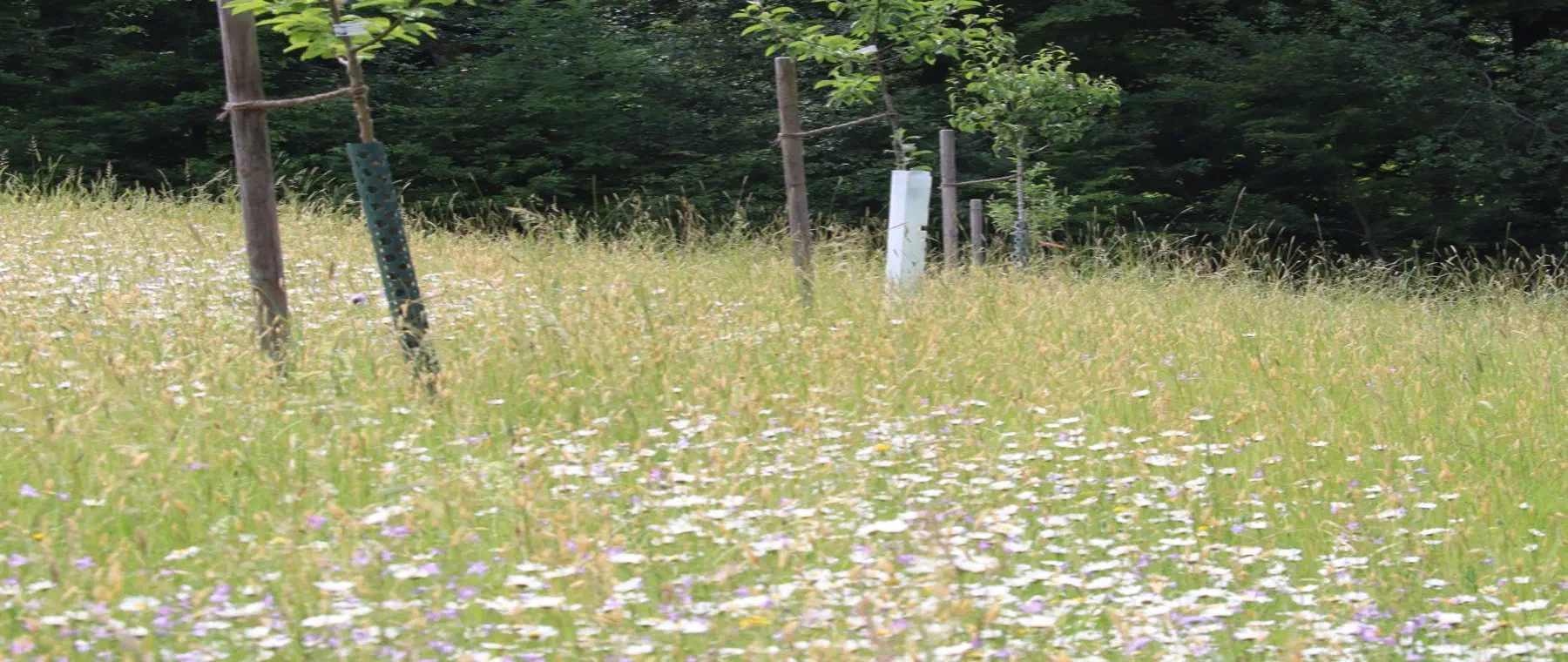
Restoration and extensive management of species-rich meadows and pastures, particularly in Lahn floodplain and cooler areas of front Vogelsberg
Develop waters and floodplains
Restoration of stream and river sections on Lahn and its tributaries, creation of riparian buffer strips and reconnection of oxbows
Convert forests ecologically
Development of structured broadleaf and broadleaf mixed forests with old and dead wood components as habitat for European wildcat, bats and cavity-nesting birds
Create traditional orchards and woodland copses
New creation and management of traditional orchards, hedgerows and woodland copses for structuring the cultural landscape and networking habitats
Create small water bodies for amphibians
Creation of ponds and breeding waters in floodplains and wet depressions to promote amphibians and other water-dependent species
Promote dry and lean locations
Development of sunny margins, dry stone walls and calcareous grasslands along railway embankments and slopes as habitat for sand lizards
Protected species in the Central Hesse, Lahn valley and front Vogelsberg
Black stork
The black stork breeds in the quiet, structurally diverse forests of Vogelsberg and uses the region's streams as feeding habitat. The species is strictly protected under the EU bird protection directive and is sensitive to disturbance around breeding sites
About this species ›Kingfisher
On Lahn and its tributaries, the kingfisher is a characteristic bird of ecologically sound banks. It requires clean, fish-rich waters and steep undercut banks for nesting, so water restoration directly benefits its population
About this species ›Northern lapwing
The northern lapwing breeds in wet meadows and open floodplain areas of Lahn floodplain. As a ground-breeder of open wet habitats, it depends on extensively managed, little-disturbed areas
About this species ›Skylark
In the open fields of Gießen basin and transition areas to Wetterau, the skylark breeds on the ground. Flower strips and skylark access windows in arable landscapes count among effective measures for the declining species
About this species ›European wildcat
Vogelsberg forests belong to distribution areas of the European wildcat in Hesse. The species, protected under Annex IV of the FFH Directive, requires large-scale, structurally diverse broadleaf forests and networked tree corridors
About this species ›Sand lizard
The sand lizard inhabits sunny slopes, railway embankments and dry locations throughout the district. For impacts, advanced CEF measures are frequently required, such as creation of replacement habitats with shelter structures
About this species ›Which projects trigger a compensation obligation?
Six-lane expansion of A45
The expansion of A45 between Dortmund and Gießen with construction of numerous valley bridges requires extensive compensation and replacement measures along the route
Commercial and logistics areas
Allocation and expansion of commercial and logistics locations on motorways A5, A480 and A485 trigger impacts that must be assessed and compensated in biotope value points
Settlement development university city
Residential construction and infrastructure projects around university city Gießen and surrounding municipalities continuously generate compensation requirements in development planning procedures
Wind energy in front Vogelsberg
New installation and repowering of wind energy systems in the uplands of front Vogelsberg require careful species protection assessment and tailored compensation
From enquiry to monitoring
Contact and enquiry
Tell us your compensation requirement and the natural region. We check availability.
Offer and advice
A transparent offer covering measure types, scope and availability.
Coordination with authorities
Full coordination with the lower nature conservation authority. We handle everything.
Long-term monitoring
Permanent securing of the land, management and documentation across the contract term.
Eco-points in adjoining districts
All about eco-points
in the district of Gießen
Request eco-points in the district of Gießen
We will promptly prepare a transparent offer with matching eco-points held in stock in the district of Gießen.