Eco-points and compensation areas
District of Prignitz
Compensation sites and officially recognised eco-accounts for projects in Prignitz. greeNature solutions accompanies you as a full-service partner with the impact mitigation regulation according to sections 13 to 15 BNatSchG, from securing land through verbal argumentation assessment according to the Guidance for implementing the impact mitigation regulation (HVE) to recognition by the lower nature conservation authority in Perleberg.
The District of Prignitz at a glance
Prignitz District lies in the far northwest of Brandenburg, on the border with Mecklenburg-Western Pomerania, Sachsen-Anhalt and Lower Saxony. Brandenburg is not divided into administrative regions, so the district is directly assigned to the state level. The district seat and administrative centre is Perleberg, the largest city is Wittenberge on the Elbe. Prignitz is sparsely populated and has the lowest population density of all German districts, which favours large-scale and coherent compensation projects.
Landscape is characterised by the Prignitz plateau, an ice-age ground moraine and sand landscape with extensive pine forests, wide arable land and scattered fens, across most of the district. In the southwest, the Elbe valley lowland (BfN natural region D09) with its floodplains, flood channels and dike lands accompanies the Middle Elbe. Important flowing waters besides the Elbe are the Stepenitz, Löcknitz, Karthane and Dosse, which drain the flat land southwards towards the Elbe.
Ecologically, Prignitz is of supra-regional significance. The southwest belongs to the transnational UNESCO Biosphere Reserve Elbe River Landscape Brandenburg with remaining floodplain forests, wet meadows and inland dunes. The FFH site and nature reserve Stepenitz ranks among Brandenburg's best-preserved flowing water systems and is habitat for otter and target for reintroduction of salmon and sea trout. Rambower Moor is an important crane resting site, and Rühstädt carries one of the highest white stork densities in Germany as a European Stork Village.
Economically, Prignitz is rural and strongly characterised by agriculture and forestry, supplemented by commerce and industry in the Wittenberge area. Significant compensation requirements are triggered above all by the new construction of the A14 motorway (northern extension Magdeburg, Wittenberge, Schwerin), the expansion of rail lines to Hamburg and Berlin, as well as wind energy and photovoltaic free-field systems. Impacts are assessed in Brandenburg according to sections 13 to 15 BNatSchG, with impact and compensation assessment conducted through verbal argumentation based on the Guidance for implementing the impact mitigation regulation (HVE).
🗺️ Associated natural regions
Go to natural region D09 ›
📍 Selected municipalities
🌿 Ecological features
- UNESCO Biosphere Reserve Elbe River Landscape Brandenburg with floodplain forests, flood channels and wet meadows
- FFH site and nature reserve Stepenitz, one of Brandenburg's best-preserved flowing water systems (otter, reintroduction of salmon and sea trout)
- Rambower Moor, large fen and important crane resting site
- Rühstädt, European Stork Village with one of the highest white stork densities in Germany
- Dike relocation near Lenzen, one of the major floodplain restoration projects on the Middle Elbe
- About 35 nature reserves and extensive pine forests and fens of the Prignitz plateau
- Lowest population density of all German districts, plenty of space for large-scale compensation
✅ greeNature on the ground
greeNature operates nationwide and knows the statutory nature conservation requirements in Brandenburg, from the lower nature conservation authority of Prignitz District through the State Office for the Environment to the administration of the Elbe River Landscape Biosphere Reserve. In Prignitz, we secure suitable sites, plan habitat enhancement and assess impact and compensation through verbal argumentation according to the Guidance for implementing the impact mitigation regulation (HVE). From floodplain restoration on the Elbe through Stepenitz restoration to fen rewetting, we handle implementation, lasting management and documentation. Where species protection requirements under section 44 BNatSchG apply, we design advance CEF measures that permanently secure the ecological function for affected species. This creates recognised compensation measures and eco-accounts that project developers and municipalities can use for impacts in the region.
Typical measures in the district of Prignitz
Floodplain restoration on the Elbe
Reconnection of oxbows and flood channels, development of floodplain forest and wet grassland in the Elbe valley, following the example of dike relocation near Lenzen. Such measures strengthen flood retention and create habitat for beaver, otter and meadow birds.
Flowing water restoration Stepenitz
Restoration of accessibility, installation of gravel spawning beds and near-natural bank structures on Stepenitz, Karthane and Löcknitz. These enhancements support otter and reintroduction of salmon and sea trout.
Wet grassland and fen rewetting
Extensification of grassland and raising of water levels in fens such as Rambower Moor. Pools, adapted mowing times and rewetting improve breeding and resting conditions for crane, northern lapwing and common snipe and simultaneously bind carbon.
Forest conversion and new afforestation
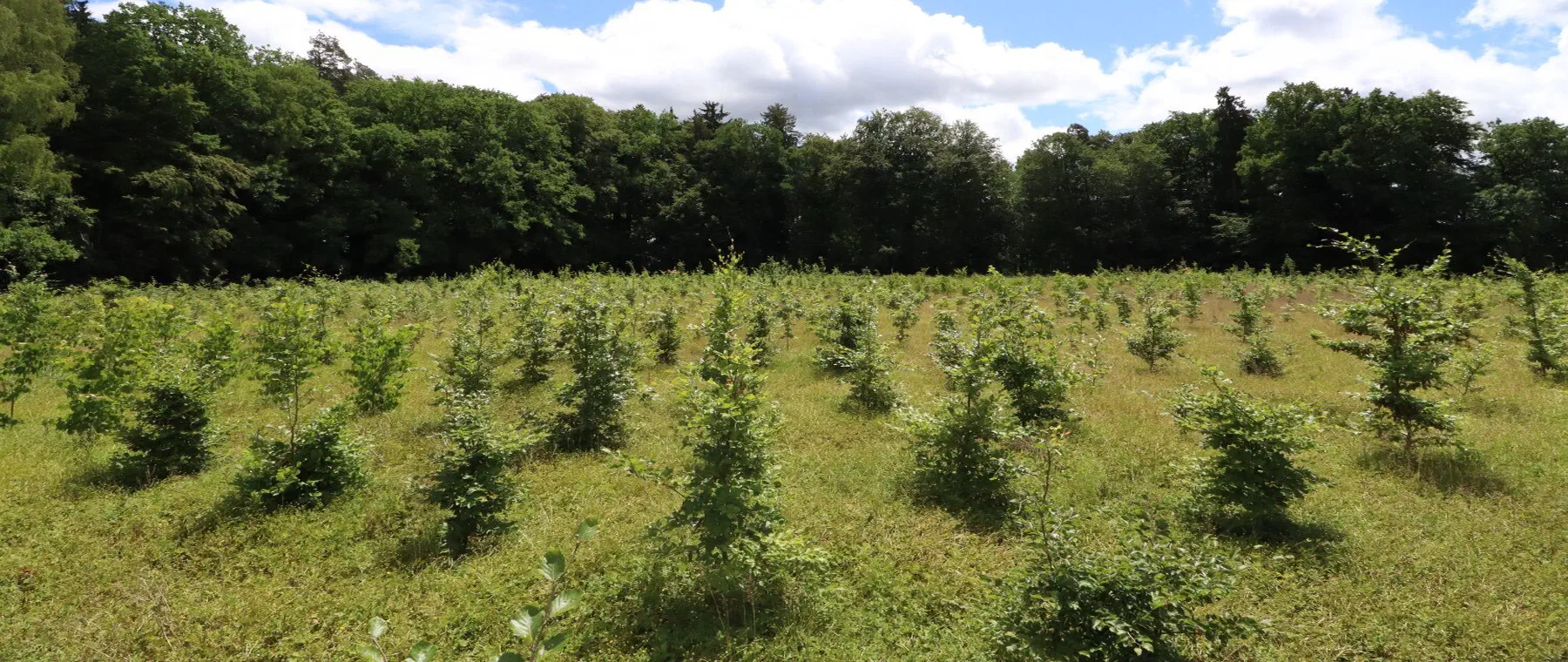
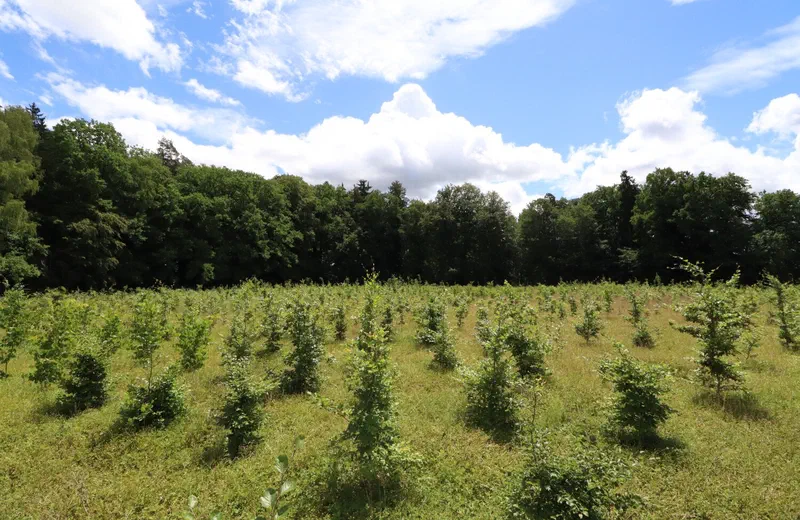
Conversion of structurally poor pine forests of the Prignitz plateau to site-appropriate deciduous mixed forests of oak, hornbeam and beech, and replacement afforestation, as required for example as compensation for forest losses along the A14.
Species protection CEF and FCS
Bat roosts, stork nesting platforms and nest boxes for barn owl and red-backed shrike, replacement habitats for sand lizard and spawning waters for red-bellied toad and great crested newt, tailored according to section 44 BNatSchG as advance measures.
Hedges, avenues and habitat networks
Planting of hedges, field copses and avenues in the extensive agricultural landscape of the Prignitz plateau. These stepping stones connect habitats and promote skylark, red-backed shrike and wild bees between forest, arable and floodplain.
Protected species in the Elbe valley and Prignitz plateau
Crane at Rambower Moor
Rambower Moor and further fens of Prignitz count among the important breeding and resting sites of the crane. Rewetting and undisturbed wet areas secure populations and are typical compensation approaches.
Otter in the Stepenitz
The Stepenitz FFH site is one of Brandenburg's best-preserved flowing water systems and is core habitat of the otter (Annex II FFH Directive). Near-natural banks, accessibility and water margin strips directly promote the species.
White and black stork
As a European Stork Village, Rühstädt carries one of the highest white stork densities in Germany. In the undisturbed floodplain and moist forests also breeds the shy black stork. Extensive wet grassland and intact floodplains are decisive for both species.
About this species ›Wetland meadow birds of the Elbe valley
The wet grasslands of the Elbe valley lowland are breeding grounds for northern lapwing, common snipe and black-tailed godwit. Extensification, pools and adjusted mowing times improve breeding success and create recognised habitat improvements.
About this species ›Bats along traffic routes
Noctules, various species of mouse-ear and long-eared bats use forests, avenues and buildings of Prignitz as hunting and roost habitat. For projects such as the A14, roost replacement and guidance structures are regularly required as CEF measures under section 44 BNatSchG.
About this species ›Amphibians and reptiles
Red-bellied toad, marsh frog and great crested newt inhabit the small water bodies of the lowlands; sand lizard colonises warm-dry margins, embankments and sandy sites. New spawning waters and warmed habitat structures are common compensation measures.
About this species ›Which projects trigger a compensation obligation?
Motorway A14 (northern extension)
The new construction of the A14 between Magdeburg, Wittenberge and Schwerin runs through Prignitz, including the Wittenberge and Karstädt section. The transnational project triggers extensive compensation and replacement obligations, including large-scale replacement afforestation and species protection measures for bats and birds.
Wind energy and free-field photovoltaic
As a sparsely populated, wind-rich region, Prignitz is the site of numerous wind parks and solar free-field systems. Their construction requires statutory nature conservation compensation and species protection assessments and FCS measures for wind-sensitive species.
Rail and transport infrastructure
The expansion of Hamburg-Berlin rail line via Wittenberge, line modernisation and bypasses create impacts on copses, waters and open land that must be compensated according to sections 13 to 15 BNatSchG.
Commerce and settlement in the Wittenberge area
The revitalisation of industrial and commercial sites and designation of residential and commercial areas in the Wittenberge and Perleberg area require compensation measures. Landowners in Prignitz can bring their sites into compensation or eco-account sites.
From enquiry to monitoring
Contact and enquiry
Tell us your compensation requirement and the natural region. We check availability.
Offer and advice
A transparent offer covering measure types, scope and availability.
Coordination with authorities
Full coordination with the lower nature conservation authority. We handle everything.
Long-term monitoring
Permanent securing of the land, management and documentation across the contract term.
Eco-points in adjoining districts
All about eco-points
in the district of Prignitz
Request eco-points in the district of Prignitz
We will promptly prepare a transparent offer with matching eco-points held in stock in the district of Prignitz.