Eco-points and compensation areas
District of Potsdam-Mittelmark
Compensation measures and eco-account sites for projects in Potsdam-Mittelmark District. greeNature solutions is your nationwide full-service partner for statutory nature conservation compensation according to the Guidance for implementing the impact mitigation regulation (HVE) in the area between Hohem Fläming, Zauche and Havelland.
The District of Potsdam-Mittelmark at a glance
Potsdam-Mittelmark District lies in western Brandenburg and encloses much of the Havelland south of the state capital Potsdam. The administrative centre and district seat is Bad Belzig. At around 2,592 km², the district ranks among Brandenburg's largest and extends from the highly structured Hohem Fläming in the southwest across the sandy Zauche to the lowlands of the Havelland in the north.
Naturally, the district divides into two BfN major natural regions. The south and west belong to Fläming (D11), characterised by Saale-period moraines, outwash plains and deeply incised dry valleys, called Rummeln here. The highest point is Hagelberg at around 200 m. The north and east lie in the Central Brandenburg plains and lowlands (D12) with the Zauche, Nauener plate and the extensive Nuthe-Nieplitz lowland.
Ecologically significant are the near-natural flowing waters Plane, Nuthe and Nieplitz, extensive pine forests with interspersed beech and oak woods, and the groundwater-near wet and marshy meadows of the lowlands. Parts of three nature parks lie within the district: Hoher Fläming, Nuthe-Nieplitz and Westhavelland. The core of the Nuthe-Nieplitz lowland is a large-scale FFH and bird protection site.
The east of the district is part of growing Berlin's surroundings. Municipalities such as Kleinmachnow, Teltow, Stahnsdorf, Michendorf and Werder (Havel) experience ongoing settlement and commercial pressure. Together with transport infrastructure and the expansion of renewable energy, this regularly creates significant compensation requirements. In Brandenburg, compensation is assessed under the Guidance for implementing the impact mitigation regulation (HVE) through verbal argumentation; there is no fixed point system.
🗺️ Associated natural regions
Go to natural region D12 ›
Go to natural region D11 ›
📍 Selected municipalities
🌿 Ecological features
- Hoher Fläming nature park with mountain ranges, outwash plains and dry valleys (Rummels)
- Nuthe-Nieplitz lowland FFH and bird protection site as extensive wetland habitat
- Westhavelland nature park in the north, significant for resting and breeding birds
- Near-natural flowing waters Plane, Nuthe and Nieplitz, linked to Havel and Spree
- Sandy Zauche with pine forests, dry grassland and inland dunes
- Open arable landscapes of Fläming as winter habitat of the great bustard
✅ greeNature on the ground
greeNature operates nationwide and manages compensation projects in western Brandenburg beyond the boundaries of the Fläming and Central Brandenburg plains natural regions. We know the responsible lower nature conservation authority of Potsdam-Mittelmark District in Bad Belzig and the relevant regulations: verbal argumentation assessment according to the HVE and the statutory nature conservation eco-account under the BbgNatSchAG. This ensures that compensation and replacement measures are professionally recognised and legally secure.
Typical measures in the district of Potsdam-Mittelmark
Flowing water restoration
On the Plane, Nuthe and Nieplitz, removal of built structures and development of near-natural bank and bed structures improve the condition of the waterways and create habitats for kingfisher, otter and aquatic fauna.
Arable extensification and farmland bird protection
Flower strips, arable field margins and larch windows in the open landscapes of Fläming and Zauche enhance depleted arable land and strengthen skylark, northern lapwing and other open country species.
Wet and marshy meadows
Rewetting and extensive grassland management in the Nuthe-Nieplitz lowland and Havel lowlands promote meadow-breeding birds and amphibians such as red-bellied toad and marsh frog.
Forest conversion
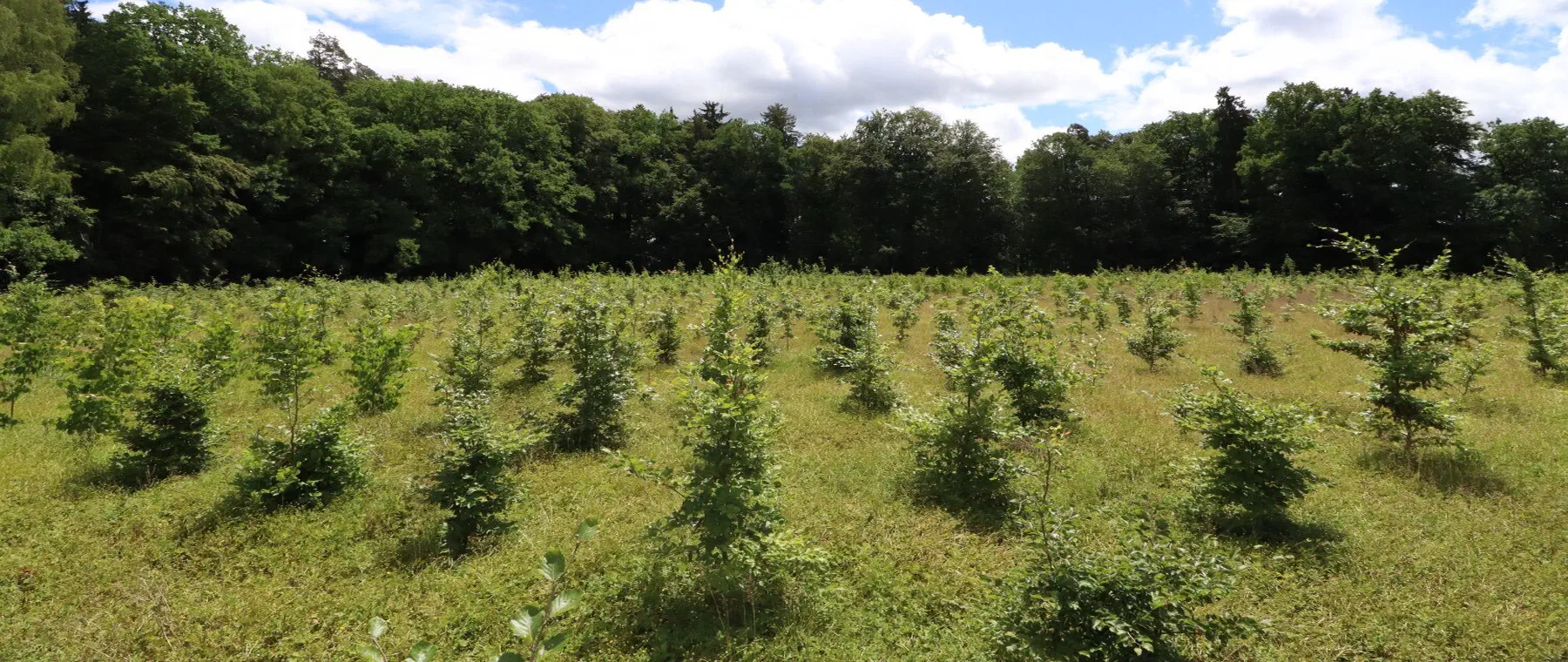
Conversion of structurally poor pine forests to site-appropriate deciduous mixed forests with oak, beech and hornbeam on the outwash plains of Fläming and Zauche increases stability and species diversity of forests.
Species protection CEF and FCS
Advance measures under section 44 BNatSchG, for example sand lizard habitats on sandy sites, bat roosts in forests and avenues, and new spawning habitats for strictly protected amphibians.
Dry grassland and heaths
Management and new development of sand dry grassland, heaths and inland dunes on nutrient-poor sites of the Zauche create habitat for thermophile insects and reptiles.
Protected species in the Between Hohem Fläming, Zauche and Havelland
Great bustard and farmland birds
The open arable landscapes of Fläming count among the winter habitats of the great bustard. Extensification, flower strips and larch windows simultaneously promote skylark and further farmland birds and are frequently relevant to the impact mitigation regulation.
About this species ›Crane and black stork
In the quiet, old forest stands and wetlands of the lowlands, black stork and crane breed. The retention of large, undisturbed forest complexes and near-natural waters is decisive for these species.
About this species ›Red-bellied toad, marsh frog and great crested newt
The groundwater-near wetlands of the Nuthe-Nieplitz lowland are home to strictly protected amphibians. New and rewetted spawning habitats are effective measures for red-bellied toad, marsh frog and great crested newt.
About this species ›Kingfisher and otter
On near-natural streams such as Plane and Nuthe, kingfisher breeds in steep banks, otter uses the networked waters as habitat. Waterway restoration and structured banks improve conditions for both species.
About this species ›Bats in forests and avenues
Forests, avenues and waters of the district provide roosts and hunting territories for several strictly protected bat species. The retention of cavity trees and additional roost provision are central species protection measures.
About this species ›Sand lizard on sandy sites
The sandy, sun-exposed sites of Zauche and Fläming are typical habitats of the sand lizard. Building and infrastructure projects regularly require CEF measures with replacement habitats.
About this species ›Which projects trigger a compensation obligation?
Settlement growth in the Berlin metropolitan area
Municipalities such as Kleinmachnow, Teltow, Stahnsdorf, Michendorf and Werder (Havel) are experiencing ongoing growth. New residential and commercial areas trigger compensation and replacement obligations. Owners of suitable sites can benefit as providers of compensation measures.
Transport and infrastructure
The expansion of roads and rail, bypasses and projects in the vicinity of motorways A9 and A10 (Berlin Ring) cause impacts on nature and landscape that must be compensated according to the HVE.
Renewable energy
Wind energy in Fläming and photovoltaic free-field systems on sandy sites of Zauche require statutory nature conservation compensation and, where species are affected, measures under section 44 BNatSchG.
Raw material extraction and commerce
Sand and gravel extraction in Zauche and logistics and technology sites in the surroundings involve land consumption. Restoration of exploited extraction sites and accompanying compensation measures are typical tasks here.
From enquiry to monitoring
Contact and enquiry
Tell us your compensation requirement and the natural region. We check availability.
Offer and advice
A transparent offer covering measure types, scope and availability.
Coordination with authorities
Full coordination with the lower nature conservation authority. We handle everything.
Long-term monitoring
Permanent securing of the land, management and documentation across the contract term.
Eco-points in adjoining districts
All about eco-points
in the district of Potsdam-Mittelmark
Request eco-points in the district of Potsdam-Mittelmark
We will promptly prepare a transparent offer with matching eco-points held in stock in the district of Potsdam-Mittelmark.