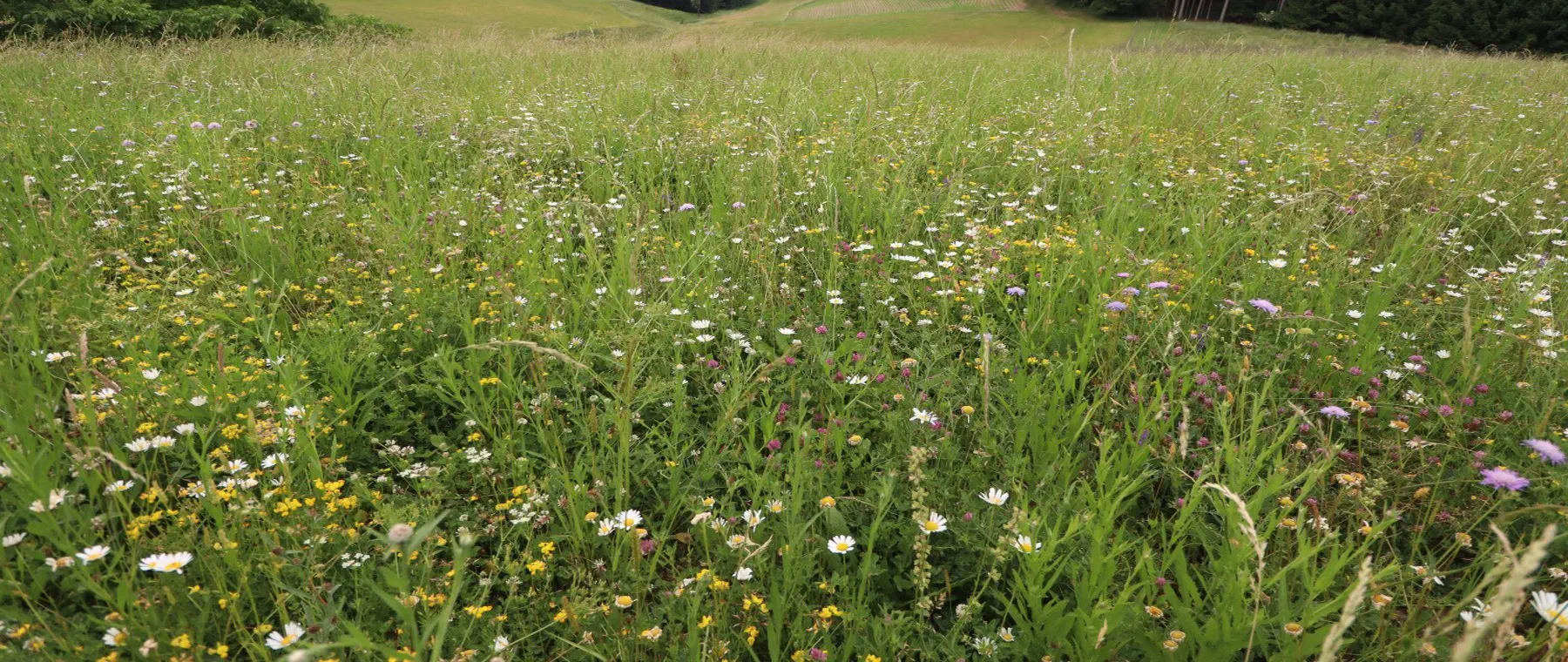
Eco-points and compensation areas
District of Oberhavel
Recognised eco-account and compensation areas for your compensation requirements. greeNature solutions is your full-service partner for nature conservation compensation according to the impact mitigation regulation (sections 13 to 15 of the Federal Nature Conservation Act (BNatSchG)) in Oberhavel district, between Berlin and the Mecklenburg Lake Plateau.
The District of Oberhavel at a glance
Oberhavel district lies in northern Brandenburg and extends from Berlin's northern city boundary to the Mecklenburg Lake Plateau. The district seat is Oranienburg. Around 218,000 people live on approximately 1,808 km² in 19 municipalities, nine of which are towns. The name-giver is the Upper Havel, which runs through the district from north to south.
Geographically, Oberhavel belongs predominantly to the BfN major unit D05 (Mecklenburg-Brandenburg plains and hills plus luchland) with the Gransee plateau, Ruppin and North Brandenburg forest and lake region, and the Rhin luch. Southern and eastern margins belong to the major unit D12 (Central Brandenburg plains and lowlands plus East Brandenburg heathland and lake region). Glacial outwash plains, ground and end moraines, extensive pine plantations and lowland moors in the luches are characteristic.
More than half of the district is under landscape or nature protection. In the north lies the Stechlin-Ruppiner Land nature park with the clear Great Stechlin Lake, in the south-east the Barnim nature park extends into the district. Important Natura 2000 areas are the FFH and bird protection area Stechlin, the EU bird protection area Upper Havel lowland, and the FFH areas of Havel and luch landscapes.
Economically, Oberhavel links industrial cores (rail vehicle manufacturing in Hennigsdorf, adhesive and film products and pharmaceuticals in Oranienburg) with strong settlement pressure in Berlin's hinterland and agriculturally and forestry-shaped land in the north. Residential development, commerce, traffic and energy projects regularly trigger impacts for which compensation must be provided according to the impact mitigation regulation (sections 13 to 15 of the Federal Nature Conservation Act (BNatSchG)) based on the guidelines for implementation of the impact mitigation regulation (HVE).
🗺️ Associated natural regions
Go to natural region D04 ›
📍 Selected municipalities
🌿 Ecological features
- Stechlin-Ruppiner Land nature park in the north with the clear Great Stechlin Lake
- Barnim nature park (partial) in the south-east around Liebenwalde
- FFH and EU bird protection area Stechlin, around 8,655 hectares of forest, lake and moor complex
- EU bird protection area Upper Havel lowland, crane and osprey habitat
- FFH area Seilershofer Buchheide, naturally dynamic beech forest in the north (around 971 hectares)
- Rhin and Havel luch with extensive lowland moors
- Restored Zehdenick clay pits, wetland for amphibians and water birds
✅ greeNature on the ground
greeNature solutions operates across Germany for nature conservation compensation and is familiar with Brandenburg's impact mitigation regulation according to sections 13 to 15 of the Federal Nature Conservation Act (BNatSchG) and the guidelines for implementation of the impact mitigation regulation (HVE). We secure and develop eco-account and compensation areas in the luches, forests and Havel lowlands of Oberhavel, coordinate the verbal-argumentative assessment with the lower nature conservation authority, and support project developers from requirements analysis through implementation to permanent management and monitoring.
Typical measures in the district of Oberhavel
Lowland moor re-wetting
Water-table elevation and removal of drainage ditches in drained lowland moors in Rhin luch, Havelland luch and Havel lowlands. Such measures are recognised as high-value enhancement in verbal-argumentative assessment, secure moor-typical habitats and sequester carbon.
Forest conversion
Conversion of structurally poor pine plantations on sandy outwash and end moraines into site-appropriate deciduous-mixed and beech forests. Enhancement as habitat for black woodpeckers, bats and black storks.
Watercourse and riparian restoration
Restoration of Havel sections, oxbow lakes and waterways, removal of bank reinforcement and basal weirs, development of riparian forest and reed beds, breeding and spawning habitat for fish, kingfishers and beavers.
Grassland extensification
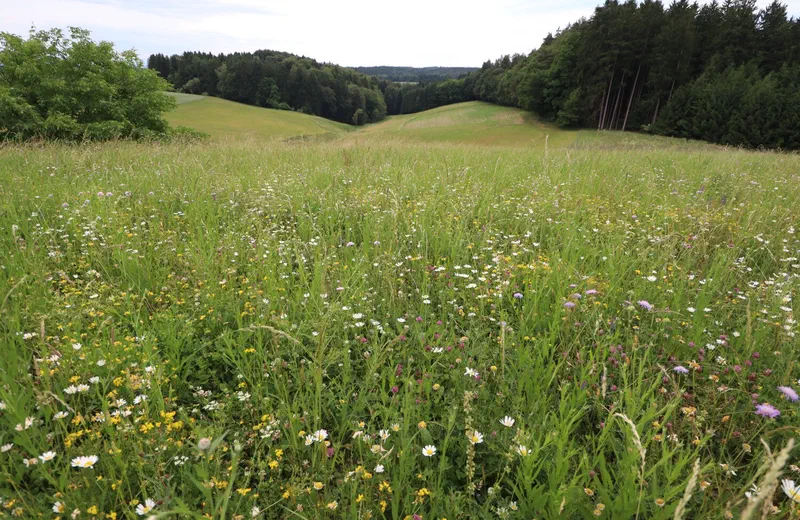
Conversion of intensively used arable and grassland in the luches into species-rich wet grassland, habitat for meadow-breeding birds such as northern lapwings and snipes, and feeding areas for resting cranes.
Species protection CEF/FCS
Advanced compensation measures under § 44 BNatSchG, replacement breeding ponds for great crested newts and red-bellied toads, habitat structures for sand lizards on railway embankments and sandy areas, roosts for bats, coordinated with affected species.
Sand dry grasslands & hedgerows
Development and management of sand dry grasslands and heathland on nutrient-poor sandy soils, plus establishment of hedgerows and field copses on the Gransee plateau as habitat network for skylarks, red-backed shrikes and wild bees.
Protected species in the Upper Havel between Berlin and Mecklenburg Lake Plateau
Cranes & wading birds
The Upper Havel lowland and restored Zehdenick clay pits are significant breeding and resting areas. Cranes gather in thousands in autumn, ospreys breed on masts and nest platforms along Havel and lakes.
Black stork & red kite
The extensive forests around Stechlin and the Seilershofer Buchheide provide black storks with undisturbed breeding sites, red kites and white-tailed eagles hunt over the open luches. Wind and infrastructure projects require FCS measures here.
About this species ›Bats
Old beech forests, cellar vaults and tree holes house greater mouse-eared bats, common noctules and Bechstein's bats. When buildings are demolished or forests worked, roost losses must be offset by CEF bat boxes and preservation of habitat trees.
About this species ›Kingfisher & beaver
On the Havel, Havel canals and clay pits, kingfishers, beavers and otters are regularly present. Cliff faces, naturally dynamic banks and oxbow lakes are typical enhancement targets.
About this species ›Great crested newt & amphibians
The water-filled Zehdenick clay pits and numerous small water bodies in the moraine landscape are breeding habitats for great crested newts, red-bellied toads, marsh frogs and tree frogs, frequent target species in impacts in Berlin's hinterland.
About this species ›Sand lizard & skylark
Sand dry grasslands, railway embankments and field margins of the Gransee plateau are habitat for sand lizards, skylarks and red-backed shrikes. In construction and routing projects, sand lizard relocation is among the most frequent CEF measures.
About this species ›Which projects trigger a compensation obligation?
Industry & commerce
Sites such as rail vehicle manufacturing (Alstom) in Hennigsdorf and film, adhesive and pharmaceutical companies in Oranienburg and Velten expand production and logistics land. Business and commercial area developments trigger compensation and replacement obligations.
Settlement pressure, Berlin's hinterland
In the southern commuter belt (Hohen Neuendorf, Glienicke/Nordbahn, Mühlenbecker Land, Birkenwerder), residential and commercial areas are being built. Land sealing and tree loss require compensation under the impact mitigation regulation, often needing advanced eco-account land.
Traffic & infrastructure
The Berlin ring (A10), the A24 and A111, bypass routes and expansion of regional and urban railway lines (including towards Oranienburg and Velten) lead to impacts on nature and landscape with corresponding compensation requirements.
Energy & raw materials
Wind energy on the Gransee plateau and in Löwenberger Land, ground-mounted solar photovoltaic installations and clay and gravel extraction near Zehdenick generate compensation and species protection requirements, especially for raptors, field-nesting birds and reptiles.
From enquiry to monitoring
Contact and enquiry
Tell us your compensation requirement and the natural region. We check availability.
Offer and advice
A transparent offer covering measure types, scope and availability.
Coordination with authorities
Full coordination with the lower nature conservation authority. We handle everything.
Long-term monitoring
Permanent securing of the land, management and documentation across the contract term.
Eco-points in adjoining districts
All about eco-points
in the district of Oberhavel
Request eco-points in the district of Oberhavel
We will promptly prepare a transparent offer with matching eco-points held in stock in the district of Oberhavel.