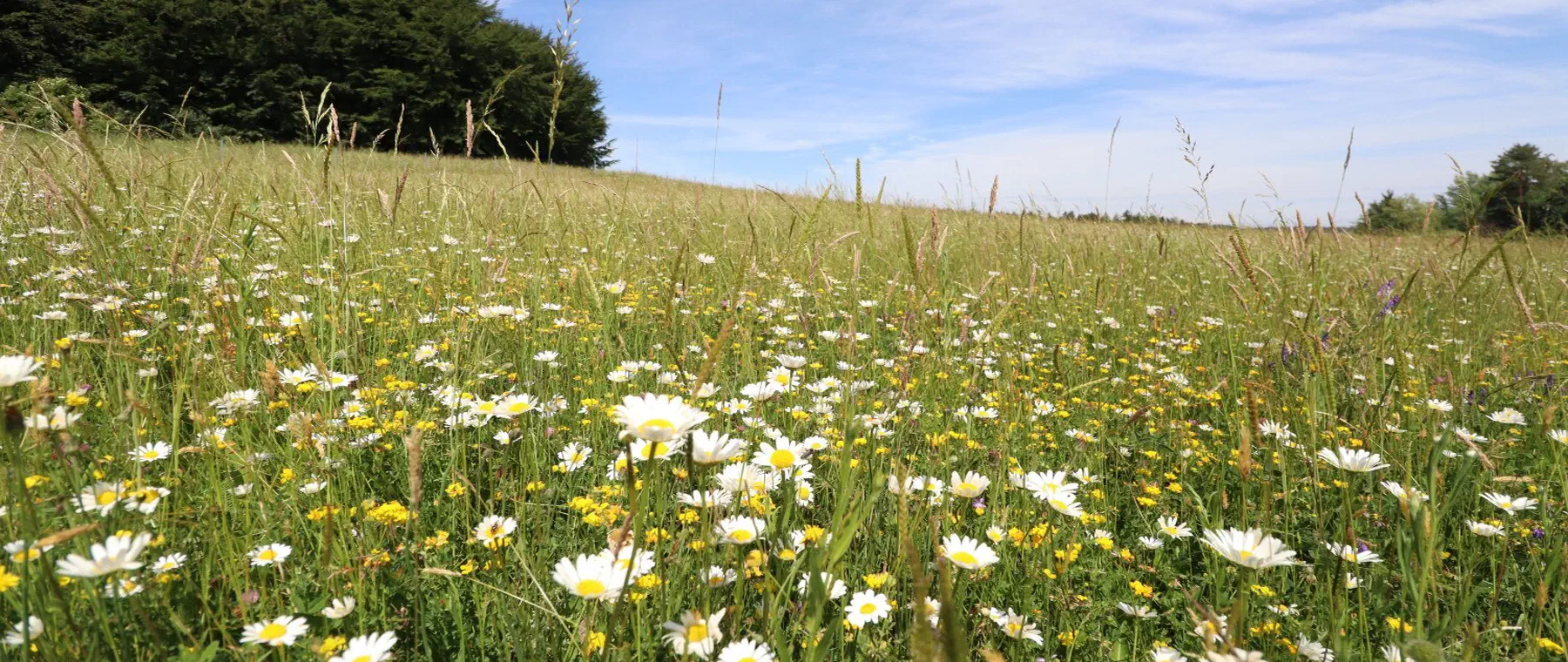
Eco-points and compensation areas
District of Barnim
Compensation areas and officially authorised eco-account measures for your compensation obligations in Barnim district. greeNature solutions, your full-service partner active across Germany for statutory nature conservation compensation under Brandenburg's impact mitigation regulation (HVE).
The District of Barnim at a glance
The Barnim district lies in the north-east of Brandenburg directly on Berlin's northern city boundary. The district seat and administrative centre is Eberswalde. Around 195,000 people live on approximately 1,480 km², making the district one of the growing regions in Berlin's hinterland.
The landscape is shaped by the last ice age (Weichsel glaciation). In the south extends the Barnim plateau, a gently undulating ground moraine plain with fertile arable soils. To the north follows the broad Eberswalde glacial valley with the Finow valley and Finow canal, and the extensive forests of the Schorfheide.
Large parts of the district form part of the UNESCO Schorfheide-Chorin biosphere reserve with the Grumsin World Natural Heritage beech forest. In addition are the Barnim nature park, numerous Natura 2000 areas (FFH and bird protection sites), and in the north-east parts of the Oder valley. The Barnim is one of Germany's most forest and water-rich districts.
Economically, the Barnim is shaped by growth in Berlin's hinterland. Residential and commercial development in Bernau, Panketal, Ahrensfelde and Wandlitz, expansion of transport corridors, and development of wind and ground-mounted solar photovoltaic installations regularly generate compensation requirements. Assessment is verbal-argumentative according to the guidelines for implementation of the impact mitigation regulation (HVE) based on sections 13 to 15 of the Federal Nature Conservation Act (BNatSchG).
🗺️ Associated natural regions
Go to natural region D04 ›
Go to natural region D03 ›
📍 Selected municipalities
🌿 Ecological features
- UNESCO Schorfheide-Chorin biosphere reserve (partially in the district)
- Grumsin World Natural Heritage beech forest (UNESCO)
- Barnim nature park, jointly with Berlin and Oberhavel
- Eberswalde glacial valley with Finow valley and historic Finow canal
- Oder valley fringes in the north-east (Niederoderbruch)
- Numerous lakes, moors and dead-ice kettles from the Weichsel ice age
- Fertile ground moraine arable soils of the Barnim plateau
✅ greeNature on the ground
greeNature solutions operates across Germany and manages compensation projects throughout Brandenburg. We understand Brandenburg's impact mitigation regulation, the verbal-argumentative assessment according to the HVE, and work with the lower nature conservation authority of Barnim district and the agencies within the Schorfheide-Chorin biosphere reserve.
Typical measures in the district of Barnim
Peatland and wet grassland restoration
Re-wetting of drained lowland and kettle moors in the Eberswalde glacial valley and Schorfheide, restoration of wet and damp grasslands as habitat for meadow-breeding birds, amphibians and dragonflies.
Forest conversion to natural deciduous woodlands
Conversion of structurally poor pine plantations into site-appropriate beech and oak mixed forests, enrichment with deadwood and old-growth timber. Enhancement of the extensive forest areas of the Barnim with their beech forests of European rank.
Running water restoration
Removal of culverts and bank reinforcements on the Finow, Schwärze, Nonnenfließ and Ragöser Fließ, establishment of buffer strips and riparian woodland fringes for kingfishers, otters and beavers.
Grassland extensification
Conversion of intensively used areas into species-rich extensively managed grassland on the Barnim plateau and in the Oder valley, adapted mowing and grazing regimes for northern lapwings and other meadow-breeding birds.
Species protection CEF/FCS
Advanced compensation measures under § 44 BNatSchG: replacement and winter roosts for bats, habitat areas and stone piles for sand lizards, newly established breeding ponds for red-bellied toads and great crested newts.
Hedgerows & habitat network
Establishment of hedgerows, field copses and field margin strips in the denuded agricultural landscape of the Barnim plateau, stepping-stone habitats for skylarks, grey partridges and wild bees between forest areas.
Protected species in the Barnim between Berlin's suburbs and Schorfheide
Black stork & crane
The quiet forests and moors of Schorfheide count among Brandenburg's most important black stork breeding areas. Cranes rest and breed in the wetlands. Both species are sensitive to disturbance, which requires special examination in planning procedures.
About this species ›White-tailed & eastern imperial eagle
White-tailed and eastern imperial eagles breed in the lake-rich landscapes of the district. As strictly protected large birds, they are regularly subject to species protection examination under § 44 BNatSchG in wind energy and infrastructure projects.
Bats of the beech forests
Beech forests rich in old and deadwood provide roosts for Bechstein's bats, barbastelles and other species. Typical CEF measures are the preservation of hollow trees and replacement and winter roosts.
About this species ›Red-bellied toad & great crested newt
Numerous small water bodies and dead-ice kettles in the ground moraine support red-bellied toads, marsh frogs and great crested newts. Newly established, sunny breeding ponds are proven compensation measures.
About this species ›Sand lizard
Railway embankments, sand dry grasslands and forest edges are habitat for the sand lizard, a frequent target species in construction and infrastructure projects. It usually requires advanced relocation and establishment of structurally diverse replacement habitats.
About this species ›Northern lapwing & meadow-breeding birds
Wet grasslands of the Oder valley and glacial valleys are home to northern lapwings and other meadow birds. Extensive grassland management and re-wetting counter population decline.
About this species ›Which projects trigger a compensation obligation?
Settlement and commercial development (Berlin's hinterland)
Bernau, Panketal, Ahrensfelde and Wandlitz are among the fastest-growing municipalities in Berlin's hinterland. New residential and commercial areas regularly trigger compensation and replacement obligations under the impact mitigation regulation.
Traffic & infrastructure
Expansion of the A11 motorway, modernisation of the Berlin to Stettin railway line, bypass routes and cycle path projects generate compensation requirements along linear interventions.
Energy & renewables
Wind energy installations on the Barnim plateau, ground-mounted solar photovoltaic installations on conversion and arable sites, and network expansion require nature conservation compensation and species protection CEF and FCS measures.
Commerce & logistics
Commercial and logistics settlements in the vicinity of Eberswalde and along transport corridors towards Berlin lead to land sealing and thus trigger compensation obligations, for which eco-account land can be provided.
From enquiry to monitoring
Contact and enquiry
Tell us your compensation requirement and the natural region. We check availability.
Offer and advice
A transparent offer covering measure types, scope and availability.
Coordination with authorities
Full coordination with the lower nature conservation authority. We handle everything.
Long-term monitoring
Permanent securing of the land, management and documentation across the contract term.
Eco-points in adjoining districts
All about eco-points
in the district of Barnim
Request eco-points in the district of Barnim
We will promptly prepare a transparent offer with matching eco-points held in stock in the district of Barnim.