Eco-points and compensation areas
District of Unterallgäu
Eco-points in Unterallgäu district secure your project. greeNature accompanies you as a full-service partner from the impact assessment through to the recognised compensation area, BayKompV-compliant and with measures in the natural regions Danau-Iller-Lech Plain and Pre-Alpine Hilly and Moorland.
The District of Unterallgäu at a glance
Unterallgäu district lies in the south of the Swabian administrative region between the river valleys of the Iller in the west and Wertach in the east. The independent city of Memmingen is surrounded by the district area, the district seat is Mindelheim. With around 147,400 residents on just over 1,229 square kilometres, Unterallgäu is one of the rural, economically strong districts in the Alpine foothills.
The landscape opens from north to south from wide plains to rolling hilly land. Distinctive are the glacially shaped gravel plains of the Danau-Iller-Lech Plain (BfN natural region D64), cut through by the valleys of the Iller, Günz, Mindel and Wertach. Towards the south, the district extends into the Pre-Alpine Hilly and Moorland (D66), with forested terminal moraines and embedded lowland moors. The geological substrate of Quaternary cover gravels above the Upper Freshwater Molasse is partly covered by loess.
Ecologically, the calcareous spring moors and valley moors of the Iller-Lech Plain are of supra-regional importance. The Benninger Ried FFH area preserves one of the last intact calcareous spring moors of the northern Alpine foothills, plus nature reserves such as Hundsmoor, Pfaffenhauser Moos and Kettershauser Ried as well as the large-scale SPA area in the Mindel valley. These wetland habitats, river floodplains and structured cultural landscapes form a dense network of Natura 2000 sites and protected biotopes.
Economically, Unterallgäu is one of Bavaria's most livestock-intensive districts with pronounced dairy farming, supplemented by efficient industrial enterprises in mechanical and plant engineering and food processing. Commercial and industrial development, expansion of transport routes along the A96 and A7, municipal building areas as well as ground-mounted photovoltaic systems regularly trigger impacts that must be compensated according to BayKompV. This creates a continuous need for legally secure compensation areas for project developers.
🗺️ Associated natural regions
Go to natural region D64 ›
📍 Selected municipalities
🌿 Ecological features
- Benninger Ried FFH area with the world's only occurrence of purple fen-sedge, one of the last intact calcareous spring moors of the northern Alpine foothills
- Four nature reserves (Benninger Ried, Hundsmoor, Pfaffenhauser Moos and Kettershauser Ried) with valuable lowland and spring moor habitats
- SPA bird protection area Mindel valley of around 2,655 hectares along the Mindel as habitat for meadow-breeding birds and floodplain species
- Four distinctive river valleys (Iller, Günz, Mindel and Wertach), separated by forested glacial moraine ridges
- Transition from the Iller-Lech gravel plains in the north to the Pre-Alpine hilly land in the south, creating great variety of habitats
- One of Bavaria's most livestock-intensive and dairy-farming intensive districts with correspondingly intensively used cultural landscape
✅ greeNature on the ground
greeNature is familiar with local natural regions, protected area layers and requirements of the Lower Nature Conservation Authority at Mindelheim District Office in Bavarian Swabia and specifically in Unterallgäu. We develop compensation measures suited to the Iller-Lech region, coordinate them with authorities and landowners and, as a full-service partner, handle planning, implementation, securitisation and monitoring through to recognition in the eco-area register.
Typical measures in the district of Unterallgäu
Valley moor restoration
Rewetting and extensification of drained lowland and spring moors in the Günz and Mindel valleys to regenerate typical wetland habitats of the Iller-Lech Plain and preserve carbon stores.
Water body and floodplain development
Structural improvement and riverbank restoration on the Iller, Günz, Mindel and Wertach, such as through creation of flood channels, gravel banks and woodland margins as habitat for kingfisher and floodplain species.
Extensively managed grassland and meadow-breeding bird protection
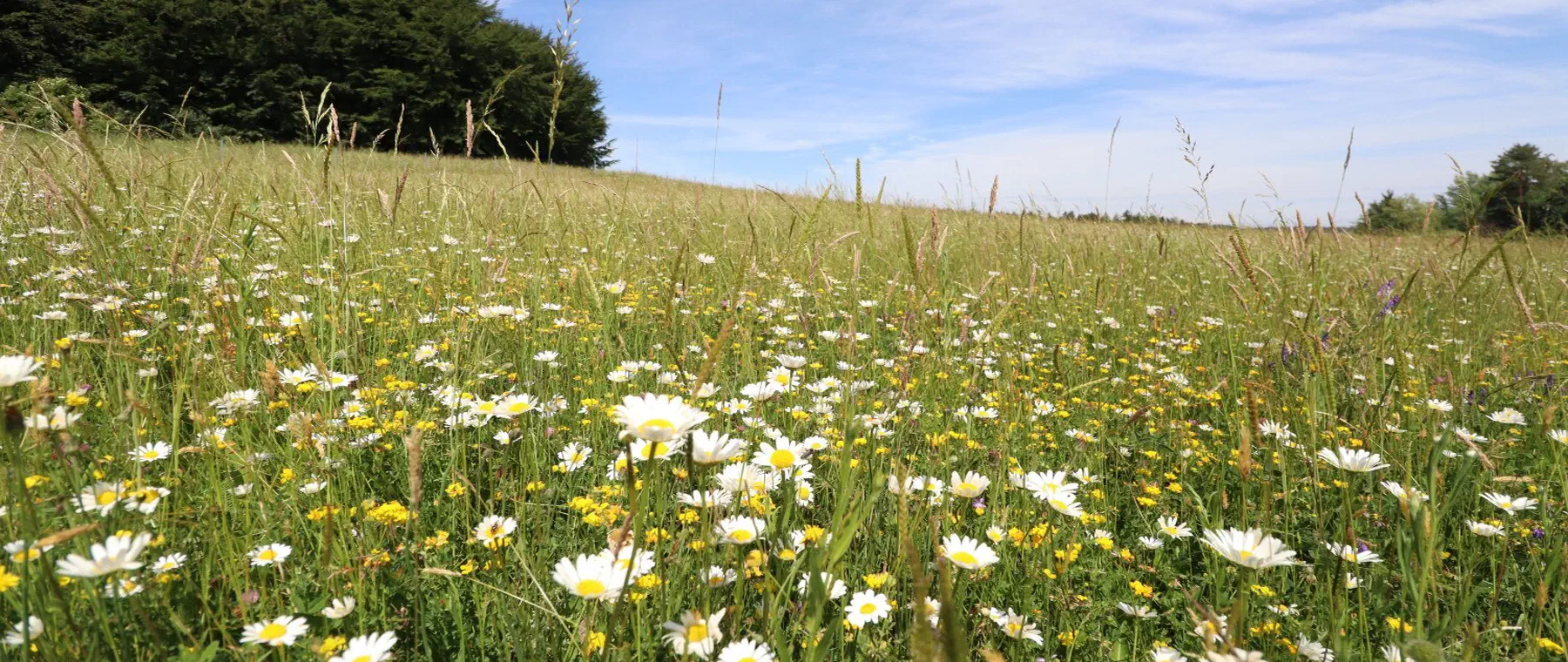
Conversion of intensively used areas into species-rich extensively managed grassland with adapted mowing to support meadow-breeding birds such as northern lapwing in the vicinity of the Mindel valley.
Upgrading forests and forest margins
Conversion of structurally poor stands on moraine ridges towards site-appropriate, multi-layered broadleaf mixed forests with tiered forest margins for hazel dormouse and bats.
Amphibians and small water bodies
Creation and networking of sunny spawning waters and pools in moor and valley margin locations as stepping-stone habitats, including for the great crested newt.
Hedgerows and habitat network
Creation of field hedgerows, margins and field strips in the denuded agricultural landscape to create structural diversity and networking between protected areas.
Protected species in the Iller-Lech region in Bavarian Swabia
Northern lapwing
Ground-nesting bird of damp meadows and lowland moors, including in the Mindel valley SPA area. Benefits from extensively managed grassland and rewetted areas.
About this species ›Skylark
Characteristic species of open arable landscape on the Iller-Lech plains. Declining due to management intensification, supported by skylark patches and extensive field margins.
About this species ›Kingfisher
Breeding bird on near-natural sections of the Iller, Günz, Mindel and Wertach. Requires structurally rich steep banks and clear, fish-rich waters.
About this species ›Great crested newt
Amphibian species protected under the FFH Directive, of moor and valley margin areas. Dependent on well-sunned, fish-free spawning waters with rich marginal vegetation.
About this species ›Bats
Several strictly protected species use forests, water floodplains and building roosts in the district area as hunting territory and nursery roosts. Relevant for demolition and tree removal work.
About this species ›Hazel dormouse
Strictly protected sleeper species of structure and berry-rich forest margins, hedgerows and shrubland on moraine ridges. Sensitive to fragmentation of woodland structures.
About this species ›Which projects trigger a compensation obligation?
Commercial and industrial areas
Expansion and new designation of commercial land for mechanical engineering, plant engineering and food industry create land sealing and thus compensation requirements according to BayKompV.
Transport and infrastructure
Expansion and upgrading of roads along the A96 and A7 corridors and municipal development lead to impacts on soils, woodland and water bodies.
Residential and settlement development
New building areas in growing municipalities around Mindelheim, Bad Wörishofen and Memmingerberg trigger compensation obligations through land-use planning.
Ground-mounted photovoltaic systems
Solar parks on arable and grassland require nature conservation assessment and compensation for impacts on landscape and soil.
From enquiry to monitoring
Contact and enquiry
Tell us your compensation requirement and the natural region. We check availability.
Offer and advice
A transparent offer covering measure types, scope and availability.
Coordination with authorities
Full coordination with the lower nature conservation authority. We handle everything.
Long-term monitoring
Permanent securing of the land, management and documentation across the contract term.
Eco-points in adjoining districts
All about eco-points
in the district of Unterallgäu
Request eco-points in the district of Unterallgäu
We will promptly prepare a transparent offer with matching eco-points held in stock in the district of Unterallgäu.