Eco-points and compensation areas
District of Traunstein
Eco-points in the district of Traunstein are available via recognised eco-accounts. greeNature accompanies project developers in the Chiemgau as a full-service partner from impact assessment to permanent compensation securing according to BayKompV.
The District of Traunstein at a glance
The district of Traunstein is located in the south-east of Upper Bavaria between the Chiemsee to the west and the Salzach at the Austrian border to the east. At approximately 1,534 km² and about 175,000 inhabitants in 35 municipalities, it is one of Bavaria's larger districts. The district seat is the large district town of Traunstein. The area is known as Chiemgau and borders the Alps to the south and Austrian state territory.
The district area extends from the Chiemgauer Alps to the south with peaks such as Sonntagshorn (1,961 m) via the ice-age pre-Alpine hilly and moorland to the Tertiary hilly landscape to the north. The landscape was significantly shaped by the Würm ice-age glaciers, which left moraine ridges, dead-ice holes and extensive moorland. The Chiemsee as Bavaria's largest lake, smaller lakes such as the Waginger and Tachinger See, and the rivers Alz, Traun, Tiroler Achen and Salzach are defining.
In terms of nature conservation, the district is one of Bavaria's most species-rich regions. Over two dozen Natura 2000 areas, including 18 FFH areas and several bird protection areas, secure moorland, lake shores, mountain forests and floodplains. Significant habitats are the moorlands south of the Chiemsee, the moorland area from Eggstätt-Hemhof to Seeon, the Eastern Chiemgauer Alps and the Geigelstein. In addition to Europe-wide protected bat species, there are, amongst others, northern lapwing, kingfisher and many moorland and meadow-dependent species.
Economically, small and medium-sized industry, the Trostberg chemical park, precision engineering in Traunreut, as well as tourism and agriculture shape the district. Commercial settlements, residential construction, the expansion of transport routes and freestanding photovoltaics regularly trigger impacts on nature and landscape that must be compensated according to the Bavarian Compensation Regulation (BayKompV). greeNature provides legally secure compensation areas and eco-points for this and takes on the nature conservation implementation.
🗺️ Associated natural regions
Go to natural region D66 ›
Go to natural region D67 ›
Go to natural region D65 ›
Go to natural region D68 ›
📍 Selected municipalities
🌿 Ecological features
- Chiemsee as Bavaria's largest lake with extensive silting and moorland zones on its shores
- Extensive lowland and raised moorlands such as the Kendlmühlfilzen and the moorlands south of the Chiemsee
- Chiemgauer Alps with Geigelstein and the Eastern Chiemgauer Alps nature reserve
- State-level significant bat occurrences (hairy dragonfly bat, greater mouse-eared bat, Tenebrae bat) with dedicated FFH areas
- Waginger and Tachinger See as Bavaria's warmest lake landscape with high habitat diversity
- River and floodplain landscapes of Alz, Traun, Tiroler Achen and Salzach as a supraregional habitat network
✅ greeNature on the ground
greeNature is active throughout Chiemgau and knows the natural region peculiarities of Traunstein district, from the moorlands around the Chiemsee to the mountain forests of the Chiemgauer Alps. We coordinate compensation and replacement measures with the Lower Nature Conservation Authority (Untere Naturschutzbehörde) at the District Office Traunstein and secure eco-points that match the impact area and affected natural region.
Typical measures in the district of Traunstein
Moorland restoration and rewetting
Restoration of drained lowland and raised moorlands by raising water levels. Such measures bind carbon and create habitat for moorland-typical species, as they occur in the wetland areas around the Chiemsee.
Grassland extensification
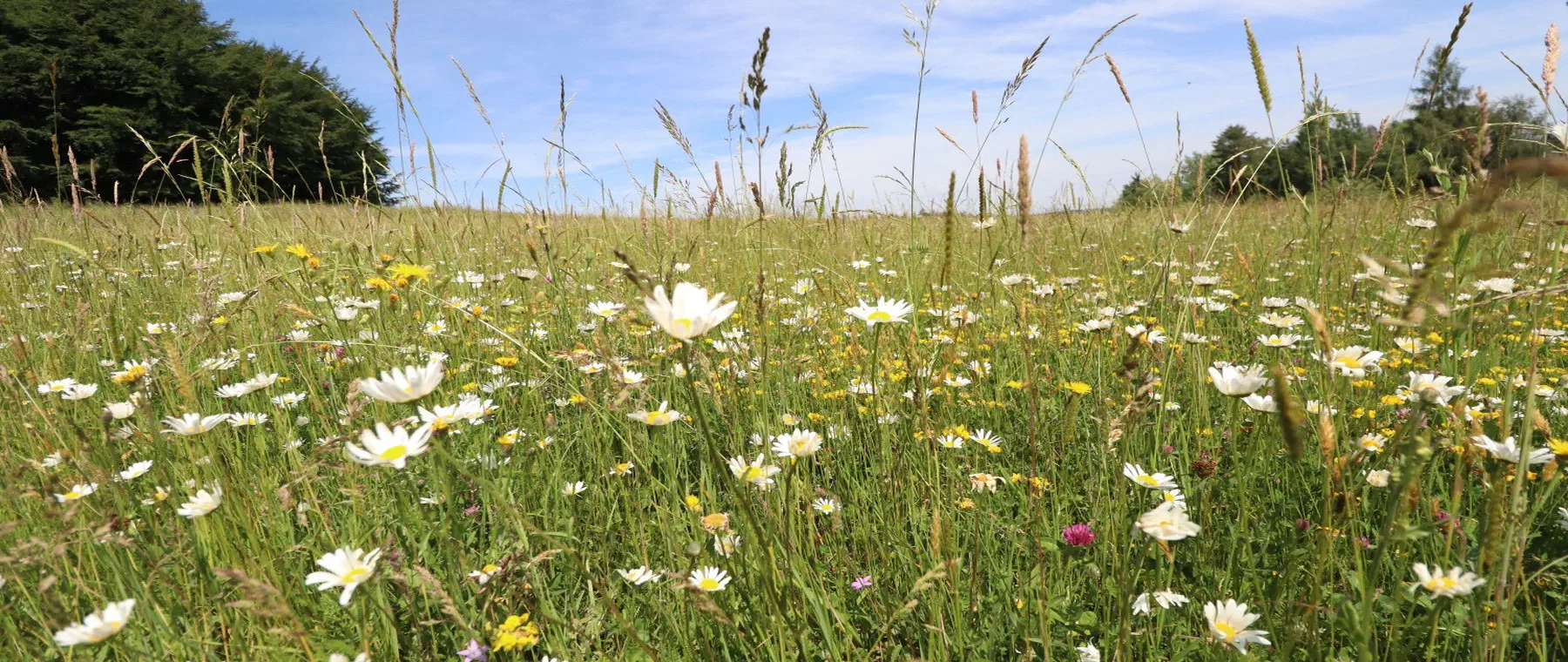
Conversion of intensively used areas into species-rich meadow plots and wet meadows with adapted mowing. In Chiemgau, extensive meadows are essential to securing meadow-breeding birds and insect diversity.
Watercourse and floodplain development
Restoration of watercourses, creation of bank margin strips and reactivation of floodplains on Alz, Traun and Tiroler Achen. Near-natural watercourses improve habitat network and flood retention.
Securing bat roosts (CEF)
Preservation and upgrading of breeding colonies and winter roosts as advance compensation measures under § 44 BNatSchG. The district is home to state-level significant colonies of hairy dragonfly bat, greater mouse-eared bat and Tenebrae bat.
Hedgerows, traditional orchards and field woodlands
New establishment and management of hedgerows, field woodlands and traditional orchard stands in the cultural landscape. These structures network habitats and provide cover and food for birds, reptiles and small mammals.
Near-natural forest conversion
Development of stable, site-appropriate mixed forests in the forested slope and mountain areas of the Chiemgauer Alps. Conversion increases structural and species diversity and strengthens the protective function of mountain forests.
Protected species in the Chiemgau
Bats
The district is one of Bavaria's most important bat regions. There are dedicated FFH areas for hairy dragonfly bat, greater mouse-eared bat and Tenebrae bat. Roosts are strictly protected and must be secured early through CEF measures in the event of impacts.
About this species ›Northern lapwing
The northern lapwing breeds in open wet meadows and moorland margins, for example in the moorlands south of the Chiemsee. As a ground-nesting bird, it is sensitive to changes in use, so meadow extensification is a suitable compensation measure.
About this species ›Kingfisher
The kingfisher finds steep banks on near-natural sections of Alz, Traun and Salzach for its breeding holes and clear waters as hunting ground. Bank restoration and preservation of erosion banks directly support the species.
About this species ›Sand lizard
The sand lizard inhabits slopes, railway embankments and sunlit margins. It is regularly affected by construction projects and requires species protection measures such as the creation of stone accumulations and habitat structures.
About this species ›Great crested newt
The great crested newt lives in fish-free small water bodies and silting zones of the lake and moorland-rich landscape. It is a species of Annex II and IV of the FFH Directive, for which new spawning waters can be created.
About this species ›Skylark
The skylark breeds on the ground in the open arable landscapes of the northern district. Flower strips and fallow strips as well as extensively managed field structures are suitable as compensation.
About this species ›Which projects trigger a compensation obligation?
Commercial and industrial enterprises
Settlements and extensions in the vicinity of the Trostberg chemical park as well as industrial locations in Traunreut and Traunstein take up land and trigger compensation obligations according to BayKompV.
Traffic infrastructure
Expansion and conversion of federal roads, bypasses and railway installations in the district area intervene in nature and landscape and require compensation via eco-points or compensation areas.
Residential and settlement construction
The designation of new residential and mixed areas in the district's growing municipalities regularly leads to impacts that must be compensated as part of land use planning.
Freestanding photovoltaics and network expansion
Solar parks and power grid expansion require large areas. Nature conservation assessment and compensation according to BayKompV is also required here.
From enquiry to monitoring
Contact and enquiry
Tell us your compensation requirement and the natural region. We check availability.
Offer and advice
A transparent offer covering measure types, scope and availability.
Coordination with authorities
Full coordination with the lower nature conservation authority. We handle everything.
Long-term monitoring
Permanent securing of the land, management and documentation across the contract term.
Eco-points in adjoining districts
All about eco-points
in the district of Traunstein
Request eco-points in the district of Traunstein
We will promptly prepare a transparent offer with matching eco-points held in stock in the district of Traunstein.