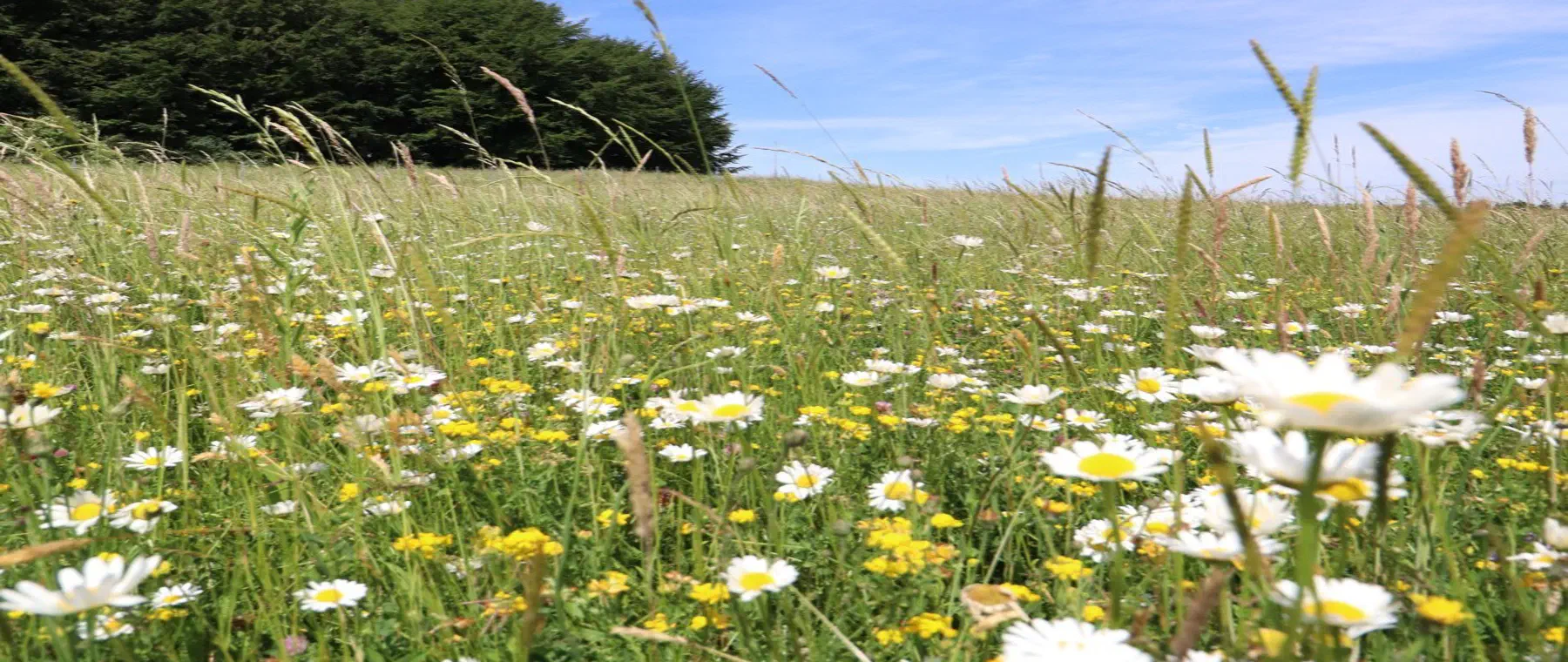
Eco-points and compensation areas
District of Roth
Eco-points immediately available from officially recognised eco-accounts in the district of Roth. greeNature is your full-service partner for BayKompV-compliant compensation between the Mittelfränkisches Becken and the Fränkische Alb.
The District of Roth at a glance
The district of Roth forms the southern part of Mittelfranken and belongs to the Nuremberg metropolitan region. Around 128,000 people live across some 895 km² in 16 municipalities, the seat of administration is the district seat of Roth. The district encloses the independent city of Schwabach and borders the districts of Fürth, Nürnberger Land, Neumarkt in der Oberpfalz, Eichstätt, Weißenburg-Gunzenhausen and Ansbach. With the A6 and A9 motorways, the Main-Danube Canal and the Nuremberg to Munich high-speed rail line, the area is strongly shaped by supra-regional infrastructure.
In landscape terms, the district is divided in two. The north lies within the Mittelfränkisches Becken (natural region D59, Fränkisches Keuper-Liasland), with Keuper sandstones, extensive sandy areas, pine woodland and the broad valleys of the Rednitz, Schwäbische Rezat and Roth. The south rises to the Fränkische Alb (natural region D61), a limestone karst landscape of the White Jurassic with elevations of over 600 m. The Fränkisches Seenland, with the Rothsee and the district's share of the Großer Brombachsee, is also a defining feature of the landscape.
The sandy grassland and sandy habitats are ecologically valuable, connected through the supra-regional habitat network initiative Sandachse Franken and offering habitat for warmth-loving species such as the sand lizard. The wet meadows in the Rednitz valley are a refuge for meadow-breeding birds, and the calcareous grassland of the Alb is home to rare insects and plants. Several areas are secured as Natura 2000 sites, including the Rednitztal FFH site and parts of the Nürnberger Reichswald Special Protection Area.
The economy combines industry and commerce (including cable and packaging manufacturers) with dynamic settlement development in the Nuremberg conurbation. Housing, commercial land, the expansion of transport routes and ground-mounted photovoltaics regularly trigger impacts on nature and landscape. Under the BayKompV, this impact must be compensated as far as possible within the same natural region, which is why there is a steady demand for eligible eco-points and suitable compensation areas in the district of Roth.
🗺️ Associated natural regions
Go to natural region D59 ›
Go to natural region D61 ›
📍 Selected municipalities
🌿 Ecological features
- Fränkisches Seenland with the Rothsee and the district's share of the Großer Brombachsee as a recreational and water landscape
- Sandachse Franken: supra-regional habitat network for sandy grassland and sandy habitats, including habitat of the sand lizard
- Natural region divide between the Mittelfränkisches Becken in the north and the Fränkische Alb in the south with elevations above 600 m
- Rednitztal FFH site and the valley areas of the Schwäbische Rezat and Roth as protected watercourse and wetland habitats
- Share of the Nürnberger Reichswald Special Protection Area (SPA) with its extensive pine and mixed woodland
- The Main-Danube Canal crosses the district and connects the river systems of the Rhine and the Danube
- Traditional hop growing in the Spalter Land as a distinctive cultural landscape feature
✅ greeNature on the ground
In the district of Roth, greeNature develops and manages eco-account and compensation areas that suit the character of both natural regions, from the Mittelfränkisches Becken to the Fränkische Alb. We secure suitable land, plan the enhancement under the BayKompV, implement the measures and take on long-term management and monitoring. Because the BayKompV provides for a natural region assignment of compensation, we ensure that compensation takes effect as far as possible within the affected natural region, for example through sandy grassland, extensively managed grassland in the river valleys or calcareous grassland on the Alb. Where there is a species protection requirement under § 44 BNatSchG, we design advance CEF measures that continuously secure the ecological function for the species concerned. We coordinate the measures with the lower nature conservation authority at the Roth District Office and document them for official recognition.
Typical measures in the district of Roth
Sandy grassland and sandy habitats
Exposing and maintaining open sandy areas within the Sandachse Franken network, through scrub clearance, grazing and creating sunlit bare-ground structures. These nutrient-poor sites are high-quality habitats and achieve a high enhancement value under the BayKompV.
Grassland extensification in the river valleys
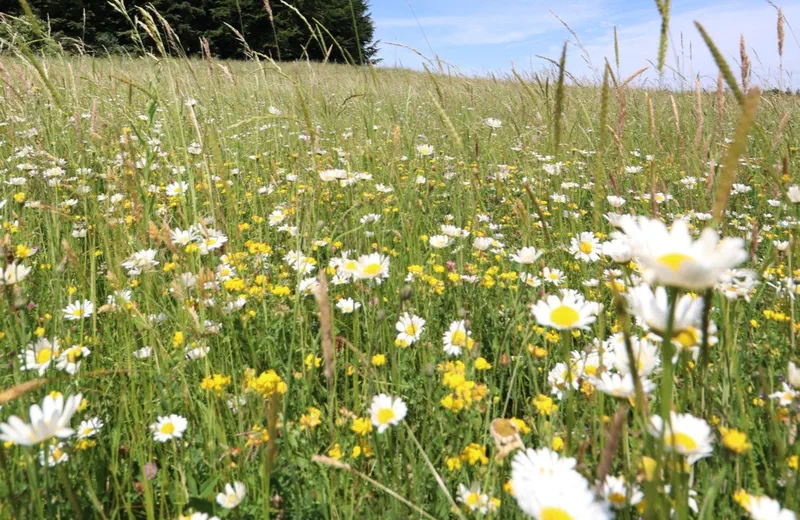
Converting intensively used land into species-rich wet meadows and marshy meadows in the valleys of the Rednitz, Schwäbische Rezat and Roth. Adapted mowing regimes and rewetting support meadow-breeding birds and create compensation areas true to the natural region.
Calcareous grassland of the Fränkische Alb
Restoring and permanently keeping open semi-dry grassland and juniper heaths in the south of the district through extensive sheep and goat grazing and clearing scrub from abandoned slopes.
Near-natural forest conversion
Converting off-site pine plantations into structurally rich broadleaf and mixed woodland while retaining old and dead wood. This improves habitat quality for cavity-nesting birds and bats and increases the climate resilience of the stands.
Watercourse restoration and small water bodies
Removing bank reinforcement, creating riparian buffer strips and floodplain woodland margins, as well as new fish-free pools. Such measures enhance watercourses and serve as CEF measures for amphibians such as the great crested newt.
Hedgerows, traditional orchards and field copses
Establishing and managing hedgerows, traditional orchards and field copses in the Alb foreland and the agricultural landscape. These structures connect habitats and support farmland birds, insects and small mammals.
Protected species in the Fränkisches Seenland and Mittelfränkisches Becken
Sand lizard
The sand lizard inhabits sandy grassland, embankments, railway embankments and sunlit field margins in the Mittelfränkisches Becken. As a strictly protected species under § 44 BNatSchG, impacts often require CEF measures such as creating sand lenses and stone piles.
About this species ›Skylark
The skylark is a characteristic bird of the open arable landscape. Its population is declining due to intensive land use, which is why skylark plots, flowering strips and extensively managed field margins are effective enhancements that can be credited as compensation.
About this species ›Northern lapwing
The northern lapwing breeds in wet meadows and hollows, including in the Rednitz valley. Extensively managed grassland, shallow wet depressions and late mowing secure its habitat and can be implemented through production-integrated compensation.
About this species ›Bats
Woodland, the karst structures of the Alb and building roosts offer bats such as the greater mouse-eared bat both roosts and hunting grounds. Securing roosts, forest conversion and connecting hunting habitats are typical measures.
About this species ›Great crested newt
The great crested newt spawns in fish-free small water bodies with rich bankside vegetation. Creating and connecting new sunlit spawning waters supports its populations and is well suited as a CEF measure.
About this species ›Kingfisher
The kingfisher inhabits the Rednitz, Roth and Schwäbische Rezat. It needs near-natural banks with steep faces for breeding, as well as clear, fish-rich waters, such as those created through watercourse restoration.
About this species ›Which projects trigger a compensation obligation?
Transport infrastructure
The expansion and maintenance of motorways (A6, A9), state and district roads and railway lines in the Nuremberg area regularly trigger impacts subject to a compensation obligation.
Commerce and industry
New and expanded commercial and industrial land, for example in cable technology and packaging, seals ground and requires compensation true to the natural region under the BayKompV.
Housing and settlement
Settlement development in the Nuremberg conurbation, with new residential and building areas, is generating a compensation requirement in many municipalities of the district.
Ground-mounted photovoltaics
The expansion of ground-mounted solar installations and further energy infrastructure uses up land and makes accompanying compensation and species protection measures necessary.
From enquiry to monitoring
Contact and enquiry
Tell us your compensation requirement and the natural region. We check availability.
Offer and advice
A transparent offer covering measure types, scope and availability.
Coordination with authorities
Full coordination with the lower nature conservation authority. We handle everything.
Long-term monitoring
Permanent securing of the land, management and documentation across the contract term.
Eco-points in adjoining districts
All about eco-points
in the district of Roth
Request eco-points in the district of Roth
We will promptly prepare a transparent offer with matching eco-points held in stock in the district of Roth.