Eco-points and compensation areas
District of Rhön-Grabfeld
Eco-points immediately available in stock from officially recognised eco-accounts. greeNature is your full-service partner for compensation under the BayKompV in the Bayerische Rhön and the Grabfeld.
The District of Rhön-Grabfeld at a glance
The district of Rhön-Grabfeld forms the northernmost corner of Bavaria and belongs to the Unterfranken administrative region. It borders Hesse and Thuringia and combines two very different landscapes, the Hohe Rhön in the west and the open Grabfeld in the east. The district seat is Bad Neustadt an der Saale, on the Fränkische Saale.
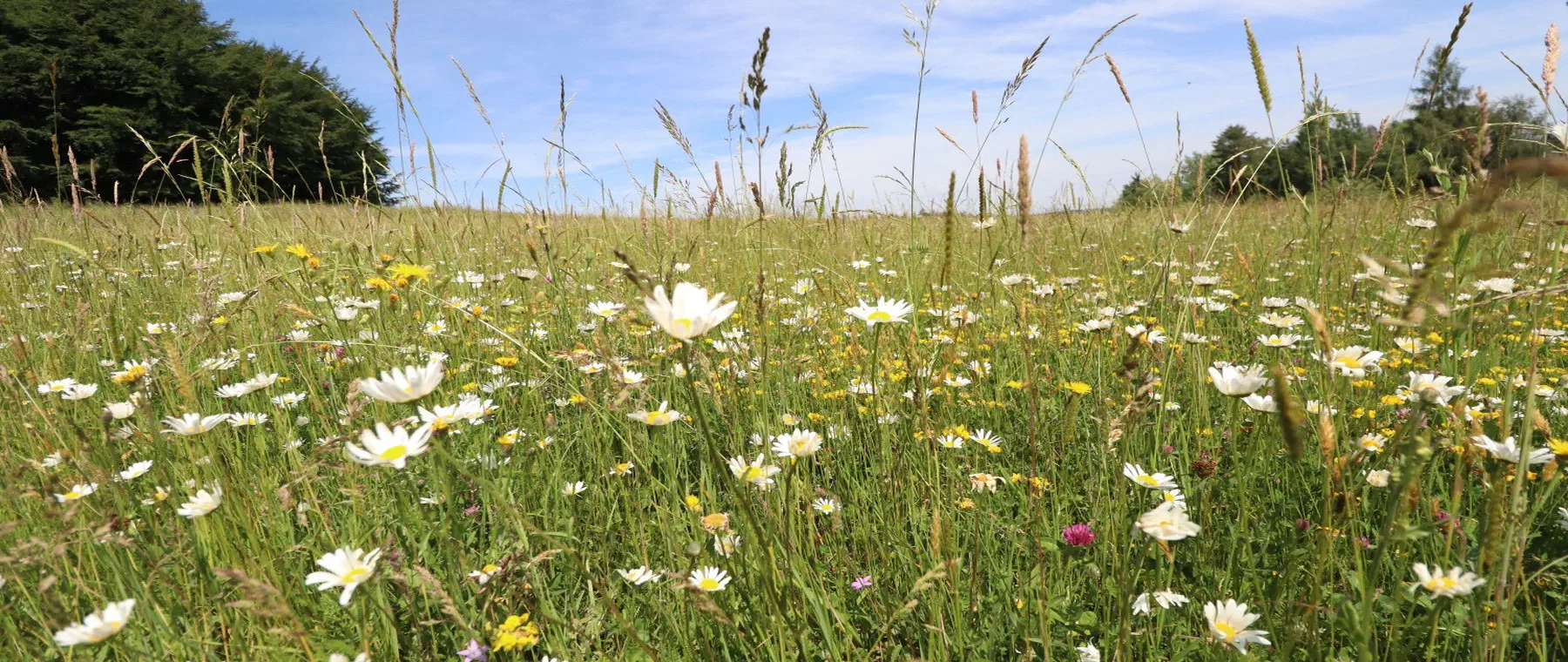
The Rhön is a low mountain range shaped by volcanism, with basalt domes, raised bogs and broad mountain meadows, while the Grabfeld is a gently rolling, largely woodland-free hill landscape of Muschelkalk and Keuper. This geological divide, volcanic uplands in the west and fertile Gäu soils in the east, creates an exceptional diversity of sites and habitats.
Large parts of the Rhön belong to the cross-border UNESCO Rhön Biosphere Reserve. The Bayerische Hohe Rhön FFH and Special Protection Area (DE 5526-371 and DE 5526-471) covers around 19,000 hectares, making it Unterfranken's largest FFH site, and is home to mountain hay meadows, mat-grass swards and beech woodland, as well as species such as black grouse, red-backed shrike and common snipe. In the Grabfeld, the Trockenverbundgebiet Rhön-Grabfeld FFH site (DE 5527-373) secures extensive calcareous grassland and juniper heaths.
Economically, Bad Neustadt is an important industrial and medical location (electrical engineering, automotive suppliers, the Rhön-Klinikum). Business relocations, the expansion of federal and state roads in the Grabfeld, as well as ground-mounted photovoltaics and settlement development, regularly generate a compensation requirement under the BayKompV. Specific compensation and replacement obligations arise for impacts outside the strictly protected core zones of the biosphere reserve.
🗺️ Associated natural regions
Go to natural region D56 ›
Go to natural region D47 ›
Go to natural region D55 ›
Go to natural region D59 ›
📍 Selected municipalities
🌿 Ecological features
- UNESCO Rhön Biosphere Reserve, spanning Bavaria, Hesse and Thuringia
- Bayerische Hohe Rhön FFH and Special Protection Area (DE 5526-371 / DE 5526-471), Unterfranken's largest FFH site
- Lange Rhön with mountain hay meadows and mat-grass swards, a refuge for the black grouse
- Schwarzes Moor, one of the Rhön's most important raised bogs, with a boardwalk
- Trockenverbundgebiet Rhön-Grabfeld FFH site (DE 5527-373), calcareous grassland and juniper heaths
- The Grabfeld as an open arable landscape shaped by Muschelkalk, habitat of farmland birds
- The Fränkische Saale and Streu as defining watercourses of the district
✅ greeNature on the ground
greeNature also operates as a supra-regional full-service partner in Unterfranken. We know the ecological requirements amid the interplay of the Rhön Biosphere Reserve, Natura 2000 sites and the intensively used Grabfeld, and coordinate measures with the lower nature conservation authority at the Rhön-Grabfeld District Office from concept through to acceptance.
Typical measures in the district of Rhön-Grabfeld
Mountain meadows and mat-grass swards
Restoration and extensive mowing of species-rich mountain hay meadows and mat-grass swards of the Hohe Rhön, habitat for meadow-breeding birds, butterflies and rare grasses of the montane zones.
Calcareous grassland and juniper heaths
Clearing scrub and grazing calcareous grassland and juniper heaths in the Grabfeld and the Trockenverbundgebiet, conserving warmth-loving insects, orchids and reptiles.
Traditional orchards
Establishing and reactivating traditional orchards on the outskirts of the Rhön and the Grabfeld, habitat for little owl, wryneck and cavity-dwelling bats.
Watercourse restoration
Removing bank reinforcement and creating near-natural riparian buffer strips on the Fränkische Saale and Streu, improving habitats for kingfisher, beaver and bullhead.
Species protection CEF/FCS
Tailored measures under the BayKompV: habitat network for the European wildcat, roosts for Bechstein's bat and the barbastelle, sand lizard habitats and breeding sites and resting places for farmland birds.
Hedgerows and habitat network
Establishing hedgerows, field margins and stepping-stone habitats in the cleared farmland of the Grabfeld, connecting dry habitats for grey partridge, common hamster and wild bees.
Protected species in the Bayerische Rhön and Grabfeld
European wildcat
The extensive beech woodland of the Rhön is among the core areas of the European wildcat in Bavaria. Habitat networks and wooded migration corridors are typical compensation measures for impacts on woodland edges.
About this species ›Black grouse and meadow-breeding birds of the Lange Rhön
The Lange Rhön is home to one of the last low-mountain populations of the black grouse, as well as the red-backed shrike and common snipe. Extensive mowing and keeping the mountain meadows open secure these species of the Special Protection Area.
Black stork
The black stork breeds in the undisturbed woodland areas of the Rhön and uses near-natural streams as a feeding habitat. Watercourse restoration and nest protection are proven FCS measures here.
About this species ›Sand lizard and dry grassland species
The calcareous grassland and juniper heaths of the Grabfeld offer valuable habitats to the sand lizard and warmth-loving insects. Stone ridges, stone piles and field margin structures are common CEF measures in infrastructure and commercial projects.
About this species ›Farmland birds in the Grabfeld
The open agricultural landscape of the Grabfeld is habitat for the skylark, northern lapwing and grey partridge. Flowering areas, fallow arable land and skylark plots offset impacts on farmland under the BayKompV.
About this species ›Bats in beech woodland
Bechstein's bat, the barbastelle and the greater mouse-eared bat use the old beech woodland and traditional orchards as hunting and roosting habitat. Protecting cavity trees and providing roosts are common compensation building blocks.
About this species ›Which projects trigger a compensation obligation?
Industry and commerce
Bad Neustadt and Mellrichstadt are important industrial locations with electrical engineering and automotive suppliers. Business expansions and new commercial areas regularly generate a compensation requirement, which greeNature meets through recognised eco-accounts.
Infrastructure and transport
The expansion of federal and state roads in the Grabfeld, bypasses and bridge structures over the Fränkische Saale and Streu trigger compensation and replacement obligations under the BayKompV.
Energy and renewables
Ground-mounted photovoltaics on marginal land in the Grabfeld and wind energy outside the protected zones require statutory nature conservation compensation and species protection CEF measures.
Settlement development
Residential and commercial building land in the towns and municipalities of the district requires compensation measures. Owners of suitable land can participate by offering land and benefit from doing so.
From enquiry to monitoring
Contact and enquiry
Tell us your compensation requirement and the natural region. We check availability.
Offer and advice
A transparent offer covering measure types, scope and availability.
Coordination with authorities
Full coordination with the lower nature conservation authority. We handle everything.
Long-term monitoring
Permanent securing of the land, management and documentation across the contract term.
Eco-points in adjoining districts
All about eco-points
in the district of Rhön-Grabfeld
Request eco-points in the district of Rhön-Grabfeld
We will promptly prepare a transparent offer with matching eco-points held in stock in the district of Rhön-Grabfeld.