Eco-points and compensation areas
District of Regensburg
For projects in Regensburg district, greeNature bundles compensation under BayKompV from a single source. We provide eco-points from recognised measures in the Danube area, Gäuboden and Falkenstein Foothills and accompany you as a full-service partner from assessment through to recognition by the lower nature conservation authority.
The District of Regensburg at a glance
Regensburg district is located in the south of the Palatinate and forms a ring around the independent city of Regensburg, which is also its administrative seat. At around 1,392 km² and about 198,000 inhabitants in 41 municipalities, it ranks among Bavaria's larger and economically strongest districts. The Danube, which runs through the district from west to east and, with its tributaries Naab, Regen and Laber, forms a widely branching water network, is characteristic.
Geographically, three very different natural regions meet in the district territory. South and west of the Danube, the Franconian Alb with its limestone and dolomite slopes extends to the Danube valley and forms warmth-loving dry sites. The broad Danube valley and the adjacent Gäuboden belong to the Lower Bavarian hill country and bear some of Bavaria's most fertile arable soils. In the east, the terrain rises to the Falkenstein Foothills, the westernmost, heavily forested extension of the Bavarian Forest.
This diversity results in a dense protected area network with several nature reserves and numerous Habitats Directive sites of the European Natura 2000 system, including dry slopes such as the Mattinger slopes and near-natural valleys such as the Gmünd floodplain. Calcareous grasslands, riparian forests, small water bodies and structured forest margins provide habitat for strictly protected species under Section 44 BNatSchG and for species under the Habitats Directive.
Economically, the district benefits from proximity to the regional centre Regensburg and its efficient transport axes (A3, A93 and railway hub). Commercial and industrial settlements in the surrounding area, residential development through ongoing migration as well as infrastructure and energy projects regularly trigger impacts on nature and landscape. This creates a steady need for legally binding compensation and replacement measures that must be assessed according to BayKompV and permanently secured.
🗺️ Associated natural regions
Go to natural region D61 ›
Go to natural region D65 ›
Go to natural region D63 ›
📍 Selected municipalities
🌿 Ecological features
- District forms a ring around the independent city of Regensburg with high settlement and commercial pressure in the surrounding area
- Three natural regions in close proximity: Franconian Alb, Gäuboden in the Danube valley and Falkenstein Foothills
- Dense Natura 2000 network with multiple Habitats Directive sites and nature reserves
- Warmth-loving calcareous grasslands and dry slopes of the Jura foothills (such as Mattinger slopes)
- River and floodplain landscapes of the Danube, Naab, Regen and Laber
- Gäuboden as one of Bavaria's most fertile and intensively used arable landscapes
✅ greeNature on the ground
greeNature knows the nature conservation requirements in Regensburg district and adapts every measure to the respective natural region, whether enhancement of calcareous grasslands on the Jura, restoration of riparian edges on the Danube and Naab or forest conversion in Falkenstein Foothills. As a full-service partner, we take on compensation assessment under BayKompV, land securing, coordination with the lower nature conservation authority at Regensburg District Office as well as implementation, management and monitoring. This ensures that project developers receive recognised eco-points without their own land requirements.
Typical measures in the district of Regensburg
Floodplain and riparian edge enhancement
Restoration of riparian strips and floodplains on the Danube, Naab, Regen and Laber with site-appropriate vegetation and shallow water zones. Such measures promote kingfisher and amphibians and enhance the water network under BayKompV.
Calcareous grasslands and dry slopes
Removal of encroaching vegetation, grazing or mowing of the Jura dry slopes preserves warmth-loving habitats for sand lizard and light-loving plant species and permanently secures valuable open land habitats.
Arable extensification in the Gäuboden
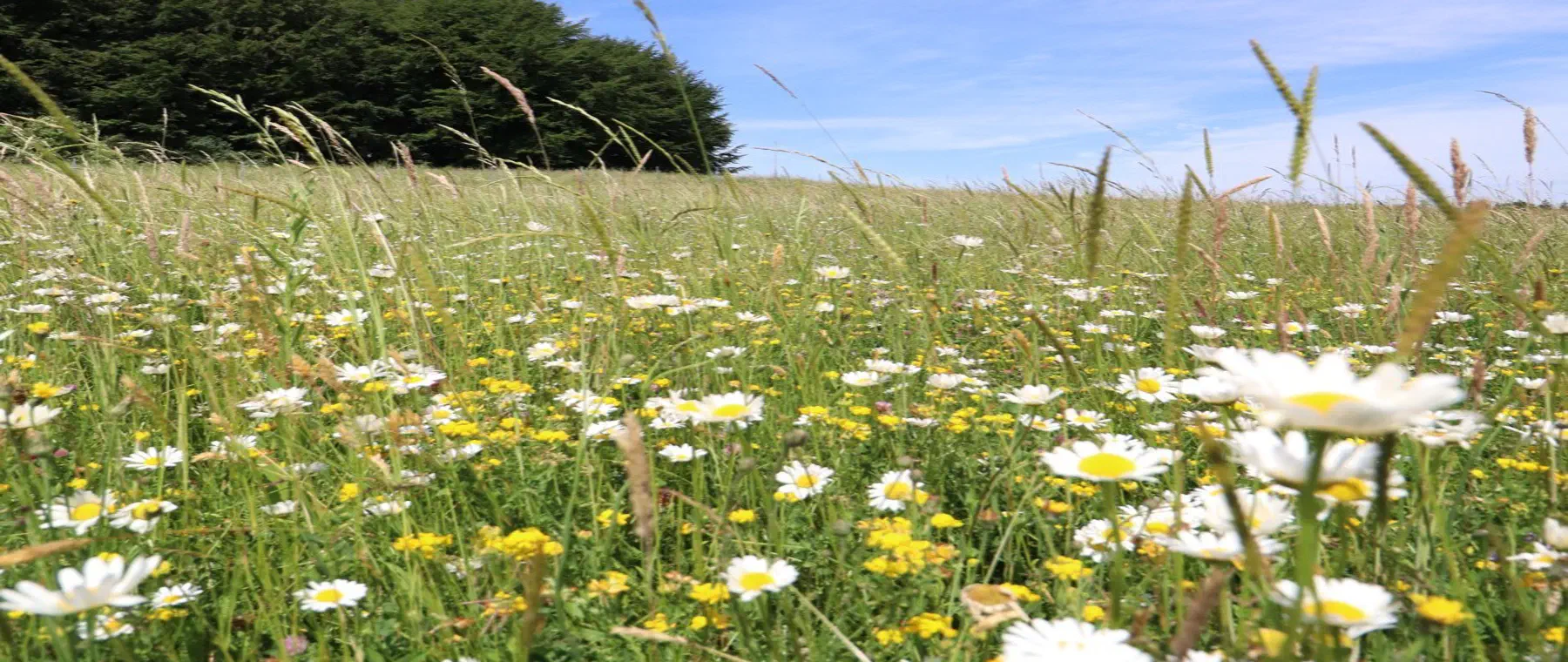
Flower areas, multi-year margin strips and skylark gaps in the intensively farmed field landscape create feeding and breeding habitats for field breeders and improve habitat networking.
Forest conversion in Falkenstein Foothills
Development of structured, site-native mixed forests with old and dead wood content provides habitat for bats, hazel dormouse and black stork and stabilises stands to be climate-resilient.
Small water bodies and spawning habitats
Creation of sunny pools and ponds in the cultural landscape creates breeding waters for great crested newt and other amphibians and is suitable as CEF measure ahead of an impact.
Hedgerows and traditional orchards
New establishment of hedgerows, field copses and traditional orchard meadows structures simplified fields, networks habitats and generates long-term secured eco-points in Regensburg's surrounding area.
Protected species in the Danube area and Falkenstein Foothills
Skylark
Characteristic species of the open Gäuboden field landscape. The ground-breeding bird suffers under intensive arable use and benefits from skylark gaps and extensive margin strips as CEF measure.
About this species ›Sand lizard
Inhabits the warm-exposed limestone slopes and dry grasslands of the Franconian Alb as well as railway and path embankments. In impacts, advanced compensation measures and relocations are frequently necessary.
About this species ›Kingfisher
Breeds on steep banks of the Danube, Naab and Laber. Near-natural bank structures and low-disturbance water sections are decisive for the strictly protected species.
About this species ›Bats
The karst caves and tunnels of the Jura as well as old buildings and tree cavities provide roosts. All native species are strictly protected and must be examined early in building and renovation projects.
About this species ›Great crested newt
Species of the Habitats Directive that inhabits sunny, fish-free small water bodies in the cultural landscape and forest margin areas. New breeding waters are suitable as advanced compensation.
About this species ›Black stork
Shy breeding bird of low-disturbance, water-rich forests in Falkenstein Foothills. It requires large nest trees and intact creek floodplains as feeding areas.
About this species ›Which projects trigger a compensation obligation?
Commercial and industrial areas
Settlements and extensions in the commerce-strong surrounding municipalities such as Neutraubling and Obertraubling seal land and trigger compensation obligations under BayKompV.
Transport infrastructure
Expansion and new construction on motorways A3 and A93, on federal and state roads and on railway lines have impacts on nature and landscape and require compensation.
Residential and settlement development
Ongoing migration to Regensburg's surrounding area drives building areas and infill development forward and regularly creates compensation and replacement requirements.
Renewable energies
Ground-mounted photovoltaic facilities in the Gäuboden and wind energy in the forest areas of the foothills require nature conservation assessment and compensation land.
From enquiry to monitoring
Contact and enquiry
Tell us your compensation requirement and the natural region. We check availability.
Offer and advice
A transparent offer covering measure types, scope and availability.
Coordination with authorities
Full coordination with the lower nature conservation authority. We handle everything.
Long-term monitoring
Permanent securing of the land, management and documentation across the contract term.
Eco-points in adjoining districts
All about eco-points
in the district of Regensburg
Request eco-points in the district of Regensburg
We will promptly prepare a transparent offer with matching eco-points held in stock in the district of Regensburg.