Eco-points and compensation areas
City of Passau
Eco-points available immediately from officially recognised eco-accounts. greeNature is your full-service partner for compensation according to BayKompV in the three-river city of Passau, between Bavarian Forest and the floodplains of Danube, Inn and Ilz.
The City of Passau at a glance
Passau is an independent city in the administrative region Lower Bavaria and lies at the confluence of Danube, Inn and Ilz. On roughly 69.56 km² live about 53,500 people. The city is divided into 16 city districts or citizen assembly areas, from the historic old town on the peninsula between Danube and Inn to the elevated areas of Hals, Grubweg and Heining.
In natural region terms, the city shares land in two BfN units. North of the Danube, the Bavarian Forest with its wooded crystalline slopes runs out (natural region D63, Upper Palatinate and Bavarian Forest), south of the Inn the landscape transitions into the gently undulating, tertiary hilly region (natural region D65, Lower Bavarian hilly region). This location at the transition between two natural regions creates a close intermingling of river, forest and open-land habitats.
Ecologically formative are the Danube cliffs, the steep, warmth-loving slope forests east of the city. The Natura 2000 and nature reserve Danube cliffs from Passau to Jochenstein harbours Bavaria's highest reptile diversity, including the rare emerald lizard and Aesculapian snake. In addition, the naturalised Ilz on the edge of Bavarian Forest Nature Park and the floodplains of Danube and Inn are vital arteries and habitat networks.
Economically, the University of Passau, administration, tourism, trade and Danube shipping characterise the city. Housing construction on conversion and inner development areas, commercial and transport projects and flood protection on the three rivers regularly trigger impacts whose compensation according to the Bavarian Compensation Ordinance (BayKompV) must be provided in value points according to natural region. The limited land scope in the densely built valley basin makes forward-looking compensation planning particularly important.
🗺️ Associated natural regions
Go to natural region D63 ›
📍 City districts
🌿 Ecological features
- Natura 2000 and nature reserve Danube cliffs from Passau to Jochenstein, Bavaria's highest reptile diversity (emerald lizard, Aesculapian snake)
- Three-river confluence, confluence of Danube, Inn and Ilz with extensive floodplains and riparian habitats
- Naturalised Ilz on the south edge of Bavarian Forest Nature Park, blackwater river with high water quality
- Transition between two natural regions, crystalline slopes of Bavarian Forest (D63) and tertiary hilly region (D65)
- Warmth-loving slope forests and dry sites on the steep Danube cliffs
- City centre in narrow valley basin with high degree of sealing and limited land supply for compensation
✅ greeNature on the ground
greeNature is active in the lower Bavarian and east Bavarian region and knows compensation requirements along Danube, Inn and Ilz from practice. We coordinate with the lower nature conservation authority of the city of Passau, know the regional land pools and the features of natural regions D63 and D65 and the tight land scope in the three-river city's valley basin.
Typical measures in the city of Passau
Watercourse and floodplain restoration
Removal of bank reinforcement, connection of oxbows and naturalised redesign of bank sections on Danube, Inn and Ilz. Steep banks, gravel bars and floodplain woodland margins are created as habitat for kingfisher, fish and amphibians in the city area and near surrounding area.
De-sealing in city area
Removal of no longer used paving, courtyards and conversion areas and their conversion into green-networked, infiltration-capable soils. De-sealing is in the densely built valley basin an important element to regain soil functions and cold-air corridors.
Management of Danube cliff dry habitats
Clearing of overgrown rock summits, retention of dry walls, loose stone ridges and margins on the warmth-loving slopes of Danube cliffs. These measures secure habitats of reptiles such as emerald lizard and sand lizard and the associated insect fauna.
Grassland upgrading in city surrounding area
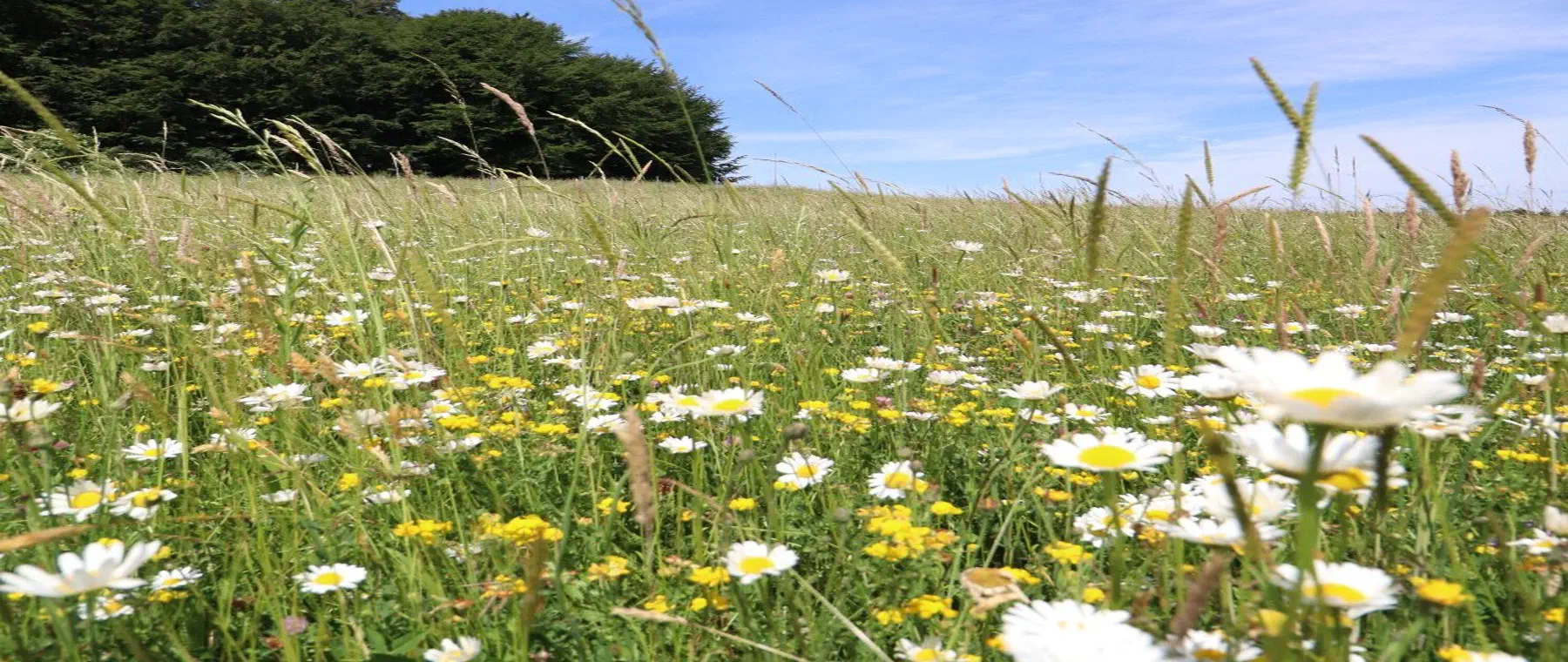
Extensification of intensively used meadows and conversion of arable to species-rich grassland on the plateaus of Heining, Patriching and Hals. Adapted cutting and fertiliser abstinence create habitat for meadow-breeding birds and insects.
Naturalised forest conversion
Development of site-appropriate broadleaf and mixed forests on the slope forests north of the Danube, promotion of old and deadwood and conversion of poorly structured conifer stocks to climate-stable stocks of oak, beech, lime and sycamore maple.
Species protection CEF and FCS
Bat roosts on and in buildings, nest aids for building-breeding bird species, kingfisher steep banks on the rivers and replacement habitats for reptiles, each as prerequisite CEF or population-supporting FCS measure according to § 44 and § 45 BNatSchG.
Protected species in the Three-river city at Danube, Inn and Ilz
Reptiles of the Danube cliffs
The warmth-loving slopes of the Danube cliffs harbour Bavaria's highest reptile diversity, including emerald lizard, Aesculapian snake and sand lizard. For impacts on sunny slopes and dry sites, habitat management and replacement habitats are typical measures for strictly protected species under Annex IV of the FFH Directive.
About this species ›Bats in city and slope forest
Common pipistrelle, greater mouse-eared bat and brown long-eared bat use attic spaces, cellars and tree holes in the Passau slope forests as roost and hunting ground. All species are strictly protected, demolition and renovation require replacement roosts as a CEF measure.
About this species ›Kingfisher at the three rivers
Naturalised bank sections of Danube, Inn and Ilz offer the kingfisher steep banks as breeding sites. In construction and bank work, steep bank remodelling and bank restoration are proven CEF measures for the strictly protected species.
About this species ›Amphibians in floodplains and ponds
Common frog, common toad and yellow-bellied toad settle floodplain waters, ponds and semi-wet depressions along the rivers. Replacement spawning waters and terrestrial habitats in spatial context secure their breeding sites during impacts.
About this species ›Beaver and otter
Danube, Inn and Ilz and their secondary watercourses are habitat for beaver and otter. Both species are strictly protected, conflict management, riparian strips and continuous bank structures are typical elements of compensation here.
Black stork at forest edge
In the continuous forests of Bavarian Forest north of the city, the black stork occurs, needing disturbance-free old forests as breeding habitat and naturalised streams as feeding space. Forest edge design and watercourse restoration support its conservation status.
About this species ›Which projects trigger a compensation obligation?
Housing and inner development
Residential areas and densification on conversion and inner development areas, for instance around Kohlbruck and western districts, trigger nature conservation compensation obligations. In the tight valley basin, compensation is often only achievable outside the immediate construction site.
University and public buildings
Expansions of the University of Passau, administrative and infrastructure buildings and educational and health facilities regularly generate impacts whose compensation according to BayKompV must be assessed and implemented.
Traffic and river crossings
Road and bridge structures over Danube and Inn, town through-routes and railway facilities in the vicinity of federal roads and motorway A3 require compensation and replacement measures as well as species protection assessments.
Harbour, commerce and flood protection
The Danube port, commercial and logistics sites, and flood protection schemes on the three rivers encroach on floodplain and riverbank habitats and trigger a compensation requirement that combines well with watercourse and floodplain restoration.
From enquiry to monitoring
Contact and enquiry
Tell us your compensation requirement and the natural region. We check availability.
Offer and advice
A transparent offer covering measure types, scope and availability.
Coordination with authorities
Full coordination with the lower nature conservation authority. We handle everything.
Long-term monitoring
Permanent securing of the land, management and documentation across the contract term.
Eco-points in adjoining districts
All about eco-points
in the city of Passau
Request eco-points in the city of Passau
We will promptly prepare a transparent offer with matching eco-points held in stock in the city of Passau.