Eco-points and compensation areas
District of Oberallgäu
Immediately available eco-points from officially recognised eco-accounts for projects in Oberallgäu. greeNature is your full-service partner for compensation according to BayKompV between pre-Alpine region and Allgäuer High Alps.
The District of Oberallgäu at a glance
Oberallgäu district is the southernmost district in Germany and belongs to the Swabian administrative region. The district seat is Sonthofen. In the south the district borders Austria (Tyrol and Vorarlberg), the independent city of Kempten lies as an enclave within the district area. The district ranges from gentle pre-Alpine region in the north to the Allgäuer High Alps with Hochfrottspitze at 2,649 metres.
The Oberallgäu is divided into three zones in terms of landscape and geology. In the north, glacial moraines, drumlins and extensive lowland moors characterise the Pre-Alpine Hilly and Moorland (D66). To the south the flysch zone connects with Grünten and the nagelfluh chain, which belong to the Swabian-Upper Bavarian Pre-Alps (D67). The core is formed by the Northern Limestone Alps (D68) with the Allgäuer High Alps. The Iller and its source streams Breitach, Stillach and Trettach drain the mountains.
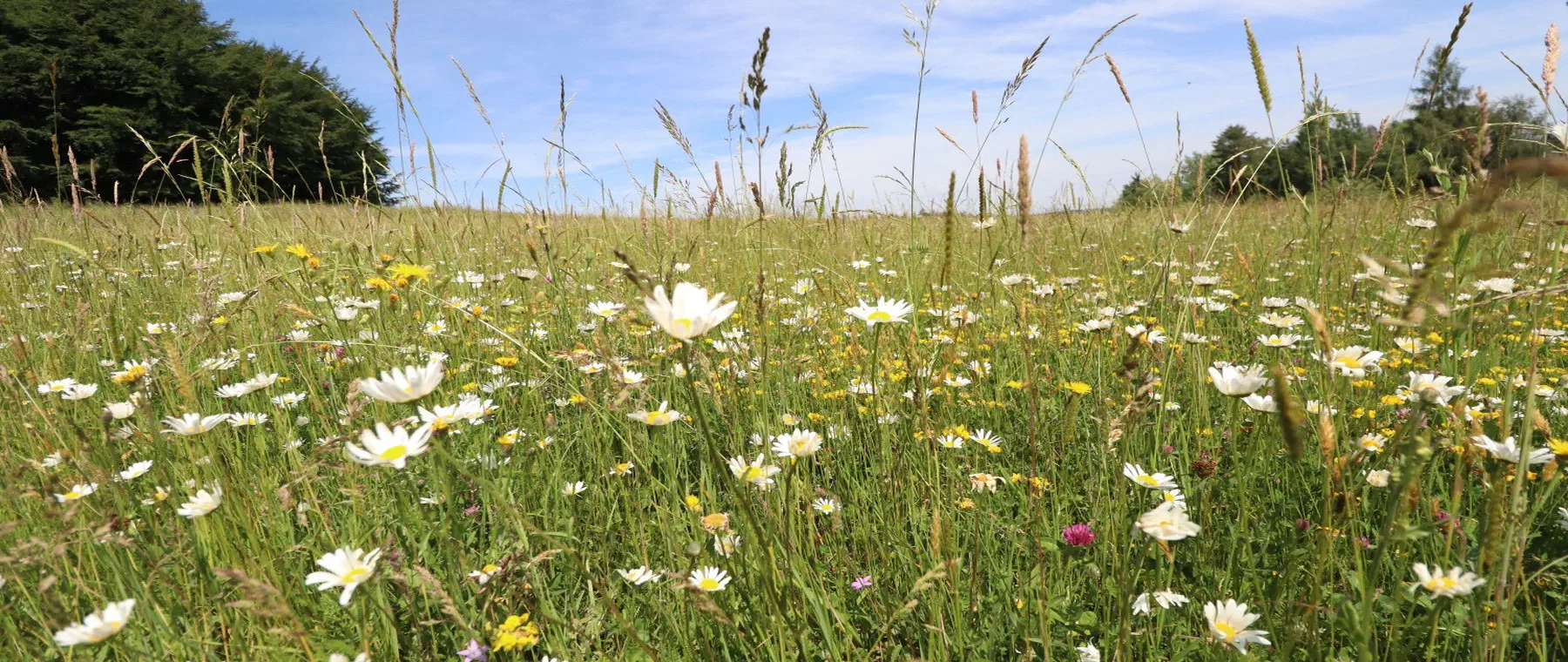
Ecologically, Oberallgäu is of outstanding importance. The Allgäuer High Alps nature reserve is the largest nature reserve in Swabia and at the same time an FFH and bird protection area in the Natura 2000 network. Calcareous grasslands, mountain meadows, dwarf pine fields and alpine grassland offer habitat for extraordinary species diversity. The cross-border Nagelfluhkette Nature Park and the Allgäuer moors and wetland meadows complement the protected area network.
Economically the region is driven by tourism, dairy and pasture farming as well as mechanical engineering and packaging industry. Expansion of tourist infrastructure, settlement and commercial development, the A7 motorway and expansion of renewable energy regularly generate compensation requirements according to BayKompV in Oberallgäu. The close intertwining of sensitive alpine habitats and development pressure requires carefully planned compensation and replacement measures.
🗺️ Associated natural regions
Go to natural region D66 ›
Go to natural region D68 ›
Go to natural region D67 ›
📍 Selected municipalities
🌿 Ecological features
- Allgäuer High Alps nature reserve, largest nature reserve in Swabia, also FFH and bird protection area (Natura 2000)
- Nagelfluhkette Nature Park, cross-border with Vorarlberg (Austria)
- Allgäuer lowland moors and wetland meadows as carbon stores and habitat for threatened species
- Iller with source streams Breitach, Stillach and Trettach, near-natural flowing waters and floodplains
- Grünten and flysch mountainland with species-rich mountain meadows and calcareous grasslands
- Alpine calcareous grasslands and dwarf pine zone with high endemite density
✅ greeNature on the ground
From our base in Bavaria (Kastl, Altötting district) we manage projects throughout the Swabian administrative region. We know the special requirements for compensation in the pre-Alpine and alpine region, from moorland restoration to alpine calcareous grassland management, and coordinate all measures practically with the Lower Nature Conservation Authority at Oberallgäu District Office.
Typical measures in the district of Oberallgäu
Moor and wetland meadow restoration
Rewetting of drained lowland moors and management of species-rich wetland meadows in the pre-Alpine region. These measures secure habitat for meadow-breeding birds and moor specialists and also sequester carbon, a high-value compensation type in Oberallgäu.
Mountain meadows and alpine calcareous grasslands
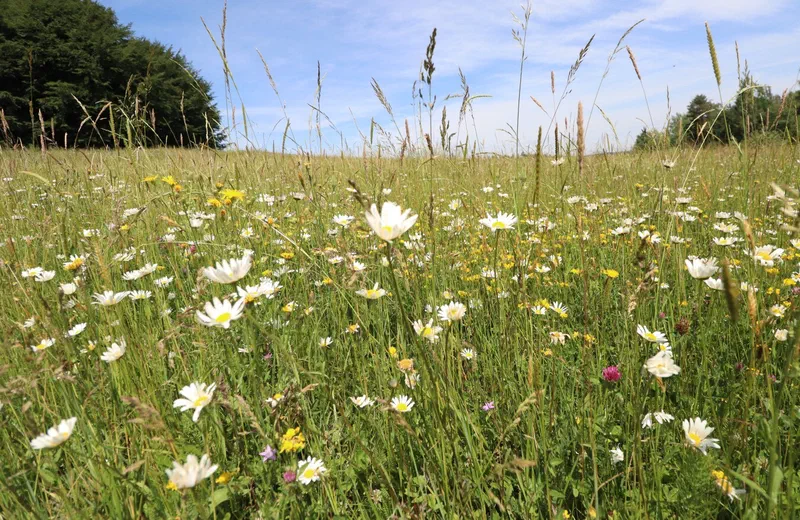
Conservation and resumption of traditional mowing on mountain meadows and calcareous grasslands. Without extensive use these particularly species-rich areas become overgrown with shrubs, their management generates permanently accredited eco-points according to BayKompV.
Iller and flowing water restoration
Decommissioning of riverbank fortifications, creation of gravel banks and side-waters on the Iller, Breitach and Trettach. Dynamic water sections create spawning and breeding habitats and improve habitat networking.
Mountain mixed forest conversion
Conversion of structurally poor coniferous forests into climate-resilient mountain mixed forests of beech, sycamore maple, fir and spruce. Site-appropriate afforestation on marginal sites creates compensation for impacts on forest stands.
Species protection CEF and FCS
Targeted measures for sand lizard on sunny slopes, bat roosts in buildings and old stands and amphibian waters, tailored to the requirements of sections 44 and 45 BNatSchG.
Hedgerows and habitat network
Creation of hedgerows, field woodlands and stepping-stone habitats in the denuded pre-Alpine region between Altusried and Dietmannsried, valuable networking structures for hazel dormouse, red-backed shrike and wild bees.
Protected species in the Allgäuer Alps and pre-Alpine region
Bats in forests and buildings
Large mouse-eared bat, Bechstein's bat and grey long-eared bat use mountain mixed forests, traditional orchards and buildings as roosts and hunting areas. Roost securitisation and new roost creation are typical CEF measures in construction projects.
About this species ›Amphibians in moors and floodplains
Yellow-bellied toad, grass frog and alpine newt inhabit peat bog waters, pools and water-filled tracks. Newly created small water bodies and spawning habitats are among the most common compensation measures in the pre-Alpine region.
About this species ›Great crested newt in ponds
The Northern great crested newt (Annex II and IV FFH Directive) inhabits fish-free ponds and peat bog waters of the hilly region. Creation and management of sunny, structured spawning waters secure its populations.
About this species ›Kingfisher on the Iller
Near-natural riverbank sections with steep banks along the Iller and tributary waters provide the kingfisher with breeding sites. Riverbank erosion and steep bank modelling are effective CEF measures on flowing waters.
About this species ›Hazel dormouse in hedgerows and forest margins
The hazel dormouse (Annex IV FFH Directive) lives in structured hedgerows, forest margins and young deciduous woodlands of the pre-Alpine region. Conservation and networking of woodland structures are central protection measures.
About this species ›Meadow-breeding birds in the Allgäuer moors
Northern lapwing and whinchat breed in the damp wetland meadows and lowland moors of Oberallgäu. Extensification, adapted mowing dates and rewetting create and secure their habitat.
About this species ›Which projects trigger a compensation obligation?
Tourism and leisure infrastructure
Oberallgäu is one of Bavaria's most important tourism regions. Extensions of mountain railways, snow-making systems, accommodation businesses and trail or path networks impact sensitive alpine and pre-Alpine areas and regularly trigger compensation and replacement obligations according to BayKompV.
Infrastructure and transport
Expansion of the A7, federal and state roads and bypasses and bridge structures over the Iller generate compensation requirements. greeNature handles needs analysis, land assignment and full authority coordination.
Energy and renewable energy
Oberallgäu is a pioneer of the energy transition, among others in Wildpoldsried. Ground-mounted photovoltaic systems, hydropower on the Iller and wind power sites require nature conservation compensation and species protection CEF and FCS measures.
Settlement and commercial development
Residential and commercial areas in Sonthofen, Immenstadt, Waltenhofen and surrounding municipalities require compensation measures. Landowners can offer suitable land as compensation areas and benefit from attractive usage fees.
From enquiry to monitoring
Contact and enquiry
Tell us your compensation requirement and the natural region. We check availability.
Offer and advice
A transparent offer covering measure types, scope and availability.
Coordination with authorities
Full coordination with the lower nature conservation authority. We handle everything.
Long-term monitoring
Permanent securing of the land, management and documentation across the contract term.
Eco-points in adjoining districts
All about eco-points
in the district of Oberallgäu
Request eco-points in the district of Oberallgäu
We will promptly prepare a transparent offer with matching eco-points held in stock in the district of Oberallgäu.