Eco-points and compensation areas
District of Neuburg-Schrobenhausen
Immediately available eco-points from authority-recognised eco-accounts in the district of Neuburg-Schrobenhausen. greeNature solutions is your full-service partner for compensation according to BayKompV between the Donaumoos, Danube valley and southern Swabian Jura.
The District of Neuburg-Schrobenhausen at a glance
The district of Neuburg-Schrobenhausen is located in the north-west of the administrative region Upper Bavaria on either side of the Danube, between Ingolstadt to the east and the district of Donau-Ries to the west. The district town Neuburg an der Donau and the town of Schrobenhausen form the two economic focuses. Over approximately 740 km², the district extends from the limestone slopes of the southern Swabian Jura via the Danube valley to the Ancient Bavarian Donaumoos and the Danube-Isar hilly country.
Geologically, very different landscapes meet in the district. North of the Danube, the limestone slopes of the Swabian Jura (natural region D61) with calcareous grasslands, juniper heaths and caves characterise the picture. To the south, the ice-age shale and loess areas of the Lower Bavarian Hilly Country (natural region D65) adjoin, in whose centre lies the Ancient Bavarian Donaumoos, the largest contiguous lowland moorland of southern Germany.
Ecologically, the district is of high significance. The Donaumoos, despite centuries-long drainage, is an important meadow-breeding bird area, the Danube floodplains with the Gerolfinger oak forest (FFH area 7233-372) and the bird protection area Danube floodplains between Lech mouth and Ingolstadt (7231-471) secure near-natural floodplain forests and oxbows. In the southern Swabian Jura there are significant bat winter roosts and greater mouse-eared bat colonies, around Neuburg particularly protected amphibian habitats (7233-371).
Economically, the district is characterised by small and medium-sized industry, mechanical engineering and agriculture. Well-known employers such as the Bauer Group and SONAX in Schrobenhausen and a defence technology location regularly generate compensation requirements for business extensions and new commercial areas. In addition, there are infrastructure projects, freestanding photovoltaics on lowland moorland sites and settlement development that trigger compensation and replacement measures according to BayKompV.
🗺️ Associated natural regions
Go to natural region D65 ›
Go to natural region D61 ›
Go to natural region D64 ›
📍 Selected municipalities
🌿 Ecological features
- Ancient Bavarian Donaumoos, largest lowland moorland of southern Germany with meadow-breeding bird areas
- FFH area Danube floodplains with Gerolfinger oak forest (7233-372), near-natural floodplain forest on the Danube
- EU bird protection area Danube floodplains between Lech mouth and Ingolstadt (7231-471)
- Southern Swabian Jura with Jura-dry slopes, juniper heaths and bat winter roosts
- FFH area amphibian habitats around Neuburg (7233-371) with great crested newt and other species
- FFH area Donaumoos streams, Zucheringer Wörth and Brucker forest (7233-373)
✅ greeNature on the ground
Our Bavarian location in Kastl (Lkr. Altötting) is located in the same administrative region Upper Bavaria. We know the Lower Nature Conservation Authority (Untere Naturschutzbehörde) in Neuburg a.d.Donau, the nature conservation requirements in the Donaumoos and in the Danube floodplains, as well as the compensation law according to BayKompV from daily project practice.
Typical measures in the district of Neuburg-Schrobenhausen
Lowland moorland rewetting
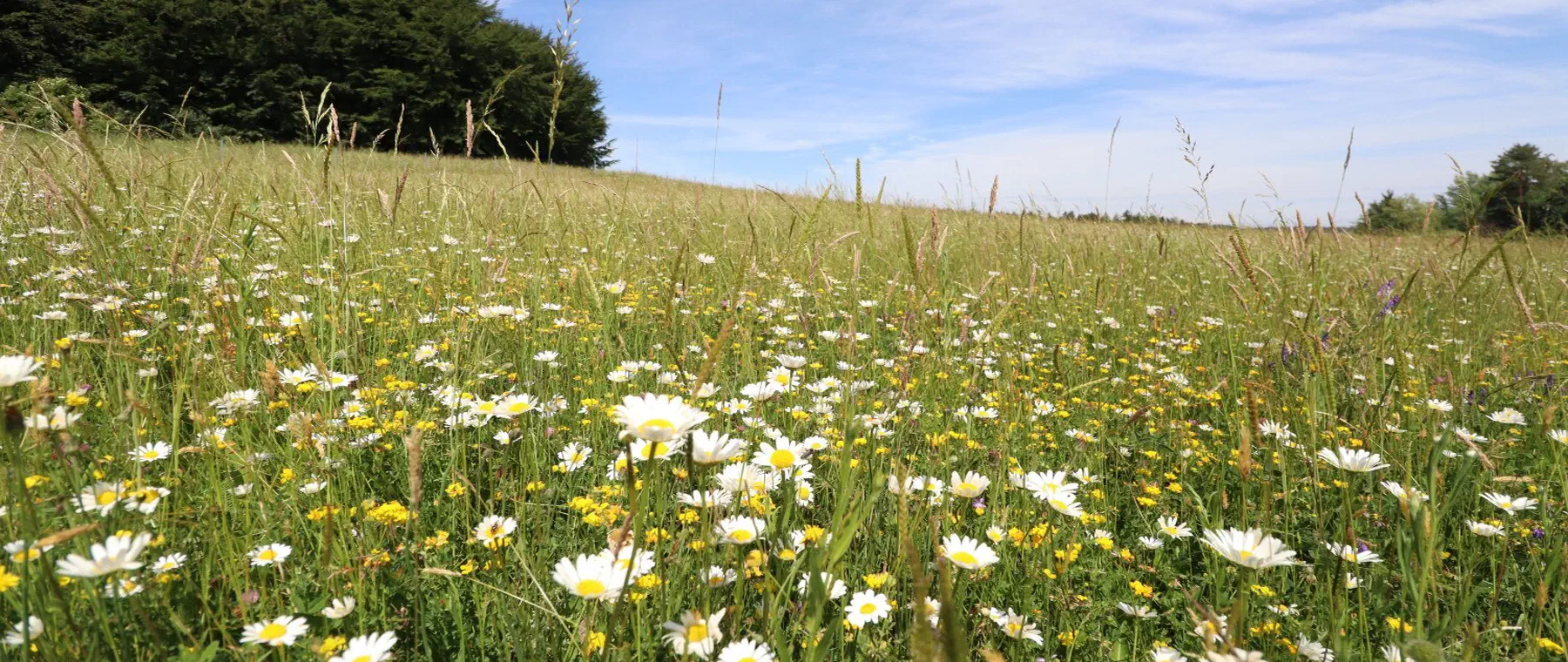
Raising of water levels and extensification in the Ancient Bavarian Donaumoos. Such measures combine climate and moorland protection with high-value compensation and create habitat for meadow-breeding birds and moorland-typical species.
Meadow-breeding bird protection and grassland extensification
Conversion of intensively used arable fields into late-mown, species-rich wet grassland in the Donaumoos, habitat for northern lapwing, curlew and snipe.
Danube floodplain restoration
Reconnection of oxbows, development of hard-wood and soft-wood floodplains and bank structuring along the Danube, amongst other things in the vicinity of the Gerolfinger oak forest.
Calcareous grasslands and juniper heaths
Care and new development of calcareous grasslands and juniper heaths on the Jura slopes of the southern Swabian Jura, habitat for heat-loving insects, reptiles and rare plants.
Species protection CEF/FCS
Tailored measures according to BayKompV, such as securing bat winter roosts, amphibian water bodies for great crested newt, replacement habitats for sand lizard, as well as nesting aids and cliff banks.
Hedgerows and habitat network
Creation of hedgerows, field woodlands and margins in the cleared arable landscape of the Danube-Isar hilly country as stepping-stone habitats for brown hare, grey partridge and wild bees.
Protected species in the Donaumoos and southern Swabian Jura
Northern lapwing and meadow-breeding birds
The Donaumoos is one of Bavaria's significant meadow-breeding bird areas. Northern lapwing, curlew and snipe breed in the wet grassland. Grassland extensification and rewetting are central compensation measures here.
About this species ›Skylark and open-land species
In the open field landscape of the Danube-Isar hilly country and the Donaumoos, the skylark is a frequent target species. Flower areas, lark windows and extensive field margins improve its breeding success.
About this species ›Great crested newt and amphibians
The FFH area amphibian habitats around Neuburg (7233-371) secures spawning waters for great crested newt and other amphibians. New construction of sunlit, fish-free small water bodies is a typical CEF measure.
About this species ›Bats of the Swabian Jura
In the southern Swabian Jura there are significant bat winter roosts and greater mouse-eared bat colonies. Securing of roosts, hunting habitats and flight corridors is often necessary when impacts occur in the north of the district.
About this species ›Kingfisher and beaver of the Danube floodplains
The near-natural Danube floodplains with oxbows and steep banks provide habitat for kingfisher and beaver. Restored riverbank cliffs and floodplain waters are effective compensation areas.
About this species ›Sand lizard
The sand lizard inhabits railway embankments, slopes, extraction areas and dry slopes in the district. It is a frequent target species for infrastructure and commercial projects and usually requires CEF replacement habitats.
About this species ›Which projects trigger a compensation obligation?
Industry and commercial enterprises
Extensions of small and medium-sized industry and new commercial areas, for example in the vicinity of Schrobenhausen and Neuburg, regularly trigger compensation and replacement obligations. greeNature provides suitable eco-points and takes on compensation land management.
Infrastructure and traffic
Road expansion, bypasses, bridge structures across the Danube and measures on the railway line in the Danube valley create compensation requirements according to BayKompV, often combined with species protection obligations.
Energy and freestanding photovoltaics
Freestanding photovoltaics on lowland moorland sites of the Donaumoos and wind power projects require nature conservation compensation as well as FCS measures for wind-sensitive species.
Settlement development
Residential and commercial areas in Neuburg, Schrobenhausen and surrounding municipalities require compensation measures. Farmers can offer suitable land as compensation areas and benefit from a use fee.
From enquiry to monitoring
Contact and enquiry
Tell us your compensation requirement and the natural region. We check availability.
Offer and advice
A transparent offer covering measure types, scope and availability.
Coordination with authorities
Full coordination with the lower nature conservation authority. We handle everything.
Long-term monitoring
Permanent securing of the land, management and documentation across the contract term.
Eco-points in adjoining districts
All about eco-points
in the district of Neuburg-Schrobenhausen
Request eco-points in the district of Neuburg-Schrobenhausen
We will promptly prepare a transparent offer with matching eco-points held in stock in the district of Neuburg-Schrobenhausen.