Eco-points and compensation areas
City of München
Immediately available eco-points from officially recognised eco-accounts. greeNature is your full-service partner for compensation according to BayKompV in Munich, from needs analysis through to permanent land securitisation.
The City of München at a glance
Munich is the state capital of Bavaria and, with around 1.5 million residents on approximately 311 square kilometres, is the most populous and most densely settled municipality in Germany. As an independent city in the Upper Bavaria administrative region, it is divided into 25 city districts and is surrounded in a ring by Munich district. The Isar flows through the city area from south to north.
Geographically Munich lies entirely in the Munich gravel plain, a Wurm Ice Age lower terrace and sand landscape made of calcareous river gravels. To the north the plain transitions into the groundwater-influenced lowland moor remnants of the Dachauer and Erdinger moors. In terms of natural regions, the entire city area belongs to the BfN major landscape D65 (Lower Bavarian hilly region and Isar-Inn gravel plains).
Despite dense development, Munich possesses remarkable habitats. Six FFH areas are registered in the city area, plus the heathland of the northern gravel plain with the Fröttmaninger Heide and Panzerwiese, remnants of the historical lohwood belt such as the Allacher Lohe, and the Isar floodplains as a significant habitat network axis between the Alps and Danube.
As Bavaria's economically strongest location, Munich faces high settlement and land pressure. Housing construction in new urban quarters, commercial and technology land and major transport projects generate ongoing impacts that must be compensated according to BayKompV. In the densely built-up city area, land unsealing, green roof installation and upgrading of peri-urban areas gain particular importance as compensation approaches.
🗺️ Associated natural regions
Go to natural region D65 ›
📍 City districts
🌿 Ecological features
- Six FFH areas in the city as part of the Natura 2000 network
- Heathlands and lohwoods north of Munich (7735-371), state-wide significant heathland of the gravel plain
- Fröttmaninger Heide, largest contiguous heathland of the Munich gravel plain, maintained by sheep grazing
- Panzerwiese and Hartelholz nature reserve, calcareous grasslands of the northern gravel plain
- Allacher Forst and Angerlohe (7734-302), remnants of the historical lohwood belt with hardwood floodplain forest
- Isar floodplains as habitat network axis between Alps and Danube, FFH area Isar floodplains from Unterföhring to Landshut (7537-301)
- Nymphenburg Palace Park with avenue and Kapuzinerhölzl (7834-301), FFH area with ancient tree stand and bat populations
✅ greeNature on the ground
greeNature develops and manages compensation areas and eco-accounts in the greater Munich area according to the Bavarian Compensation Regulation (BayKompV) requirements. We know the natural region focuses of the Munich gravel plain, from the Isar floodplains via the northern gravel plain heathlands to the lohwoods, and coordinate measures with the Lower Nature Conservation Authority in the Department for Climate and Environmental Protection of the state capital. From land acquisition through planning to permanent securitisation, management and monitoring, we support project developers, municipalities and landowners throughout the city area.
Typical measures in the city of München
Isar floodplains and water body restoration
Upgrading of riparian woodland remnants, riverbank structures and subsidiary waters along the Isar in the city area. Near-natural banks and gravel banks create habitat for kingfisher, fish and floodplain-typical species and strengthen the habitat network axis between the Alps and Danube.
Land unsealing and land restoration
Decommissioning of sealed areas, conversion to permeable, green soils and green roof and facade installation. In the densely developed city area, such measures are an effective contribution to compensating new sealing and simultaneously improve water balance and urban climate.
Heathland and calcareous grassland management
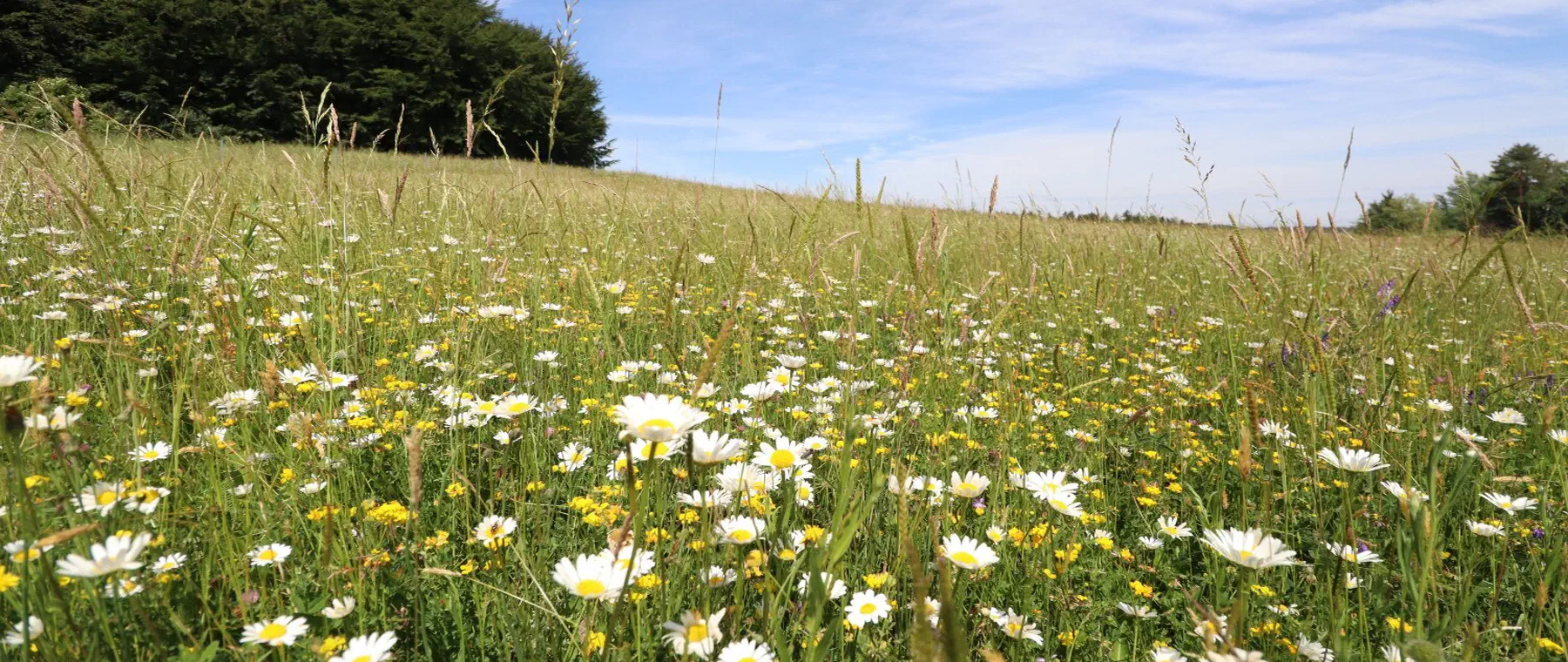
Conservation of calcareous grasslands and heathlands of the northern gravel plain, for example on Fröttmaninger Heide and Panzerwiese, through sheep grazing and shrub removal. These habitats are home to rare plants, wild bees and the sand lizard.
Lohwood and riparian woodland development
Securitisation and development of remnants of the historical lohwood belt, such as the Allacher Lohe and Angerlohe, through promotion of site-appropriate broadleaf mixed forests and dead wood and snags. Hardwood riparian forests are protected FFH habitat types.
Grassland extensification in the surrounding area
Conversion of intensively used areas into species-rich meadows and rewetting of groundwater-influenced sites in the moor belts on the city fringe. Such measures promote meadow-breeding birds, insects and water balance in the lowland moors.
Species protection CEF and FCS
Advanced replacement habitats for the sand lizard on railway land and embankments, spawning waters for spadefoot toad and other amphibians, bat roosts and kingfisher steep banks, each as a CEF or population-supporting FCS measure according to sections 44 and 45 BNatSchG.
Protected species in the State capital in the Munich gravel plain
Sand lizard
The sand lizard is widespread on the heathlands, railway embankments and gravel sites of the gravel plain. It is one of the species most frequently affected by impacts, for which advanced CEF measures are required according to § 44 BNatSchG.
About this species ›Spadefoot toad and amphibians
The spadefoot toad is a typical pioneer species of gravel pits, construction sites and heathland ponds in the Munich area. For it and other amphibians such as great crested newt and common toad, newly created, fish-free small water bodies in spatial context are proven compensation measures.
About this species ›Bats
Nymphenburg Palace Park with its ancient tree stand, the Isar floodplains and settlement margins serve species such as common noctule, large mouse-eared bat and common pipistrelle as roosts and hunting areas. All species are strictly protected, replacement roosts are required as a CEF measure in demolition and tree felling.
About this species ›Kingfisher
On the near-natural riverbank sections of the Isar, the kingfisher finds steep banks and structured water bodies. It is protected under Annex I of the Birds Directive, typical CEF measures are created steep banks and near-natural riverbank erosion.
About this species ›Skylark and crested lark
On the open heathlands of the northern gravel plain, such as Fröttmaninger Heide and Panzerwiese, skylark and crested lark breed. Conservation and management of open calcareous grasslands secure their habitat.
About this species ›Hazel dormouse
The structured lohwoods and woodland margins in northern and western Munich, such as in Allacher Lohe and Angerlohe, provide suitable habitat for the strictly protected hazel dormouse. Tree removal requires careful, phased tree extraction and networked replacement habitats.
About this species ›Which projects trigger a compensation obligation?
Housing construction and new urban quarters
High housing pressure leads to development of large new quarters, such as Freiham in western Munich, and to conversion and densification throughout the city area. Every new sealing triggers compensation and replacement obligations according to BayKompV.
Transport infrastructure
Major projects such as the second S-Bahn trunk line, extensions of U-Bahn and tram lines and expansion of roads and cycle superhighways generate substantial compensation requirements in the densely serviced city area.
Commerce, technology and trade fair
Expansions of office, commercial and technology sites and projects in the vicinity of the trade fair and commercial areas lead to ongoing impacts on nature and landscape that must be compensated under nature conservation law.
Green and open space development
Development of new parks and green corridors and upgrading of the Isar area combine urban development with ecological upgrading. Such projects can be linked with land unsealing, habitat networking and species protection measures as compensation.
From enquiry to monitoring
Contact and enquiry
Tell us your compensation requirement and the natural region. We check availability.
Offer and advice
A transparent offer covering measure types, scope and availability.
Coordination with authorities
Full coordination with the lower nature conservation authority. We handle everything.
Long-term monitoring
Permanent securing of the land, management and documentation across the contract term.
Eco-points in adjoining districts
All about eco-points
in the city of München
Request eco-points in the city of München
We will promptly prepare a transparent offer with matching eco-points held in stock in the city of München.