Eco-points and compensation areas
District of Miesbach
Immediately available eco-points from authority-recognised eco-accounts. greeNature is your full-service partner for compensation according to BayKompV in the Bavarian Highlands and Mangfallgebirge.
The District of Miesbach at a glance
The district of Miesbach is located in southern Upper Bavaria between the Munich metropolitan area and the border with Tyrol and belongs to the Bavarian Highlands. It extends from the gentle moraine landscape around Holzkirchen and Weyarn to the summit regions of the Mangfallgebirge and includes the well-known pre-Alpine lakes Tegernsee, Schliersee and Spitzingsee.
Landscape and geology divide the district into two areas. The north belongs to the Pre-Alpine Hilly and Moorland (BfN natural region D66) with ice-age-formed moraine ridges, dead-ice basins and numerous moorland and lowland moorland. The south belongs to the Northern Limestone Alps (natural region D68), where flysch mountains and limestone peaks of the Mangfallgebirge rise to the Rotwand. The Mangfall, Schlierach and Leitzach drain the area to the north.
Ecologically, the district is exceptionally rich. With the FFH area Mangfallgebirge (DE 8336-371) and the corresponding bird protection area (DE 8336-471), one of Bavaria's largest contiguous protected areas is located here. In addition, there are moorlands such as the Attenloher Filzen, the Ellbach and Kirchseemoor, as well as the near-natural valley areas of Mangfalltal and Leitzachtal. This mosaic of moorland, mountain hay meadows, alpine pastures, near-natural watercourses and mountain mixed forests is home to many species strictly protected under the FFH Directive and BNatSchG.
Economically, tourism around Tegernsee and Schliersee, small and medium-sized manufacturing and the growth area Holzkirchen with S-Bahn connection to Munich shape the district. Residential and commercial construction, traffic projects, tourism and leisure infrastructure, as well as energy projects (such as geothermal energy near Holzkirchen), regularly trigger impacts that must be compensated according to the Bavarian Compensation Regulation (BayKompV).
🗺️ Associated natural regions
Go to natural region D67 ›
Go to natural region D66 ›
Go to natural region D65 ›
📍 Selected municipalities
🌿 Ecological features
- FFH area Mangfallgebirge (DE 8336-371), one of Bavaria's largest FFH areas
- Bird protection area Mangfallgebirge with Rotwand area (DE 8336-471), habitat of alpine game birds
- FFH areas Mangfalltal (DE 8136-371) and Leitzachtal (DE 8237-371), near-natural pre-Alpine rivers
- Moorland areas Attenloher Filzen and Mariensteiner moorlands (DE 8235-371), as well as Ellbach and Kirchseemoor (DE 8235-301)
- Flysch mountains near Bad Wiessee (DE 8236-371) with species-rich mountain mixed forests
- FFH and bird protection area Taubenberg (DE 8136-302) at the transition to the pre-Alpine landscape
- Mountain hay meadows, alpine pastures and meadow plots with high botanical diversity
✅ greeNature on the ground
Our location in Bavaria (Kastl, Lkr. Altötting) is located in the same administrative region Upper Bavaria as the district of Miesbach. We know the Lower Nature Conservation Authority (Untere Naturschutzbehörde) in Miesbach, the land pools and the nature conservation characteristics of the Highlands and Mangfallgebirge from practice and accompany your project from demand analysis to completion.
Typical measures in the district of Miesbach
Moorland restoration
Rewetting of drained moorland and lowland moorland, for example in the Attenloher Filzen or in the Ellbach and Kirchseemoor. In addition to habitat gain for moorland-typical species, carbon is bound in the peat body.
Mountain hay meadows and meadow plots
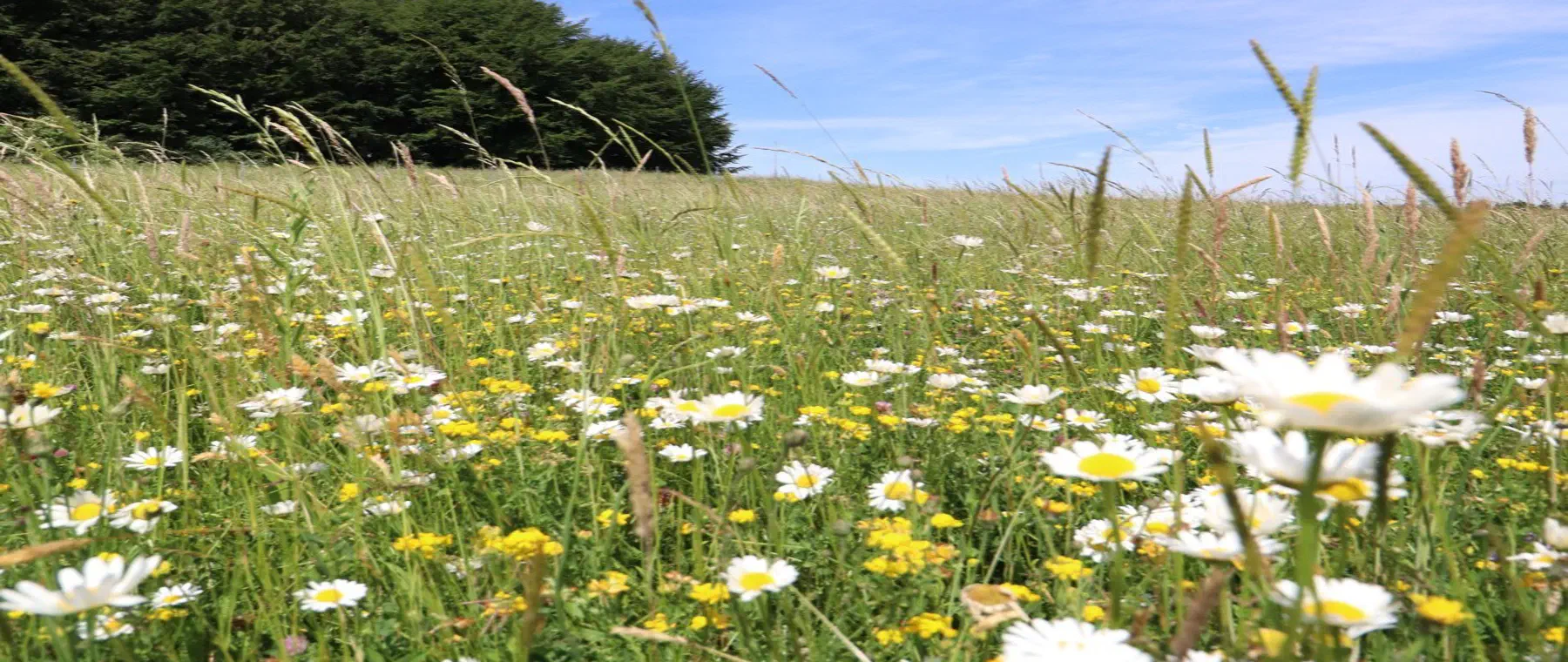
Resumption of extensive, late-onset mowing on species-rich mountain hay meadows and meadow plots. Preservation and development of habitats for meadow-breeding birds, butterflies and rare plant species of the pre-Alpine landscape.
Watercourse restoration
Decommissioning of riverbank revetments and development of near-natural banks on the Mangfall, Schlierach and Leitzach. Creation of gravel banks, steep banks and floodplain forest strips as habitat for kingfisher, brown trout and dipper.
Forest conversion and mountain mixed forest
Conversion of structurally poor coniferous plantations to site-appropriate mountain mixed forests of beech, sycamore and silver fir. Increase of dead wood and old wood content as the basis for cavity-nesting birds and bats.
Hedgerows and habitat network
Creation of hedgerows, field woodlands and traditional orchard stands in the moraine landscape around Holzkirchen and Weyarn. Networking of habitats as stepping stones for hazel dormouse, red-backed shrike and wild bees.
Species protection CEF/FCS
Advance compensation measures according to BayKompV: replacement roosts for bats, reptile habitats on sunlit slopes and railway embankments, as well as newly constructed spawning waters for amphibians, each planned according to function.
Protected species in the Bavarian Highlands and Mangfallgebirge
Bats
Mountain mixed forests, old alpine buildings and caves in the Mangfallgebirge provide roosts for greater mouse-eared bat, whiskered bat and other strictly protected species. Roost losses during renovation and demolition are compensated via CEF replacement roosts.
About this species ›Amphibians in moorland and floodplains
Yellow-bellied toad, alpine newt and grass frog inhabit moorland pools, spring flushes and floodplain water bodies. Periodically water-bearing small water bodies are a typical and effective compensation measure in the pre-Alpine landscape.
About this species ›Sand lizard
Sunlit railway embankments along the line to the Leitzach and Schlierach valleys, slopes and excavation sites are habitat of the sand lizard. In construction and infrastructure projects it is a frequent target and conflict species under § 44 BNatSchG.
About this species ›Kingfisher
Near-natural sections of the Mangfall, Schlierach and Leitzach with steep banks and clear water are breeding habitat of the kingfisher. CEF measures include the creation of nesting cliffs and the preservation of structured banks.
About this species ›Hazel dormouse
The strictly protected hazel dormouse lives in the hedgerows, forest edges and shrub margins of the moraine landscape. Woodland clearing requires avoidance measures and functional replacement of networked habitat structures.
About this species ›Alpine game birds and golden eagle
The bird protection area Mangfallgebirge (DE 8336-471) is home to capercaillie, black grouse and golden eagle. Projects in the alpine and subalpine space affect their conservation objectives and require special nature conservation assessment.
Which projects trigger a compensation obligation?
Settlement and commercial development
The Holzkirchen area is one of the growing municipalities in the hinterland of Munich. New residential and commercial areas, as well as densification, trigger compensation requirements according to BayKompV. Landowners in the vicinity can contribute their land as compensation areas.
Infrastructure and traffic
Expansion and renovation of state roads, bypasses, bridge structures across the Mangfall and Leitzach, as well as measures on the railway line of the Bavarian Highlands Railway, trigger compensation and replacement obligations.
Tourism and leisure infrastructure
Cable cars, snowmaking and ski facility projects, hotel and accommodation buildings around Tegernsee, Schliersee and Spitzingsee often intervene in sensitive pre-Alpine and moorland habitats and require demanding compensation.
Energy and renewables
Geothermal energy near Holzkirchen, hydroelectric plants on the pre-Alpine rivers and freestanding photovoltaics on moraine sites require nature conservation compensation and sometimes species protection CEF measures.
From enquiry to monitoring
Contact and enquiry
Tell us your compensation requirement and the natural region. We check availability.
Offer and advice
A transparent offer covering measure types, scope and availability.
Coordination with authorities
Full coordination with the lower nature conservation authority. We handle everything.
Long-term monitoring
Permanent securing of the land, management and documentation across the contract term.
Eco-points in adjoining districts
All about eco-points
in the district of Miesbach
Request eco-points in the district of Miesbach
We will promptly prepare a transparent offer with matching eco-points held in stock in the district of Miesbach.