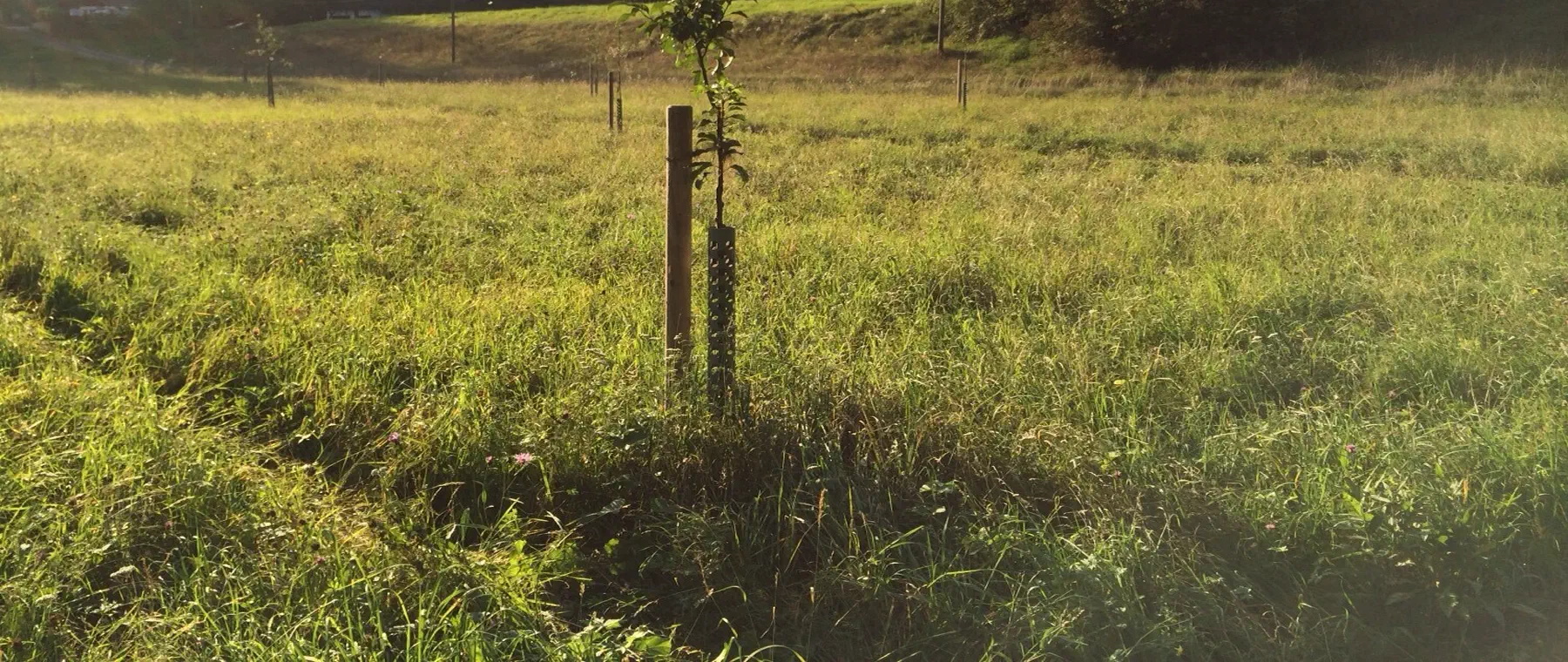
Eco-points and compensation areas
District of Lindau (Bodensee)
Eco-points for Lindau (Lake Constance) district from naturally appropriate compensation areas in the Lake Constance and West Allgäu area. greeNature accompanies compensation according to BayKompV as a full-service partner, from the land through the measure to recognition by the authority.
The District of Lindau (Bodensee) at a glance
Lindau (Lake Constance) district forms the south-western corner of Bavaria and belongs to the Swabian administrative region. To the south-west it is bordered across the Lake Constance shore by Baden-Württemberg with the Bodenseekreis and Ravensburg districts, to the south by Austrian Vorarlberg and to the east by Oberallgäu district. With around 323 square kilometres, it ranks among Bavaria's smaller districts, but its location on the lake and in the tri-border area makes it particularly distinctive in terms of natural regions and economics.
The landscape ranges from the flat Lake Constance basin across hilly West Allgäu upland to the first pre-Alpine ridges in the south. Distinctive are the height ridges built from Tertiary molasse and nagelfluh as well as the deeply incised gorges of Argen, Leiblach and Rohrach. High rainfall and a mild lakeside climate favour extensive grassland and moorland landscapes. In terms of natural regions, the district is distributed between the Pre-Alpine Hilly and Moorland (D66) with Lake Constance basin and West Allgäu upland as well as the Swabian-Upper Bavarian Pre-Alps (D67) in the area of the Front Bregenzerwald.
Ecologically the district is of European significance. The FFH area Bavarian Lake Constance shore protects shallow water zones, reed beds and wetland meadows on the lake, large parts of the water surface are also designated as an EU bird protection area. Scattered throughout the district are numerous moors and wetland meadows such as the Lindenberger Moos or the Stockenweiler Weiher, Degermoos and Schwarzenbach complex, supplemented by near-natural streams and gorge woodlands. These habitats are home to demanding and partly strictly protected species and make high demands on proper compensation when impacts occur.
Economically, dairy farming and grassland use, tourism on Lake Constance and a strong industrial core characterise the district, such as aerospace technology in Lindenberg and enterprises in the Lindau area. Commercial extensions, residential construction in the sought-after lakeside area and transport and energy projects regularly lead to impacts on nature and landscape. This creates a continuous need for legally secure compensation and replacement measures according to the Bavarian Compensation Regulation (BayKompV).
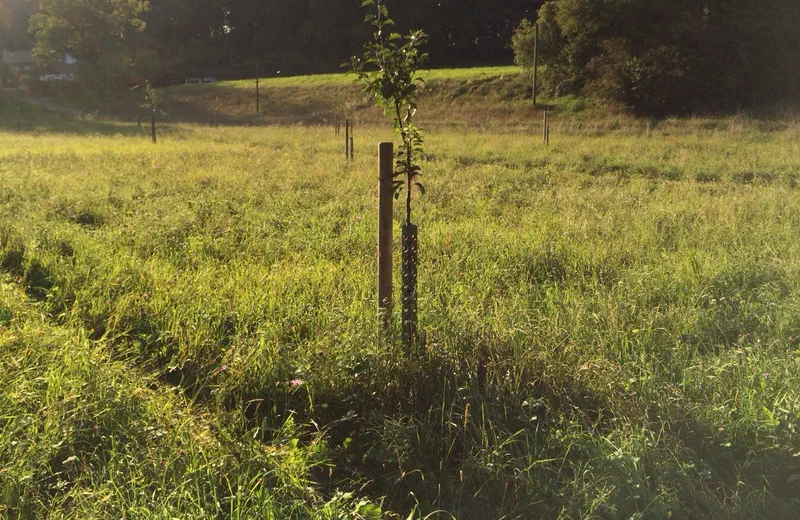
🗺️ Associated natural regions
Go to natural region D66 ›
Go to natural region D67 ›
📍 Selected municipalities
🌿 Ecological features
- Location on the Bavarian Lake Constance shore in the tri-border area with Austria and Switzerland
- FFH area Bavarian Lake Constance shore with shallow water zones, reed beds and wetland meadows
- Large parts of the Lake Constance water surface designated as EU bird protection area (SPA)
- Moore-rich cultural landscape with wetland meadows, for example in the Lindenberger Moos
- Nagelfluh and molasse geology with deeply incised gorges on the Argen, Leiblach and Rohrach
- Naturally located between Lake Constance basin, West Allgäu upland and Front Bregenzerwald
- Milk and grassland farming characterise much of the West Allgäu
✅ greeNature on the ground
greeNature develops and manages compensation areas in the Pre-Alpine moor and hilly land and in the Pre-Alps and knows the natural region requirements in the Lake Constance and West Allgäu area. As a full-service partner we handle land securitisation, measure planning, implementation and long-term management and coordinate compensation with the Lower Nature Conservation Authority of Lindau district.
Typical measures in the district of Lindau (Bodensee)
Wetland meadows and species-rich grassland
Development and extensive management of wetland and wet grassland meadows, as they are typical for the Lake Constance area and West Allgäu, to upgrade habitats and generate eco-points.
Moorland restoration
Rewetting of drained lowland and raised bogs in the moor-rich locations of the West Allgäu, with high ecological upgrading potential and a contribution to climate protection.
Flowing waters and gorges
Stream and gorge restoration on the Argen, Leiblach and Rohrach, creation of streamside buffer zones and promotion of near-natural water dynamics.
Lake Constance shoreline zones
Protection and development of shallow water zones, reed beds and riparian woodland in the vicinity of the Bavarian Lake Constance shore FFH area in close coordination with the nature conservation authority.
Hedgerows and field woodland
Creation and management of hedgerows, field woodlands and traditional orchards in the West Allgäu upland cultural landscape for habitat networking and structural enrichment.
Small water bodies and amphibian habitats
New creation of ponds and pools as well as networking of spawning waters as habitat for amphibians and as an advanced CEF measure.
Protected species in the Lake Constance and West Allgäu
Kingfisher
The kingfisher inhabits near-natural shores on Lake Constance, Argen and Leiblach. Steep banks and structurally rich water margins are important breeding habitats that must be considered in water management interventions.
About this species ›Bats
Several strictly protected bat species use forests, gorges, traditional orchards and buildings as roosts and hunting areas. Tree felling and building demolition can trigger prohibition clauses under § 44 BNatSchG.
About this species ›Amphibians
The numerous moors, ponds and wetland meadows offer spawning waters for various amphibian species. Conservation and creation of small water bodies are among the proven compensation approaches.
About this species ›Sand lizard
The sand lizard inhabits south-facing slopes, railway embankments and margins. It is one of the most common planning-relevant species in construction projects and often requires advanced CEF measures.
About this species ›Hazel dormouse
The hazel dormouse lives in hedgerows, woodland margins and gorge woodlands of the cultural landscape. As a species of Annex IV of the FFH Directive, avoidance and compensation measures are required for tree removal.
About this species ›Great crested newt
The great crested newt, a species of Annex II of the FFH Directive, is dependent on sunny, fish-free ponds in the moor and pond landscape. Conservation of networked spawning waters secures its populations.
About this species ›Which projects trigger a compensation obligation?
Commerce and industry
Extensions of commercial and industrial areas, for example around high-performing enterprises such as aerospace technology in Lindenberg, seal land and trigger compensation obligations.
Housing and settlement
High demand for housing in the Lake Constance area leads to new residential areas and densification with corresponding compensation requirements.
Transport infrastructure
Bypasses, expansion of federal and state roads and measures on rail infrastructure impact on nature and landscape.
Renewable energy
Ground-mounted photovoltaic systems and other energy projects consume land and require nature conservation compensation.
From enquiry to monitoring
Contact and enquiry
Tell us your compensation requirement and the natural region. We check availability.
Offer and advice
A transparent offer covering measure types, scope and availability.
Coordination with authorities
Full coordination with the lower nature conservation authority. We handle everything.
Long-term monitoring
Permanent securing of the land, management and documentation across the contract term.
Eco-points in adjoining districts
All about eco-points
in the district of Lindau (Bodensee)
Request eco-points in the district of Lindau (Bodensee)
We will promptly prepare a transparent offer with matching eco-points held in stock in the district of Lindau (Bodensee).