Eco-points and compensation areas
District of Lichtenfels
Eco-points available immediately from officially recognised eco-accounts in Lichtenfels district. greeNature solutions is your full-service partner for compensation under BayKompV on the Upper Main and in the northern Franconian Alb.
The District of Lichtenfels at a glance
Lichtenfels district is located in the west of the administrative region of Upper Franconia, where the Main flows through the district area in a west-east direction. Lichtenfels is the district seat, with neighbouring districts of Coburg, Kronach, Kulmbach, Bayreuth and Bamberg. Characteristic is the cultural landscape known as God's garden on the Upper Main with the table mountain Staffelberg, Banz monastery and the Vierzehnheiligen basilica.
Landscape and geologically, three natural regions meet in the district area. The broad Main valley and Upper Main hill country (natural region D62) form the central axis with floodplains, terraces and old river meanders. In the south, the Alb scarp of the Northern Franconian Alb (natural region D61) with lime and dolomite rocks of the white limestone rises up, in the west the Itz-Baunach hill country (natural region D59) from the Fränkisches Keuper-Liasland encroaches. This diversity creates a close interlinking of moist valley floodplains, warm-dry limestone slopes and forested heights.
Ecologically, the Upper Main valley is particularly significant, where the LIFE-nature project Upper Main valley created shallow water zones, reed beds and floodplain waters for amphibians and water birds. At the Alb scarp, calcareous grassland, dolomite cliffs and poor meadows characterise the FFH area Alb scarp in Lichtenfels district. Overall, twelve FFH areas of the Natura 2000 network lie wholly or partially in the district, in addition to extensive forest areas such as the Banzer Wald.
Economically, the district is traditionally known as the German centre of basket and wickerwork, with Michelau am Main as its commercial focus. Today, the automotive supply industry and upholstered furniture production define employment. Commercial and industrial extensions, expansion of transport routes (including B173, A73 and the ICE route through Lichtenfels) and new settlement and energy projects regularly generate compensation requirements under BayKompV.
🗺️ Associated natural regions
Go to natural region D59 ›
Go to natural region D62 ›
Go to natural region D61 ›
📍 Selected municipalities
🌿 Ecological features
- FFH area Alb scarp in Lichtenfels district, calcareous grassland and dolomite cliffs of the Northern Franconian Alb
- LIFE-nature project Upper Main valley, shallow water zones and floodplain habitats on the Main
- Staffelberg, distinctive table mountain of the white limestone above the Main valley (Mountain of the Franks)
- God's garden on the Upper Main with Banz monastery and Vierzehnheiligen basilica
- Twelve FFH areas of the Natura 2000 network in the district
- Main as a defining watercourse and habitat network axis
- Banzer Wald, large continuous forest area as habitat network
✅ greeNature on the ground
greeNature solutions develops and manages compensation areas suited to the character of the Upper Main and northern Franconian Alb. We understand the lower nature conservation authority at the District office Lichtenfels, the regional land pools and the natural region characteristics of natural regions D62, D61 and D59 from practice. From requirement analysis through natural region assignment of the impact and land securing to implementation, management and monitoring, we handle the complete process in compliance with BayKompV, including advance CEF measures under § 44 BNatSchG where species protection requirements exist.
Typical measures in the district of Lichtenfels
Main valley floodplain restoration
Creation of shallow water zones, bays and oxbows in the Main floodplain, in accordance with the LIFE project Upper Main valley. New spawning waters and reed beds for great crested newt, amphibians and water birds.
Calcareous grassland at the Alb scarp
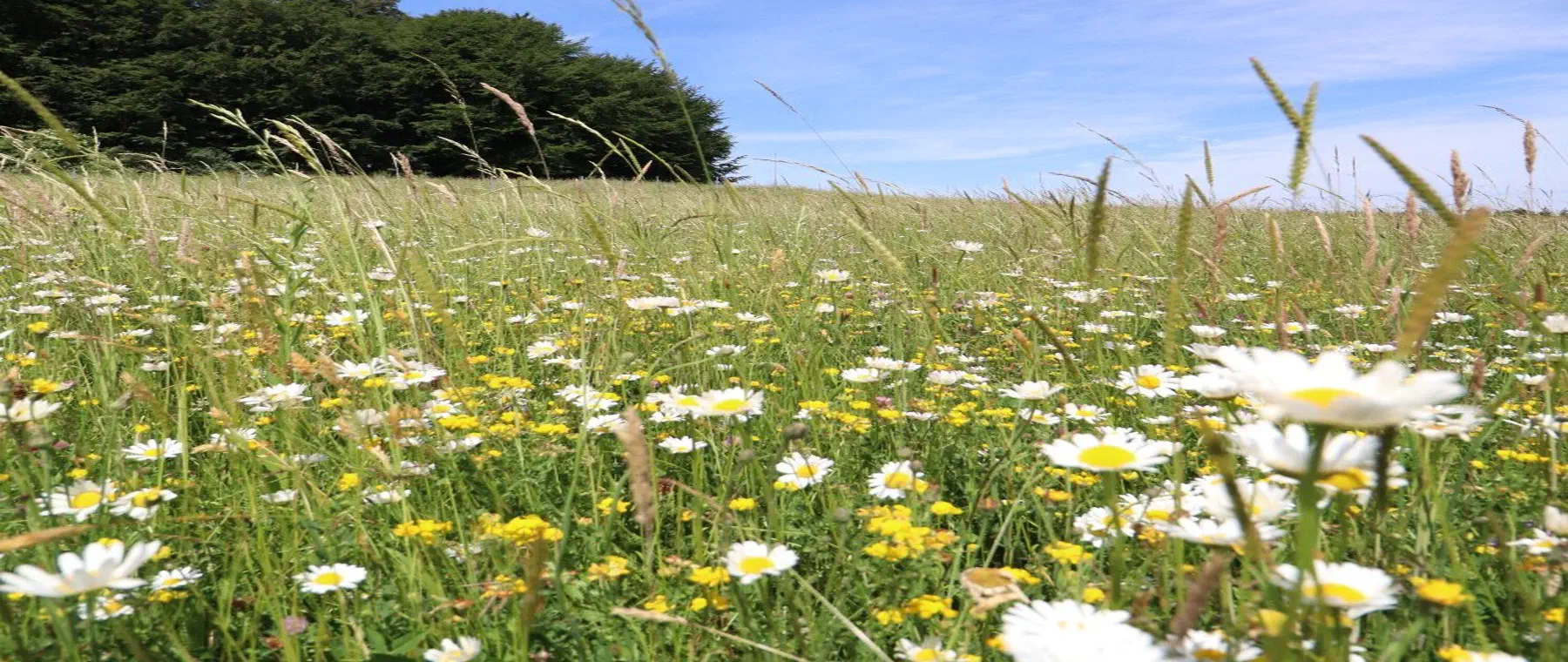
Clearing and extensive grazing with sheep and goats on the dry slopes of the Northern Franconian Alb. These areas achieve high value points under BayKompV and secure thermophilic insects and reptiles.
Traditional orchards
Establishment and reactivation of traditional orchard stands on the Main valley slopes and in hilly landscapes, habitat for cavity-nesting birds, bats and wild bees.
Grassland extensification
Conversion of intensively-used valley meadows into species-rich wet and extensively-managed grassland along Main and Rodach, habitat for meadow-breeding birds such as northern lapwing.
Natural forest development
Conversion of structurally poor stands to site-appropriate deciduous mixed forests in the Banzer Wald and on forested Alb slopes, with old wood and deadwood as habitat for bats and European wildcat.
Hedgerows and habitat network
Establishment of hedgerows, copses and stepping-stone habitats in the simplified agricultural landscape to network habitats between Main valley, Franconian Alb and Itz-Baunach hill country.
Protected species in the God's garden on the Upper Main
Great crested newt and amphibians in the Main valley
The great crested newt (Annex II FFH Directive) inhabits the floodplain waters of the Upper Main. The shallow water zones and bays created in the LIFE project are ideal spawning waters. Typical CEF measure: creation of networked small ponds.
About this species ›Kingfisher on the Main
Natural riverbank sections and steep banks on the Main and Rodach provide the kingfisher with breeding sites. CEF measures include modelling of steep banks and permitting natural riverbank erosion.
About this species ›Northern lapwing and meadow-breeding birds
Moist valley meadows in the Main valley are breeding and resting habitat for the northern lapwing. Grassland extensification, flood channels and rewetting of floodplain areas are effective measures for meadow-breeding birds.
About this species ›Sand lizard on dry slopes
The calcareous grassland and dolomite cliffs of the Northern Franconian Alb and railway and path slopes are habitat for the sand lizard. Sand lenses, deadwood and stone structures are common species protection measures in construction projects.
About this species ›Bats in rock and forest
Caves and dolomite cliffs of the Franconian Alb as well as old forests such as the Banzer Wald provide bats with roosts and hunting areas. Roost trees, winter roosts and structurally-diverse forest edges are typical FCS and CEF components.
About this species ›European wildcat in forests
The Banzer Wald and the forested Alb slopes are part of the distribution area of the European wildcat. Forest edge design, old and deadwood and habitat networking along forest areas promote the strictly protected species.
About this species ›Which projects trigger a compensation obligation?
Commerce and industry
The automotive supply industry and upholstered furniture production, especially in the Michelau and Lichtenfels area, regularly lead to compensation and replacement obligations under BayKompV when operations expand and new industrial areas are designated.
Infrastructure and transport
Expansion of federal and state roads (including B173), the A73 and the ICE route through Lichtenfels and associated rail projects generate compensation requirements for impacts on floodplains, forests and grassland.
Energy and renewables
Free-area photovoltaic installations on converted and agricultural land and wind power projects on the forested heights require nature conservation compensation and species protection assessments for birds and bats.
Settlement development
New residential and commercial areas in Lichtenfels, Bad Staffelstein and municipalities along the Main require compensation measures. Land owners in the Main valley can offer their land as compensation areas.
From enquiry to monitoring
Contact and enquiry
Tell us your compensation requirement and the natural region. We check availability.
Offer and advice
A transparent offer covering measure types, scope and availability.
Coordination with authorities
Full coordination with the lower nature conservation authority. We handle everything.
Long-term monitoring
Permanent securing of the land, management and documentation across the contract term.
Eco-points in adjoining districts
All about eco-points
in the district of Lichtenfels
Request eco-points in the district of Lichtenfels
We will promptly prepare a transparent offer with matching eco-points held in stock in the district of Lichtenfels.