Eco-points and compensation areas
District of Landshut
Immediately available eco-points from officially recognised eco-accounts for projects in Landshut district. greeNature is your full-service partner for compensation under BayKompV in the Isar valley and Lower Bavarian hill country.
The District of Landshut at a glance
Landshut district is located in the heart of Lower Bavaria and forms a ring around the independent city Landshut, which itself does not belong to the district. With around 1,348 km², it ranks among the largest districts by area in Bavaria and is divided into 35 towns and municipalities. The Isar runs through the district territory from west to east and divides it into a northern and a southern hill country area. The administrative seat of the District Office has been in Essenbach since October 2025.
Geographically, a tertiary hill country with thick loess soil deposits characterises the image, which north of the Isar belongs to the Danube-Isar hill country and south to the Isar-Inn hill country. Both partial areas are located in the BfN natural region D65 (Lower Bavarian Hill Country and Isar-Inn gravel plains). Along the Isar, Ice Age gravel terraces with rich gravel deposits extend, in the north-west the foothills of the Hallertau with their hop fields reach into the district.
Ecologically, the Isar with its riparian forests and oxbows forms the central artery of life. The Middle Isar lakes bird sanctuary is an inter-regionally significant resting and breeding area for waterfowl. In addition, there are wet meadows in the Vils valley as well as at the Große and Kleine Laber, several Habitats and Avifaunal Directive sites and the numerous gravel pits, which serve as secondary habitats for pioneer species.
Economically, the district is heavily influenced by the BMW plant in Landshut and the automotive supply industry, supplemented by active gravel extraction on the Isar terraces, logistics along the A92 and the energy location Ohu near Essenbach. Factory extensions, raw material extraction, grid expansion and settlement development in the surroundings of Munich and Landshut regularly generate substantial compensation requirements under BayKompV.
🗺️ Associated natural regions
Go to natural region D65 ›
📍 Selected municipalities
🌿 Ecological features
- Isar as defining artery of life, divides the district into a northern and a southern hill country half
- Middle Isar lakes bird sanctuary, inter-regionally significant resting and breeding area for waterfowl
- Vils valley as well as Große and Kleine Laber with wet meadows and Habitats Directive habitats
- Extensive Isar gravel terraces with active gravel extraction, gravel pits as secondary habitats
- Fertile loess arable landscape, in the north-west foothills of the Hallertau with hop cultivation
- District surrounds the independent city Landshut, District Office in Essenbach since 2025
✅ greeNature on the ground
Our Bavarian location in Kastl (district Altötting) is in south-eastern Bavaria, not far from Landshut district. We know the lower nature conservation authority in Essenbach, the regional land pools and the peculiarities of compensation law in the Isar valley from ongoing project practice.
Typical measures in the district of Landshut
Restoration of Isar floodplains
Development of near-natural riparian forests, oxbows and bank structures along the Isar, creation of breeding habitats and breeding habitats for little ringed plover, common sandpiper and kingfisher.
Restoration of gravel pits
Ecological enhancement of former and active extraction sites on the Isar terraces, steep banks, raw soils and small water bodies as secondary habitats for sand lizard, yellow-bellied toad and sand martin.
Grassland extensification in the Vils valley
Conversion of intensively managed wet areas on the Vils and Laber into species-rich meadows, habitat for meadow-breeding birds such as northern lapwing and whinchat as well as for amphibians.
Arable extensification and flower areas
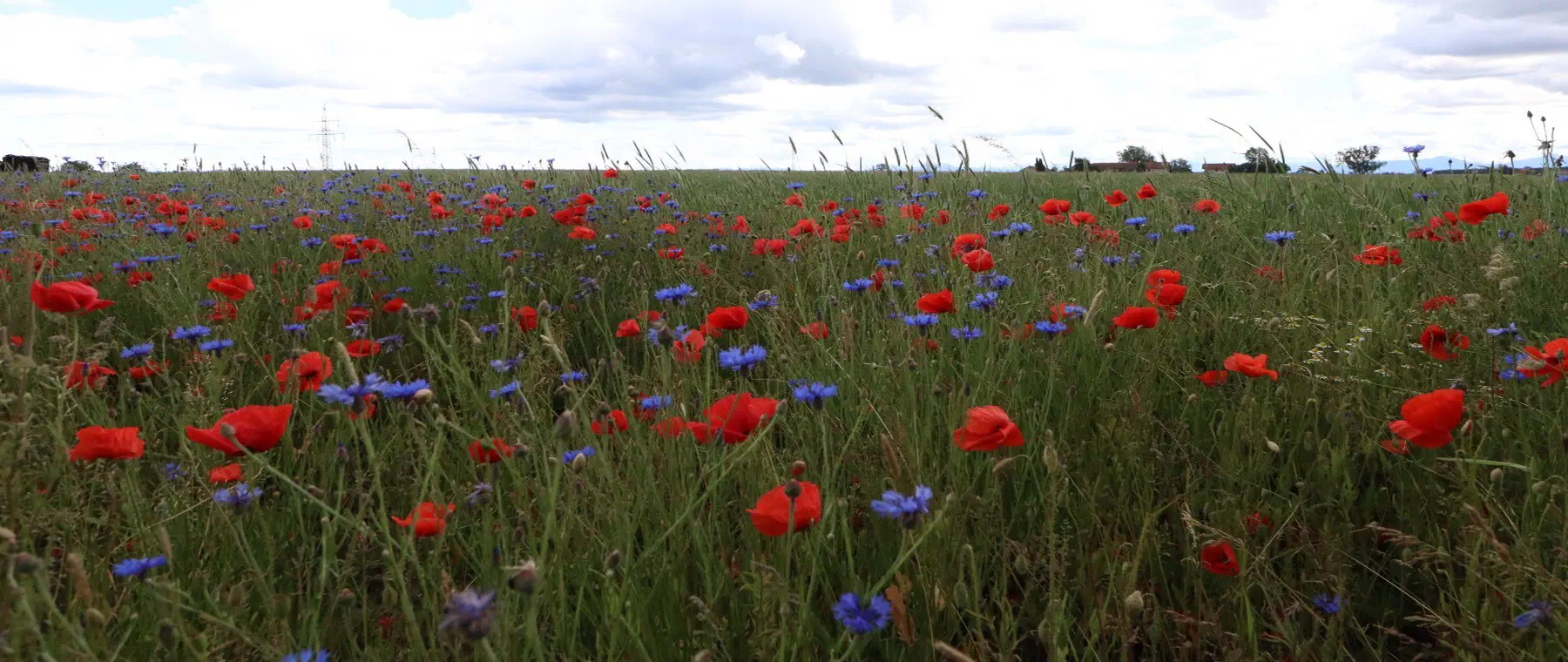
Skylark gaps, flower and fallow strips in the simplified loess arable landscape, stepping stones for skylark, grey partridge, brown hare and wild bees.
Species protection CEF/FCS
Tailored advanced compensation measures: sand lizard habitats on railway embankments and gravel areas, beaver conflict management on the Isar, kingfisher steep banks and bat roosts, in compliance with BayKompV and § 44 BNatSchG.
Hedgerows, habitat networks and new afforestation
Establishment of hedgerow lines and field copses in agricultural land as well as site-appropriate broadleaf mixed forests on marginal agricultural sites, networking of Isar floodplains with the hill country.
Protected species in the Isar valley and Lower Bavarian hill country
Skylark
Characteristic species of the wide loess arable landscape. Skylark gaps, flower strips and extensive edge structures are typical CEF measures in impacts on agricultural land.
About this species ›Northern lapwing
Breeds on wet meadows in the Vils valley and in the Isar floodplains. Rewetting and grassland extensification create and secure its breeding habitats.
About this species ›Kingfisher and beaver
The near-natural Isar sections and oxbows provide steep banks and bank structures. Bank collapses, steep bank modelling and beaver ponds are recurring compensation measures.
About this species ›Sand lizard
Inhabits railway embankments, gravel extraction sites and slopes on the Isar gravel terraces. Frequent target species in infrastructure and raw material projects, secured via advanced CEF habitats.
About this species ›Great crested newt and amphibians
Great crested newt, tree frog and yellow-bellied toad use ponds, oxbows and water-filled gravel pits in the Vils and Isar valleys. Creation of breeding ponds is a proven measure.
About this species ›Bats
Greater mouse-eared bat, common pipistrelle and other species hunt in riparian forests and orchard stands. Roosts in old trees and buildings are secured via replacement roosts and habitat trees.
About this species ›Which projects trigger a compensation obligation?
Industry and automotive
The BMW plant in Landshut and automotive suppliers in the surrounding area lead to factory extensions, commercial and logistics settlements. Such projects regularly trigger compensation and replacement obligations under BayKompV, for which greeNature provides land and measures.
Raw material extraction and gravel mining
The gravel deposits of the Isar terraces are intensively mined. New openings and extensions require nature conservation compensation as well as species protection measures for sand lizard, sand martin and yellow-bellied toad.
Infrastructure and transport
The expansion of federal and state roads, bypass routes, railway lines and the A92 as well as bridge structures over the Isar create impacts on floodplains and open land with corresponding compensation requirements.
Energy and grid expansion
Ground-mounted photovoltaic installations, high-voltage lines (including in the Adlkofen area) and the decommissioning of the Ohu nuclear site near Essenbach entail nature conservation compensation and CEF measures.
From enquiry to monitoring
Contact and enquiry
Tell us your compensation requirement and the natural region. We check availability.
Offer and advice
A transparent offer covering measure types, scope and availability.
Coordination with authorities
Full coordination with the lower nature conservation authority. We handle everything.
Long-term monitoring
Permanent securing of the land, management and documentation across the contract term.
Eco-points in adjoining districts
All about eco-points
in the district of Landshut
Request eco-points in the district of Landshut
We will promptly prepare a transparent offer with matching eco-points held in stock in the district of Landshut.