Eco-points and compensation areas
City of Landshut
Eco-points available immediately from officially recognised eco-accounts. greeNature is your full-service partner for compensation according to BayKompV in the independent city of Landshut and in the lower Bavarian Isar valley.
The City of Landshut at a glance
The independent city of Landshut lies on the Isar in the lower Bavarian hilly region and is the seat of the Government of Lower Bavaria. With roughly 65.83 square kilometres, about 76,000 people live there. Unlike the like-named district, which completely encloses the city area, the city forms an independent municipal administrative unit with its own lower nature conservation authority.
The Isar divides the city area into a northern part in the Danube-Isar hilly region and a southern part in the Isar-Inn gravel plain. Both belong to the BfN natural region D65 (Lower Bavarian hilly region and Isar-Inn gravel plains). Characteristic are the broad Isar valley with floodplains and terraces and the steep, predominantly wooded Isar cliff slopes (Isarleite).
Ecologically significant are the Isar valley with its floodplain forests and the Isar cliffs. In the city area and surrounding area lie nature reserves such as the bird sanctuary of the Middle Isar reservoirs, the former training area with Isar cliff and the Rosenau. Parts of these areas belong to the European Natura 2000 network, particularly as bird protection and Natura 2000 habitats along the Isar.
Economically, administration, university and industry shape the city, including a major BMW Group plant. Housing development in a growing city, commercial and infrastructure projects and expansion of transport routes regularly generate impacts on nature and landscape, whose compensation according to the Bavarian Compensation Ordinance (BayKompV) must be provided in value points.
🗺️ Associated natural regions
Go to natural region D65 ›
📍 City districts
🌿 Ecological features
- Isar valley with floodplain forests, terraces and the wooded Isar cliff slopes (Isarleite)
- Vogelfreistätte (bird sanctuary) Middle Isar reservoirs, significant stopover and breeding site for waterbirds
- Former training area Landshut with Isar cliff, species-rich dry and lean site
- Rosenau Nature Reserve in the Isar floodplain
- Natura 2000 areas along the Isar (bird protection and Natura 2000 habitats)
- Mill Island and Isar islands in the city centre as urban-fringe watercourse habitats
✅ greeNature on the ground
greeNature is rooted in the Bavarian Inn-Salzach region (office Kastl, Altötting district) and operates throughout Lower Bavaria. We know compensation practice in natural region D65, the requirements for impacts in the Isar valley and coordination with the lower nature conservation authority of the city of Landshut from ongoing project work.
Typical measures in the city of Landshut
Watercourse and floodplain restoration
Connection of oxbows, development of bank structures and naturalised conversion of watercourse sections on the Isar and secondary watercourses. Spawning and breeding habitats and continuous floodplain habitats are created in the city area and surrounding area.
De-sealing and inner development
Removal of sealed surfaces, greening and de-sealing in densely built urban space. Such measures reduce impact, improve city climate and can be credited as a compensation element according to BayKompV.
Grassland extensification in the surrounding area
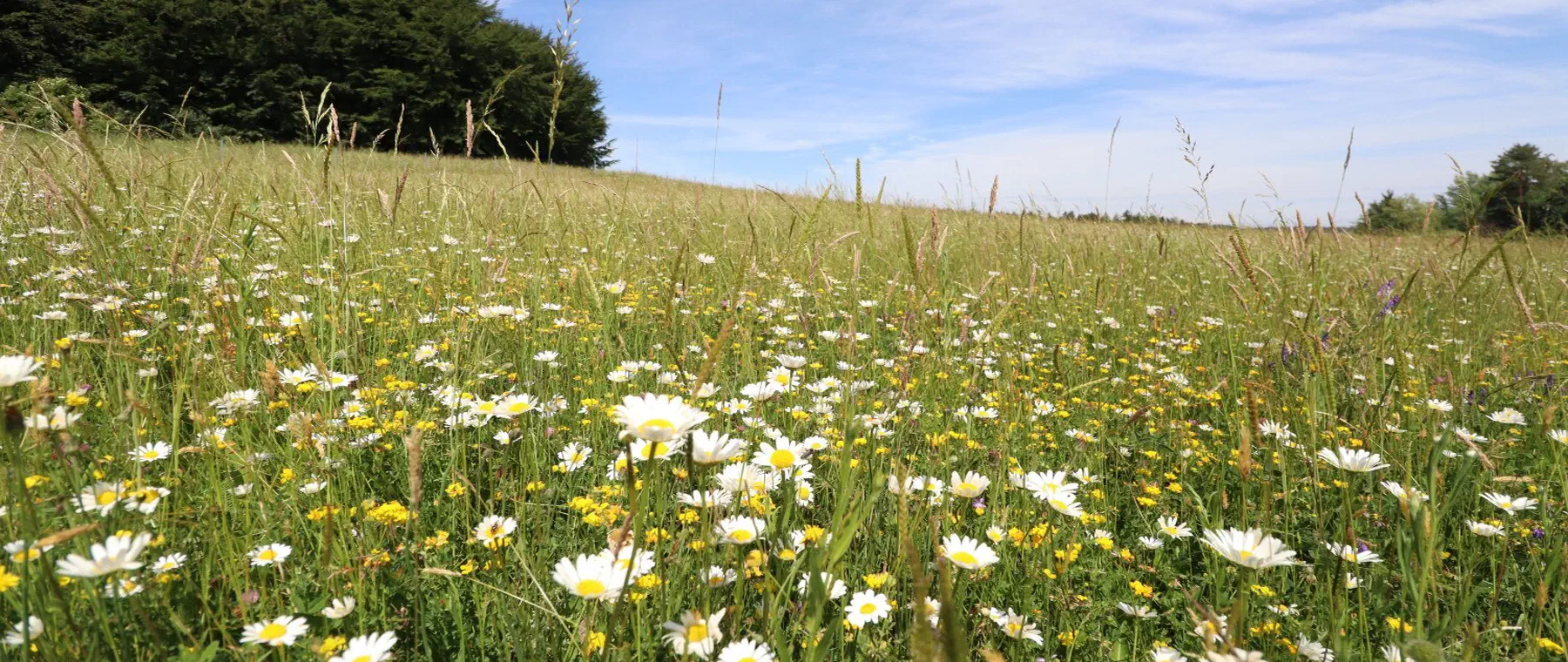
Conversion of intensively used arable and grassland areas into species-rich meadows on the terraces and in the Isar valley. Adapted cutting and fertiliser abstinence create habitat for meadow-breeding birds and insects.
Steep slope and floodplain forest development
Upgrade of wooded Isar cliffs and floodplain forest stocks through site-appropriate tree species, promotion of old and deadwood and natural woodland structure.
Species protection CEF and FCS
Bat roosts on buildings in the old town, kingfisher steep banks on the Isar and replacement habitats for sand lizard on slopes and on dry sites, each as a prerequisite CEF or population-supporting FCS measure according to § 44 and § 45 BNatSchG.
Hedgerows, traditional orchards and habitat network
Establishment of hedgerows, field woodland and traditional orchard stands in urban-fringe areas to network habitats and create stepping-stone habitats between Isar valley and hilly region.
Protected species in the Isar city in the lower Bavarian hilly region
Water and migratory birds at the Isar reservoirs
The Vogelfreistätte (bird sanctuary) Middle Isar reservoirs is a significant stopover, breeding and wintering site for ducks, divers, herons and other waterbirds. Impacts in the surrounding area require special consideration for rest and feeding areas.
Kingfisher on the Isar
Naturalised steep banks and collapse edges of the Isar offer breeding sites for the strictly protected kingfisher. For bank and bridge construction, steep bank remodelling and bank restoration are proven CEF measures.
About this species ›Sand lizard on dry sites
The former training area with Isar cliff, railway embankments and dry slopes are habitat for the strictly protected sand lizard. In construction projects, translocation and establishment of replacement habitats with sunny spots and winter quarters are typical CEF measures.
About this species ›Bats in cliff forests and old town
The Isar cliff forests and buildings in the historical old town provide hunting and roost areas for several bat species (Annex IV FFH Directive). Demolition and renovation require replacement roosts as a CEF measure.
About this species ›Amphibians in the Isar floodplains
Common frog, common toad and yellow-bellied toad settle floodplain waters, ponds and semi-wet depressions along the Isar. Replacement spawning waters in spatial context secure their breeding sites during impacts.
About this species ›Northern lapwing and meadow-breeding birds
Damp meadows and open areas in the Isar valley are habitat for the northern lapwing and other meadow-breeding birds. Extensification and rewetting of grassland support the populations and serve as a compensation measure.
About this species ›Which projects trigger a compensation obligation?
Residential construction and inner development
As a growing city, Landshut regularly designates new residential and mixed-use areas and densifies the existing stock. The associated land consumption triggers compensation and replacement obligations according to BayKompV.
Commerce and industry
Landshut is a significant industrial site, including a major BMW Group plant. Extensions of commercial and industrial areas generate compensation requirements, which greeNature covers through eco-accounts and land pools.
Traffic and infrastructure
Expansion and conversion of federal and state roads (e.g. in connection with B15 and B299), railway facilities and urban infrastructure lead to impacts that must be compensated according to BayKompV.
Public facilities and education
Expansion of university, hospital and public facilities and their associated development generates compensation requirements in the city area.
From enquiry to monitoring
Contact and enquiry
Tell us your compensation requirement and the natural region. We check availability.
Offer and advice
A transparent offer covering measure types, scope and availability.
Coordination with authorities
Full coordination with the lower nature conservation authority. We handle everything.
Long-term monitoring
Permanent securing of the land, management and documentation across the contract term.
Eco-points in adjoining districts
All about eco-points
in the city of Landshut
Request eco-points in the city of Landshut
We will promptly prepare a transparent offer with matching eco-points held in stock in the city of Landshut.