Eco-points and compensation areas
District of Kronach
Eco-points available immediately from officially recognised eco-accounts for Kronach district. greeNature solutions is your full-service partner for compensation under BayKompV in the Franconian Forest and Upper Main hill country.
The District of Kronach at a glance
Kronach district is located in the north of Upper Franconia on the border with Thuringia and belongs to the administrative region of Upper Franconia. Characteristic is the Franconian Forest, a forested upland with deeply incised stream valleys forming the largest part of the district area. The south-western edge around the district seat Kronach opens to the Upper Main hill country, where Rodach and Haßlach converge.
Geologically, the Franconian Forest is part of the Variscan basement and is composed of shales, greywackes and diorite dykes. The acidic, often shallow soils and harsh upland climate have formed a cultural landscape of forest, mountain meadows and narrow valleys. Historically, timber rafting on Rodach and Wilder Rodach shaped the region, evidenced by still existing timber ponds and natural watercourses.
Ecologically significant are the low-disturbance forest complexes of the Franconian Forest Nature Park, the natural stream valleys and a series of calcareous grasslands and bat roosts at the transition to the hill country. The district has ten FFH areas with numerous sections, including the Steinachtal, which is also designated as an EU bird protection area (SPA 5631-471), as well as significant greater mouse-eared bat colonies at Kronach and Steinwiesen.
Economically, the district is strongly industrial and medium-enterprise in character, with automotive, plastics and glass industry suppliers and electronics manufacturing. Business expansions, industrial estates, expansion of transport routes and wind energy projects in forests regularly generate compensation requirements under BayKompV, which are met through eco-points and compensation areas.
🗺️ Associated natural regions
Go to natural region D48 ›
Go to natural region D62 ›
📍 Selected municipalities
🌿 Ecological features
- Franconian Forest Nature Park, extensive, low-disturbance forest landscape
- EU bird protection area and FFH area Steinachtal (SPA 5631-471)
- Greater mouse-eared bat colonies Kronach and Steinwiesen, FFH bat roosts
- Calcareous grassland between Vogtendorf and Wötzelsdorf, thermophilic dry habitats
- Natural stream valleys of Rodach, Wilder Rodach and Haßlach with timber-rafting history
- Moorland and wet areas in the Franconian Forest, for example around Nordhalben
- Franconian Forest as well-known distribution area for European wildcat
✅ greeNature on the ground
greeNature solutions manages compensation projects throughout Bavaria and has practical experience of the Franconian Forest. We coordinate measures with the lower nature conservation authority at the District office Kronach, assign the impact to the correct natural region (D48 or D62) and provide suitable eco-points from recognised eco-accounts.
Typical measures in the district of Kronach
Natural forest conversion
Conversion of structurally poor spruce plantations into site-appropriate deciduous and mixed forests with beech, sycamore, silver fir and oak. Building old wood and deadwood and tiered forest edges ecologically upgrade typical Franconian Forest stands and stabilise them against drought and bark beetle.
Watercourse restoration
Restoration of natural stream courses at Rodach, Wilder Rodach, Haßlach and Kronach through removal of riverbank structures, reconnection of floodplains and promotion of self-regulating development. Kingfisher, dipper, brown trout and bullhead benefit.
Mountain meadows and extensively-managed grassland
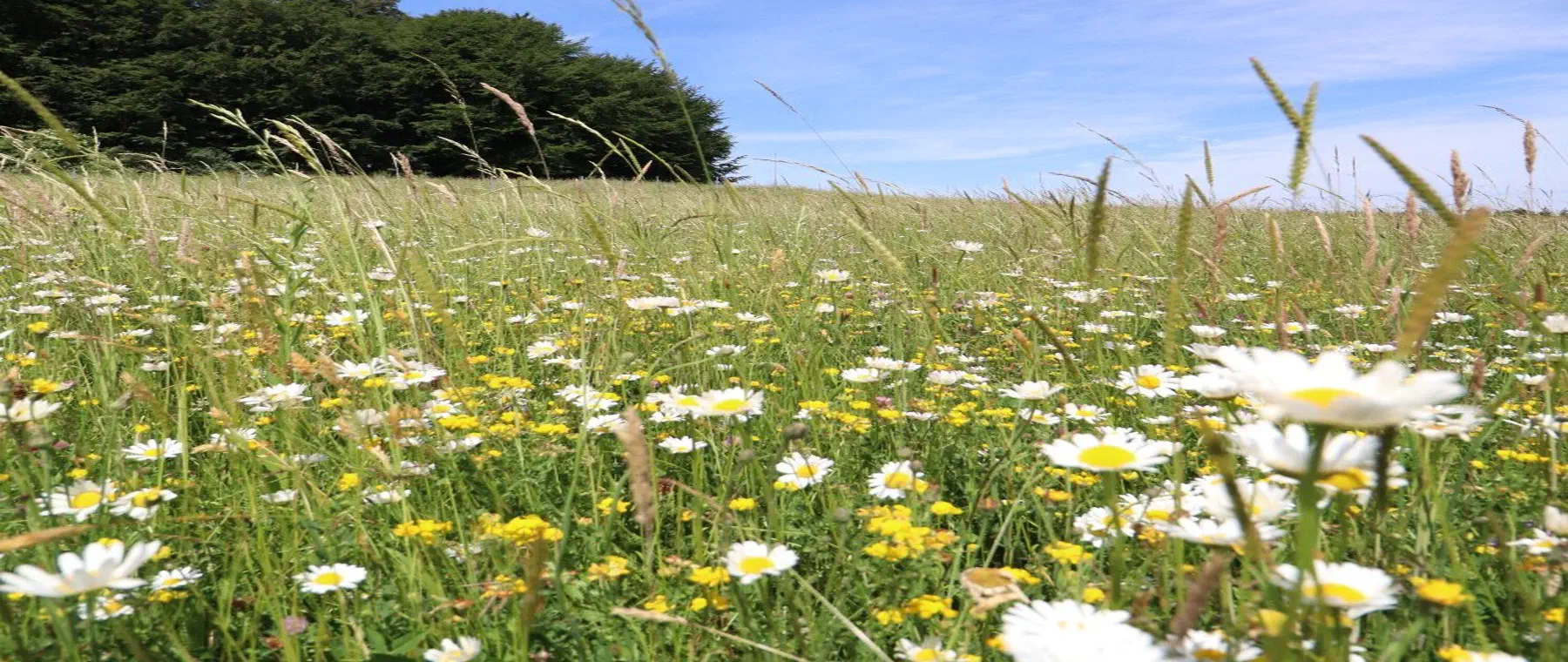
Preservation and development of species-rich mountain and wet meadows through adapted mowing, extensification and no fertilisation. These open Franconian Forest habitats depend on regular management and harbour meadow-breeding birds, butterflies and insect communities.
Moorland and wet areas
Rewetting of drained moorland and wet areas through removal of drainage systems and water level increase. Measures bind carbon, improve water retention and secure habitats for amphibians and specialised moorland species.
Species protection CEF and FCS
Tailored measures under § 44 and § 45 BNatSchG, such as securing bat roosts at the greater mouse-eared bat colonies, black stork nest protection zones, riverbanks for kingfisher and habitat networking for European wildcat in forest connectivity.
Hedgerows and habitat network
Establishment of hedgerows, copses and traditional orchard stands at the transition from Franconian Forest to Upper Main hill country. Such stepping-stone habitats link forest and grassland and create habitat for great grey shrike, wild bees and reptiles.
Protected species in the Franconian Forest and Upper Main hill country
Greater mouse-eared bat and bats
The FFH greater mouse-eared bat colonies at Kronach and Steinwiesen are among the region's significant breeding colonies. When impacts affect roosts, movement corridors or hunting habitats, CEF measures such as replacement roosts and securing habitat trees are required.
About this species ›European wildcat
The Franconian Forest is a well-known distribution area for the strictly protected European wildcat. Fragmentation-free forest complexes, forest edges and shrub corridors are critical for the species, so habitat networking and crossing aids are typical measures.
About this species ›Black stork
The large, low-disturbance forests with clear forest streams provide black stork breeding and feeding habitats. Nest protection zones, securing old wood and watercourse restoration are proven CEF and FCS measures.
About this species ›Kingfisher
On Rodach, Haßlach and Franconian Forest streams, the kingfisher breeds in natural steep banks. When impacts affect watercourses, breeding walls are created, riverbank structures are removed and watercourse structure improves.
About this species ›Amphibians and yellow-bellied toad
In seasonally-wet forest habitats, extraction sites and moorland areas occur yellow-bellied toad, common toad and other amphibians. As a CEF measure, sunny, fish-free small ponds and spawning habitat complexes are created.
About this species ›Hazel dormouse
The strictly protected hazel dormouse lives in structurally-diverse deciduous and mixed forests and in shrub-rich forest margins. Upgrading the shrub layer, shrub networking and supplementary nest boxes secure the ecological function of affected habitats.
About this species ›Which projects trigger a compensation obligation?
Industry and commerce
The district is characterised by automotive and plastics industry suppliers, glass manufacturing and electronics production. Business expansions, new production halls and industrial estate designations regularly trigger compensation and replacement obligations under BayKompV.
Infrastructure and transport
Expansion of federal and state roads in the Kronach area, bypass roads, bridge structures over valley watercourses and measures on the railway line towards Thuringia affect nature and landscape and generate compensation requirements.
Wind energy in forests
The Franconian Forest is in view as a priority area for wind energy. Wind park projects on forest sites require species protection assessments, particularly for bats and wind-sensitive bird species, as well as CEF and FCS measures.
Settlement and free-area photovoltaics
Residential and commercial development land in Kronach, Küps and the market municipalities and free-area photovoltaic installations on slopes and marginal yield sites require nature conservation compensation, which land owners can co-shape as providers.
From enquiry to monitoring
Contact and enquiry
Tell us your compensation requirement and the natural region. We check availability.
Offer and advice
A transparent offer covering measure types, scope and availability.
Coordination with authorities
Full coordination with the lower nature conservation authority. We handle everything.
Long-term monitoring
Permanent securing of the land, management and documentation across the contract term.
Eco-points in adjoining districts
All about eco-points
in the district of Kronach
Request eco-points in the district of Kronach
We will promptly prepare a transparent offer with matching eco-points held in stock in the district of Kronach.