Eco-points and compensation areas
District of Kitzingen
For projects in Kitzingen district, we provide eco-points from recognised eco-accounts and handle compensation under BayKompV as full-service. greeNature solutions accompanies you from assessment to legally sound approval by the lower nature conservation authority.
The District of Kitzingen at a glance
Kitzingen district is located in the south-east of the administrative region of Lower Franconia and extends on both sides of the Main between the district seat Kitzingen and the western Steigerwald. At approximately 684 km² and around 91,500 inhabitants, it is among Bavaria's medium-sized districts. It borders the districts of Schweinfurt, Bamberg, Neustadt an der Aisch-Bad Windsheim and Würzburg and is accessible by the A3, several federal roads and the Main as a waterway.
Naturally, the district is divided into two major landscapes. The predominant western and central part belongs to the Mainfränkische Platten with their Muschelkalk and Lettenkeuper surfaces, covered by loess and strongly arable-characterised. The east rises to the Keuper hill country of the Steigerwald and belongs to the Fränkisches Keuper-Liasland. Characteristic are the Main valley with the Volkach Main meander, extensive wine-growing on the warm-favoured slopes and wind-blown sand areas around Schwarzach.
The Main triangle is among Germany's warmest and driest regions, which favours rare habitats such as dry grassland, sand calcareous grassland and thermophilic fringe communities. The district has an extensive Natura 2000 backdrop, including the bird protection areas Southern Steigerwald foothills and Main valley between Schweinfurt and Dettelbach and FFH areas such as the sand areas near Schwarzach, Klein- and Großlangheim. The Steigerwald harbours natural broadleaf forests with populations of European wildcat, Bechstein's bat and hazel dormouse.
Economically, Franconian wine-growing around the Main meander, efficient agriculture on the gault surfaces and commercial and logistics sites along the A3 characterise the district. Conversion sites of former US facilities, new commercial and residential areas, expansion of roads and lines, free-area photovoltaics and wind energy regularly cause impacts on nature and landscape. This results in continuous need for legally sound compensation under BayKompV, which greeNature solutions meets with available eco-points and custom-fit measures.
🗺️ Associated natural regions
Go to natural region D56 ›
Go to natural region D59 ›
📍 Selected municipalities
🌿 Ecological features
- Volkach Main meander as one of Franconia's best-known wine-growing areas with extensive vineyard land and landscape conservation area
- Two natural regions meet: Mainfränkische Platten in west and centre, Steigerwald (Fränkisches Keuper-Liasland) in the east
- Wind-blown sand areas near Schwarzach, Klein- and Großlangheim with rare sand calcareous grassland and thermophilic species
- Extensive Natura 2000 backdrop with the bird protection areas Southern Steigerwald foothills and Main valley between Schweinfurt and Dettelbach
- Natural broadleaf forests of the Steigerwald with populations of European wildcat, Bechstein's bat and hazel dormouse
- Main triangle as one of Germany's warmest and driest regions with special requirements for climate-adapted compensation
✅ greeNature on the ground
greeNature solutions knows the nature conservation framework in Kitzingen district and tailors compensation concepts to local natural regions, from the dry and sand habitats of the Mainfränkische Platten to the broadleaf forests of the Steigerwald. We provide eco-points from recognised eco-accounts, develop project-specific compensation and replacement measures where required and coordinate assessment under BayKompV with the lower nature conservation authority at the District office Kitzingen. This way, project developers from wine-growing, agriculture, commerce and infrastructure receive a planning-secure and legally compliant solution.
Typical measures in the district of Kitzingen
Extensification of hay meadows
Conversion of intensively-used areas into species-rich extensively-managed grassland in the Main floodplain, with adapted mowing and no fertilisation for the benefit of meadow birds and insects.
Upgrade sand and dry grassland
Development and management of sand calcareous grassland and dry grassland in the wind-blown sand areas, among others as a CEF measure for the sand lizard and thermophilic species.
Natural forest conversion in the Steigerwald
Conversion of structurally poor stands to natural broadleaf forests with old and deadwood content.
Watercourse and oxbow restoration
Riverbank development, reconnection of oxbows and structural improvement on the Main and its tributaries.
Traditional orchards and margins
Planting of traditional orchard meadows and development of flower-rich margins in the gault landscape.
Arable habitats
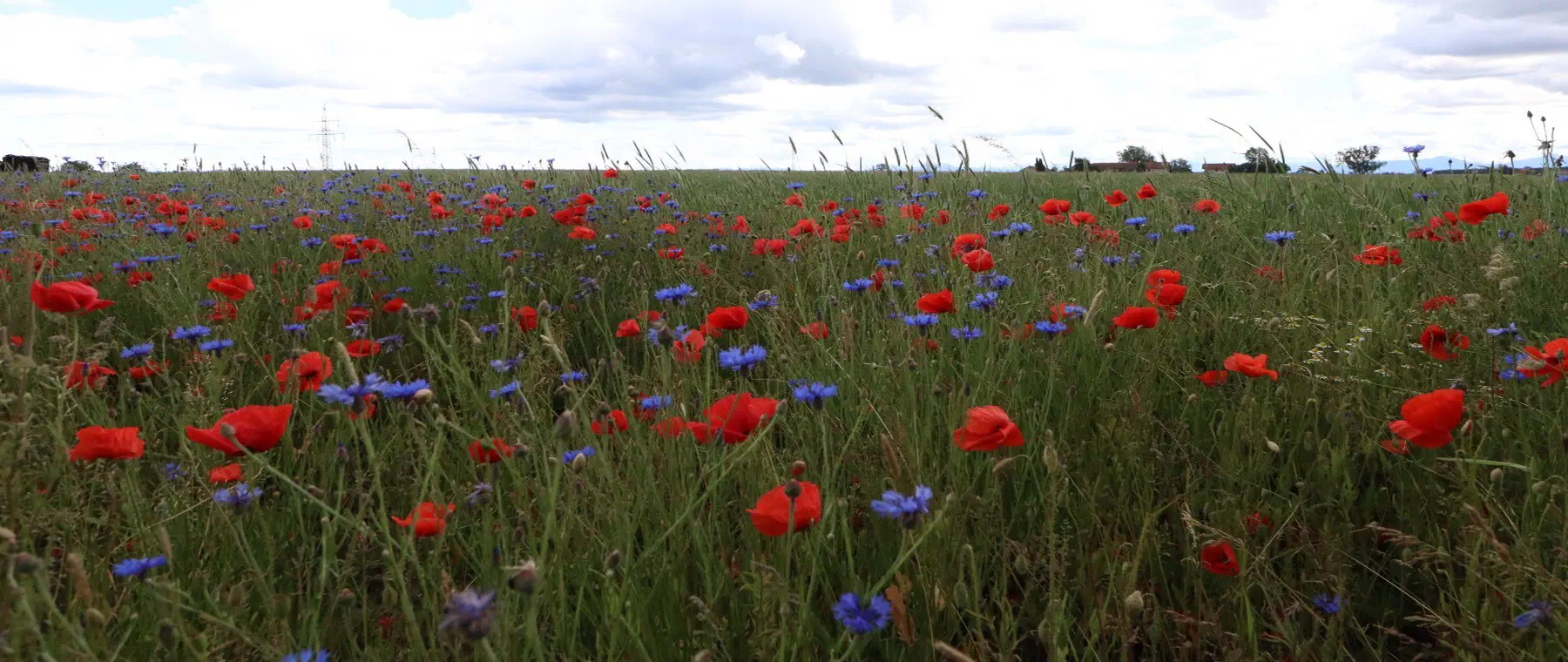
Creation of skylark windows, flower strips and extensive arable margins in intensive arable landscapes.
Protected species in the Franconian wine country on the Main
European wildcat
The European wildcat inhabits the natural broadleaf forests of the Steigerwald and Haßberge. Habitat networking and fragmentation-free woodland complexes are critical for this strictly protected species.
About this species ›Bechstein's bat
Old broadleaf forests and mature trees in the Steigerwald are vital habitats for this rare species. Preserving old wood and roosting tree cavities ensures CEF-compliant species protection.
About this species ›Hazel dormouse
This species inhabits dense hawthorn and hazel hedgerows in the gault landscape and forest margins. Hedgerow development and connection create stepping-stone habitats.
About this species ›Northern lapwing
Breeds on moist meadows in the Main valley. Grassland extensification and rewetting of floodplain areas are effective protection measures.
About this species ›Skylark
Open field species whose populations decline in intensive arable landscapes. Skylark windows and extensive margins promote breeding habitats.
About this species ›Sand lizard
Sunny wind-blown sand areas and warm-dry slopes are habitat for this heat-loving species. Sand lens creation and removal of encroaching scrub are typical CEF measures.
About this species ›Which projects trigger a compensation obligation?
Agriculture and land use
Intensive cereal cultivation, wine-growing and orchard operations provide steady land demand for compensation. Landowners can offer areas for traditional orchards and grassland extensification.
Settlements and commerce
Residential development, commercial areas and light industry in Kitzingen and surrounding municipalities require compensatory land.
Infrastructure and energy
Road and railway expansion projects and renewable energy installations (photovoltaics, wind) on elevated sites trigger regular compensation requirements.
Wine-growing and heritage
Wine cultivation on warm-favoured slopes generates pressures for habitat conversion. Historic sites and cultural monuments may constrain land use.
From enquiry to monitoring
Contact and enquiry
Tell us your compensation requirement and the natural region. We check availability.
Offer and advice
A transparent offer covering measure types, scope and availability.
Coordination with authorities
Full coordination with the lower nature conservation authority. We handle everything.
Long-term monitoring
Permanent securing of the land, management and documentation across the contract term.
Eco-points in adjoining districts
All about eco-points
in the district of Kitzingen
Request eco-points in the district of Kitzingen
We will promptly prepare a transparent offer with matching eco-points held in stock in the district of Kitzingen.