Eco-points and compensation areas
City of Kempten (Allgäu)
Eco-points available immediately from officially recognised eco-accounts. greeNature solutions is your full-service partner active nationwide for nature conservation compensation according to BayKompV at the regional centre of the Allgäu, on the Iller and in the Iller foothills.
The City of Kempten (Allgäu) at a glance
Kempten (Allgäu) is an independent city in the administrative region Swabia and the regional centre of the Allgäu. It lies on both sides of the Iller at the transition from the Iller valley to the glacial Iller foothills and is Germany's southernmost independent city.
In natural region terms, the entire city area belongs to the BfN natural region D66 (Prealp hilly and moorland), specifically to the Iller foothills. Characteristic are the Würm-age moraines and drumlin fields, incised gorges (Tobel) and damp depressions and peat remnants in the rolling hilly region.
Ecologically significant are the Iller course with the Iller gorge and naturalised bank sections, several landscape protection areas (such as Rottachtobel and Schwabelsberger pond) and the moors of the Kempten Forest to the east. The region is part of the Allgäu Moor Alliance landscape.
Economically, Kempten is shaped by mechanical engineering and precision technology, dairy and cheese industry, trade and tourism. Housing construction, commercial development, transport projects and flood protection on the Iller regularly trigger compensation requirements according to BayKompV in the city area.
🗺️ Associated natural regions
Go to natural region D66 ›
📍 City districts
🌿 Ecological features
- Iller as a formative watercourse with Iller gorge and naturalised bank sections
- Natura 2000 site Kempten Forest with Upper Rottach valley (adjoining to the east)
- Landscape protection areas Rottachtobel, Schwabelsberger pond and Betzigauer Moos
- Drumlin fields and Würm-age moraines of the Iller foothills as glacial forms
- Peat remnants and damp sites in the Allgäu Moor Alliance landscape
- Germany's southernmost independent city, regional centre of the Allgäu
✅ greeNature on the ground
greeNature operates nationwide and is firmly rooted in Bavaria. We know the compensation requirements according to BayKompV in natural region D66 from practice, work with the lower nature conservation authority of the city of Kempten and understand the features of the Iller, gorges and moors in the Iller foothills. From demand analysis through land provision to implementation, management and monitoring, we undertake the entire process.
Typical measures in the city of Kempten (Allgäu)
Watercourse restoration on Iller and streams
Removal of bank reinforcement, connection of oxbows and development of naturalised structures on Iller, Rottach, Durach and Leubas. Steep banks, gravel bars and floodplain woodland margins are created as habitat for kingfisher, bullhead and dipper.
De-sealing and inner development
Removal of sealed surfaces on abandoned industrial and conversion sites in the city area, greening and restoration of permeable, biologically active surfaces. Such measures are particularly effective in urban contexts for offsetting new sealing.
Grassland and hay meadow upgrade
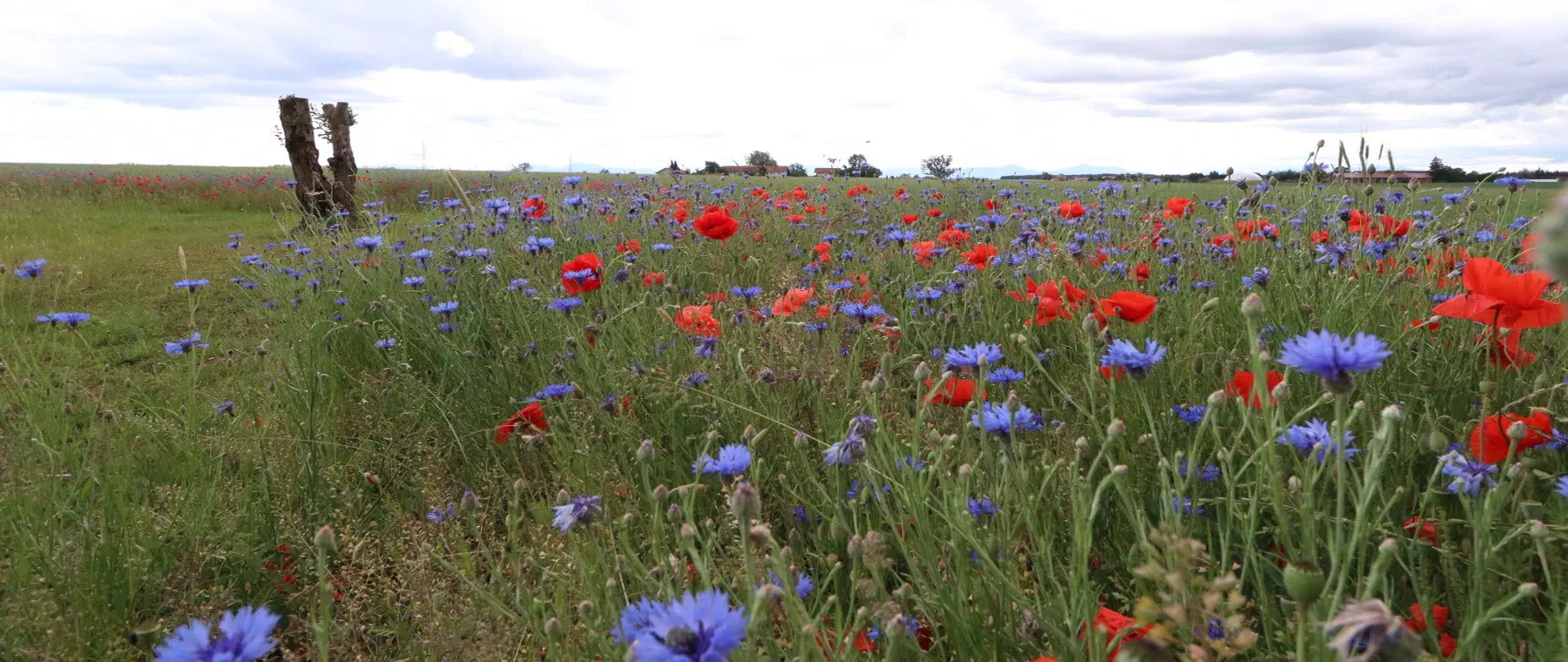
Extensification of intensively used meadows in the surrounding area through adapted cutting and abstinence from fertilisation and restoration of species-rich damp and hay meadows. These habitats typical of the prealp region upgrade insect and plant diversity.
Peat restoration and rewetting
Raising water levels and removal of drainage ditches in peat bogs and damp depressions of the Iller foothills. Rewetted peat bogs secure rare habitats, bind carbon and create habitats for peat-typical species.
Species protection CEF and FCS
Bat roosts on buildings and in woodland, kingfisher steep banks on the Iller, replacement habitats for sand lizard on railway embankments and slopes and spawning waters for amphibians, each as a prerequisite CEF or population-supporting FCS measure according to § 44 BNatSchG.
Hedgerows, woodland and habitat network
Establishment of hedgerows, field woodland and forest edges on moraine slopes and at settlement edges. These structures network habitats, create stepping-stone habitats and upgrade the cultural landscape around the city.
Protected species in the Iller valley and Iller foothills in the Allgäu
Kingfisher on the Iller
Naturalised bank sections and the Iller gorge offer steep banks as breeding sites. For impacts on watercourses, such as bridge or bank construction, steep bank remodelling and bank restoration are typical CEF measures for the strictly protected kingfisher.
About this species ›Bats in buildings and woodland
Common pipistrelle, greater mouse-eared bat and brown long-eared bat use attic spaces, cellars and old woodland stocks in the city area. All species are strictly protected (Annex IV FFH Directive), demolition and renovation require replacement roosts as a CEF measure.
About this species ›Amphibians in peat bogs and ponds
Common frog, common toad and other species settle bog waters, ponds and semi-wet depressions of the Iller foothills. Replacement spawning waters and terrestrial habitats in spatial context secure their breeding sites in construction and infrastructure projects.
About this species ›Sand lizard on railway embankments and slopes
The strictly protected sand lizard settles sun-exposed railway embankments, slopes and ruderal areas. In transport and commercial projects, habitat establishment and expert relocation are regularly required as prerequisite CEF measures.
About this species ›Hazel dormouse in forest edges and hedgerows
The strictly protected hazel dormouse settles structurally rich forest edges, hedgerows and scrub in the vicinity of Kempten Forest. In felling operations, sectional, expert-accompanied removal of woodland and networking of replacement habitats are required.
About this species ›Beaver and bullhead on the Iller
The beaver settles Iller and secondary watercourses and shapes floodplain habitats, the bullhead lives in cool, well-structured watercourses (Annex II FFH Directive). Continuity, bank restoration and beaver conflict management are typical tasks here.
Which projects trigger a compensation obligation?
Residential construction and inner development
New residential areas at settlement edges and densification and conversion of inner-city areas require nature conservation compensation. De-sealing and greening are particularly effective compensation approaches in the city area.
Commerce and industry
Expansions of commercial and logistics areas in the vicinity of Sankt Mang and along transport axes trigger impacts on soil and landscape for which compensation and replacement measures must be provided according to BayKompV.
Traffic and infrastructure
Expansion of federal and state roads, railway infrastructure and bridges over the Iller generate compensation requirements, often combined with species protection measures for bats, sand lizard and kingfisher.
Flood protection on the Iller
Flood protection and watercourse development measures on the Iller change banks and floodplains. They can be combined with restoration and floodplain forest development, so protection effect and ecological upgrading work together.
From enquiry to monitoring
Contact and enquiry
Tell us your compensation requirement and the natural region. We check availability.
Offer and advice
A transparent offer covering measure types, scope and availability.
Coordination with authorities
Full coordination with the lower nature conservation authority. We handle everything.
Long-term monitoring
Permanent securing of the land, management and documentation across the contract term.
Eco-points in adjoining districts
All about eco-points
in the city of Kempten (Allgäu)
Request eco-points in the city of Kempten (Allgäu)
We will promptly prepare a transparent offer with matching eco-points held in stock in the city of Kempten (Allgäu).