Eco-points and compensation areas
City of Kaufbeuren
Eco-points available immediately from officially recognised eco-accounts. greeNature is your full-service partner for compensation under the BayKompV in the independent city of Kaufbeuren, between the Wertach valley and the Allgäu Alpine Foothills.
The City of Kaufbeuren at a glance
Kaufbeuren is an independent city in the Bavarian Swabia administrative region and forms an enclave within the district of Ostallgäu, by which the city area is completely enclosed. Around 46,300 people live within its just over 40 square kilometres. The valley of the Wertach is a defining feature, running through the city in a glacially formed moraine valley.
In natural-region terms, Kaufbeuren lies at the transition from the Iller-Lech gravel plains (BfN major landscape D64, Danube-Iller-Lech Plains) to the Pre-Alpine Moor and Hill Country (D66). The glacial gravel terraces, moraine ridges and the Wertach floodplain create a varied mosaic of woodland, grassland and watercourses. For the compensation obligation under the BayKompV, the precise natural-region allocation of the impact is decisive.
Despite the small land area, ecologically significant habitats exist in the city area. Roughly 2.1 per cent of city area (about 86 hectares) are registered as Natura 2000 areas. The Kaiserweiher harbours with over 10,000 animals one of Bavaria's largest amphibian populations, but is today severely constrained by roads and building areas.
Economically, Kaufbeuren is characterised by medium-sized industry, such as mechanical engineering and hydraulics as well as sensor and precision technology, complemented by the Neugablonz district founded after 1945 with its jewellery and precision parts manufacturing. Housing, commercial and infrastructure projects as well as measures on the Wertach regularly trigger impacts whose compensation must be provided according to BayKompV.
🗺️ Associated natural regions
Go to natural region D66 ›
Go to natural region D64 ›
📍 City districts
🌿 Ecological features
- Natura 2000 site Calcareous tuff springs in the Allgäu Alpine foothills (8028-372), partially in city area
- Natura 2000 site Staffelwald near Irsee and clay pit Hammerschmiede (8029-371), partially in city area
- Wertach as a prealp river with restoration concept according to EU Water Framework Directive
- Kaiserweiher, one of Bavaria's largest amphibian populations with over 10,000 animals
- Natura 2000 areas on roughly 2.1 per cent of city area (about 86 hectares)
- Location at the transition of Iller-Lech gravel plains (D64) to prealp moorland and hilly region (D66)
- Fossil site clay pit Hammerschmiede in the vicinity of Staffelwald
✅ greeNature on the ground
greeNature operates nationwide and is rooted in southern Germany. We know the compensation requirements in the Swabian and prealp region from practice, coordinate measures with the lower nature conservation authority of the city of Kaufbeuren and develop suitable areas together with owners, farmers and municipalities in natural regions D64 and D66. Thus we provide eco-points that project developers can use for impacts in the city area.
Typical measures in the city of Kaufbeuren
Wertach floodplain restoration
Removal of bank reinforcement, connection of side channels and development of floodplain forest along the Wertach in harmony with the city's watercourse development concept and the EU Water Framework Directive. Naturalised banks, gravel bars and semi-wet floodplain areas are created as habitat for fish, amphibians and kingfisher.
De-sealing and inner development
Removal of sealed surfaces on former industrial and transport sites, greening and restoration of permeable soils in the densely built city area. De-sealing upgrades the soil regime and creates chargeable compensation in urban contexts according to BayKompV.
Grassland extensification in the surrounding area
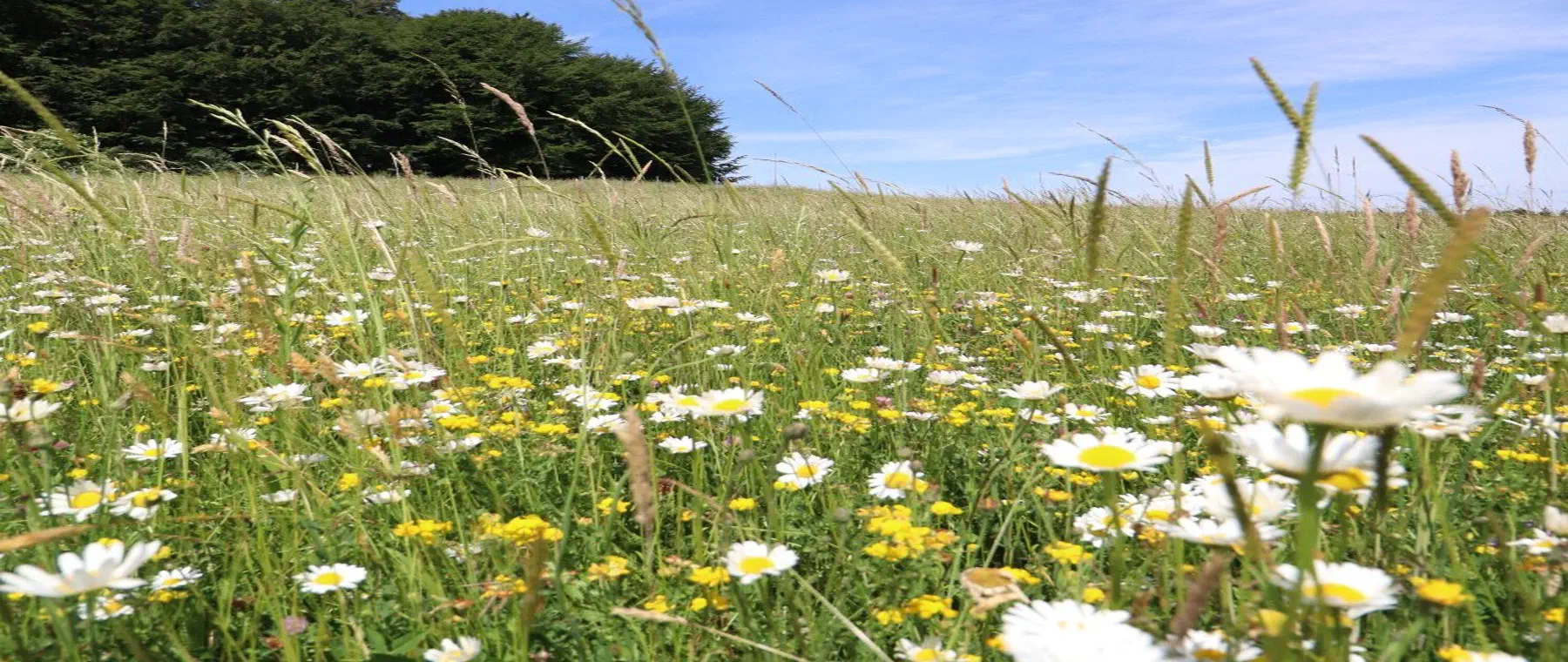
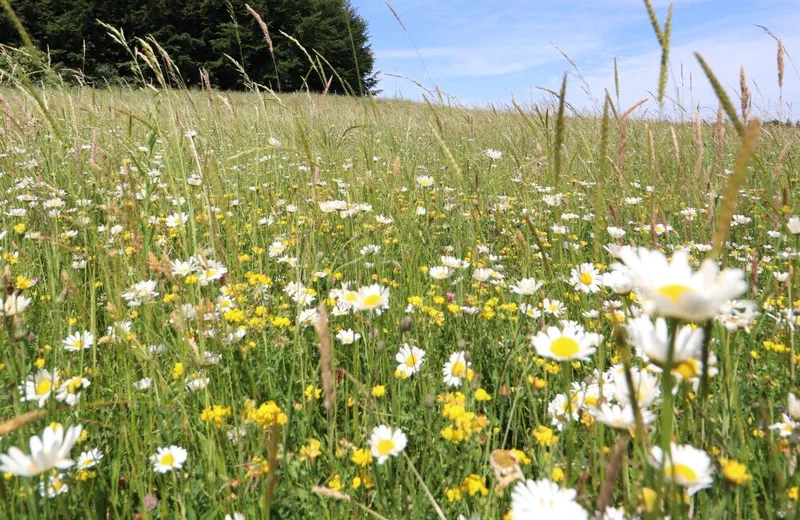
Conversion of intensively used meadows and arable on gravel terraces and moraine slopes into species-rich extensively managed grassland through adapted cutting and fertiliser abstinence. Such areas in urban-fringe space provide habitat for insects, meadow-breeding birds and field species.
Amphibian spawning waters
New establishment and networking of fish-free small and still waters and securing of terrestrial habitats, for instance around existing ponds such as Kaiserweiher. Complemented by amphibian migration guides at roads, these measures secure migrations and breeding sites.
Species protection CEF and FCS
Replacement roosts for bats on buildings, steep banks for kingfisher on the Wertach and replacement habitats for sand lizard on railway embankments and slopes, each as prerequisite CEF measure or population-supporting FCS measure according to § 44 and § 45 BNatSchG.
Hedgerows, traditional orchards and habitat network
Establishment of hedgerows, field woodland and traditional orchard stands on moraine slopes and terrace edges around city districts. These structures network forest and open land, create stepping-stone habitats and upgrade the urban-fringe cultural landscape.
Protected species in the Wertach city on the edge of the Allgäu Alpine Foothills
Amphibians at Kaiserweiher
Common toad, common frog and other species form one of Bavaria's largest amphibian populations at Kaiserweiher. The habitat is severely constrained by roads and building areas, replacement spawning waters and guides are typical CEF measures for projects in the city area.
About this species ›Kingfisher on the Wertach
Naturalised sections of the Wertach offer steep banks as breeding sites. For impacts on watercourses, such as bridge or bank construction, steep bank remodelling and bank restoration are proven CEF measures for the strictly protected kingfisher.
About this species ›Bats in city and forest
Common pipistrelle, greater mouse-eared bat and brown long-eared bat use attic spaces and cellars of the old town and old trees in surrounding forests. All species are strictly protected (Annex IV FFH Directive), demolition and renovation require replacement roosts as a CEF measure.
About this species ›Sand lizard on railway and slope
The sand lizard settles railway embankments, gravel areas and sun-exposed slopes in the city area. In construction and infrastructure projects, replacement habitats with sunny spots, shelter and egg-laying structures are established as prerequisite CEF measures.
About this species ›Great crested newt in standing waters
The great crested newt (Annex II and IV of the FFH Directive) requires larger, fish-free ponds with rich underwater vegetation and structurally rich terrestrial habitats. New establishment and networking of suitable spawning waters in the surrounding area are proven CEF and FCS measures.
About this species ›Hazel dormouse in forests and hedgerows
The strictly protected hazel dormouse lives in structurally rich forest edges, scrub and hedgerows, for instance around Staffelwald. Retention and new establishment of networked woodland structures with hazel and berry shrubs secure its habitats during impacts.
About this species ›Which projects trigger a compensation obligation?
Residential construction and urban development
New residential quarters and densifications, such as the Moser-Wiese development project between Neugablonzer Straße, railway line and Wertach, combine housing and green space. Such projects trigger nature conservation compensation obligations according to BayKompV, particularly through land sealing and impacts on woodland stocks.
Commerce and industry
Kaufbeuren Business Park in the northeast and further commercial areas provide space for local medium-sized enterprises in mechanical engineering, hydraulics and precision technology. Expansions and new establishments generate compensation requirements through sealing and loss of open soils.
Traffic and infrastructure
Road expansion, junctions and railway facilities in the city area as well as network-bound infrastructure lead to impacts on slopes, woodland and watercourse banks. Species protection measures for sand lizard and bats as well as replacement planting are frequently required.
Flood protection and watercourse expansion
Restoration and flood protection measures on the Wertach create ecological added value on the one hand but can trigger impacts on the other. greeNature combines water management objectives with chargeable compensation measures in the floodplain.
From enquiry to monitoring
Contact and enquiry
Tell us your compensation requirement and the natural region. We check availability.
Offer and advice
A transparent offer covering measure types, scope and availability.
Coordination with authorities
Full coordination with the lower nature conservation authority. We handle everything.
Long-term monitoring
Permanent securing of the land, management and documentation across the contract term.
Eco-points in adjoining districts
All about eco-points
in the city of Kaufbeuren
Request eco-points in the city of Kaufbeuren
We will promptly prepare a transparent offer with matching eco-points held in stock in the city of Kaufbeuren.