Eco-points and compensation areas
City of Hof
Eco-points available immediately from officially recognised eco-accounts. greeNature solutions, your full-service partner for statutory nature-conservation compensation under the BayKompV in the independent city of Hof and in the Hofer Land.
The City of Hof at a glance
Hof is an independent city in the far north-east of Bavaria and, as a regional centre, is the administrative, economic and educational hub of the Hofer Land. The city lies on the Saxon Saale at around 500 metres above sea level and belongs to the Upper Franconia administrative region. In natural-region terms, the city area belongs to BfN natural region D48 (Thuringian-Franconian Highlands), specifically to the Hofer Land on the edge of the Münchberg Plateau.
The landscape is characterised by low-mountain terrain of silicate rock with open plateaus, upland meadows and incised stream valleys. The Saale and its tributaries run through the city area with accompanying floodplains, wet valley meadows and riparian woodland, which form important refuges within this densely settled area.
Ecologically significant features include the Saale floodplain, the Untreusee in the south-west as a local recreation area and wetland habitat, and the historic Theresienstein public park with its mature tree stock. Hof also lies close to the Grünes Band (Green Belt) at the tri-border point of Bavaria, Saxony and Thuringia, and borders the Frankenwald and Fichtelgebirge nature parks.
Economically, the range spans the long-established textile and plastics industry, logistics at the A9/A93 motorway junction and rail hub, and Hof University of Applied Sciences. Residential, commercial and transport projects regularly generate a compensation requirement under the Bavarian Compensation Ordinance (BayKompV) within the city area and its surroundings.
🗺️ Associated natural regions
Go to natural region D48 ›
📍 City districts
🌿 Ecological features
- Saxon Saale runs through the city area with accompanying floodplain landscape
- BfN natural region D48 Thuringian-Franconian Highlands (Hofer Land, Münchberg Plateau)
- Untreusee in the south-west, local recreation area and wetland habitat
- Theresienstein, historic public park with mature tree stock
- Proximity to the Grünes Band at the tri-border point of Bavaria, Saxony and Thuringia
- Borders the Frankenwald and Fichtelgebirge nature parks
- Siliceous calcareous grassland and upland meadows of the plateau areas
✅ greeNature on the ground
greeNature solutions operates nationwide and manages compensation projects across the whole of Bavaria. We know the responsible lower nature conservation authority of the City of Hof, the regional land potential in the Hofer Land, and the particularities of assessment under the BayKompV in the natural region of the Thuringian-Franconian Highlands.
Typical measures in the city of Hof
Watercourse restoration, Saale
Removal of bank reinforcement, reconnection of former river arms and development of near-natural floodplains on the Saxon Saale and its tributaries, upgrading of spawning and breeding habitats within the city area.
Desealing & urban nature
Removal of sealed surfaces on derelict and commercial land, conversion into permeable, green sites, an effective form of compensation for soil sealing in built-up areas.
Grassland upgrading in the surrounding area
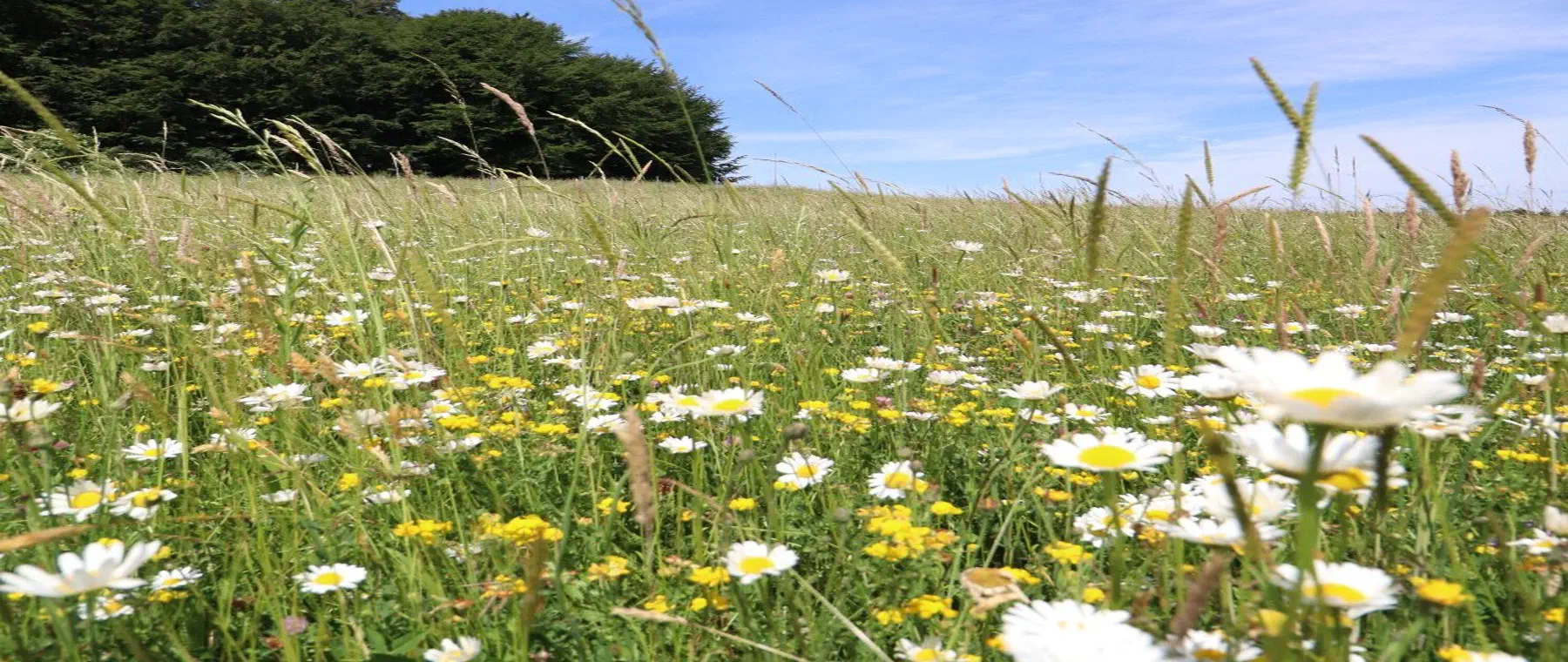
Extensification of intensively used land into species-rich upland and valley meadows of the plateau areas, habitat for meadow-breeding birds and insect communities.
Near-natural woodland edge & forest conversion
Development of site-appropriate, structurally rich woodland edges and mixed deciduous forest at the transition to the Frankenwald and Fichtelgebirge, strengthening the habitat network.
Species protection, CEF/FCS
Advance compensation (CEF) measures under § 44 BNatSchG: kingfisher nesting banks, sand lizard habitats on railway land, bat roosts and amphibian ponds, aligned with the BayKompV.
Hedgerows, traditional orchards & habitat network
Creation of hedgerow and traditional orchard structures in the farmed landscape, stepping-stone habitats along the Grünes Band and the Saale valleys to connect habitats.
Protected species in the Hofer Land on the Saxon Saale
Kingfisher on the Saale
Near-natural bank sections of the Saxon Saale provide the kingfisher with nesting banks and hunting grounds. Typical CEF measures are modelled steep banks and the creation of structurally rich bank areas.
About this species ›Bats in parks & vaults
Mature tree stock in the Theresienstein, as well as cellars and vaults in the town centre, serve as roosts. Retention of hollow trees and replacement roosts are common compensation components.
About this species ›Sand lizard on railway land
As a significant railway hub, Hof has extensive railway embankments and disused track land, important habitats for the sand lizard and a frequent target species in transport and construction projects.
About this species ›Amphibians at the Untreusee
The Untreusee and small water bodies in the surrounding area are home to common toad, common frog and newt species. Creating new spawning waters and connecting them are proven compensation measures.
About this species ›Skylark on the plateaus
The open farmland of the Münchberg Plateau is habitat for the skylark. Extensification and skylark plots support the breeding population in the city's surrounding area.
About this species ›Black stork in the forest valleys
The black stork breeds in the forested valleys of the Frankenwald and Fichtelgebirge near Hof. Undisturbed forest areas rich in watercourses are decisive for its conservation.
About this species ›Which projects trigger a compensation obligation?
Housing & settlement development
New residential development areas and infill development within the city area trigger statutory nature-conservation compensation obligations. greeNature provides suitable eco-points and handles liaison with the lower nature conservation authority of the City of Hof.
Commerce & logistics
As a logistics and industrial location at the A9/A93 motorway junction, Hof designates commercial and logistics sites. Business expansions and new warehouse buildings generate a considerable compensation requirement under the BayKompV.
Transport & rail infrastructure
Road construction, bypasses and the expansion of rail connections (the Franken-Sachsen-Magistrale) lead to impacts that require compensation and replacement measures, as well as CEF measures for the sand lizard and other species.
Energy & technical infrastructure
Ground-mounted photovoltaic installations in the surrounding area, as well as power line and district heating projects, require statutory nature-conservation compensation. greeNature supports the planning process from impact assessment through to implementation.
From enquiry to monitoring
Contact and enquiry
Tell us your compensation requirement and the natural region. We check availability.
Offer and advice
A transparent offer covering measure types, scope and availability.
Coordination with authorities
Full coordination with the lower nature conservation authority. We handle everything.
Long-term monitoring
Permanent securing of the land, management and documentation across the contract term.
Eco-points in adjoining districts
All about eco-points
in the city of Hof
Request eco-points in the city of Hof
We will promptly prepare a transparent offer with matching eco-points held in stock in the city of Hof.