Eco-points and compensation areas
District of Garmisch-Partenkirchen
For impacts in the district of Garmisch-Partenkirchen, greeNature supplies eco-points and compensation areas that match the Werdenfelser Land according to the natural-region-based assessment of BayKompV. As a full-service partner, we take on demand determination, specialist planning, authority coordination and long-term management.
The District of Garmisch-Partenkirchen at a glance
The district of Garmisch-Partenkirchen is located in the far south of Upper Bavaria and borders a long section of the Austrian federal state of Tyrol. The valleys around the district town of Garmisch-Partenkirchen and the surrounding mountains form the Werdenfelser Land. The Zugspitze, Germany's highest mountain, is located in the district.
Geologically, the district is divided into three parts. The south is characterised by the Northern Limestone Alps with the Wetterstein range, Karwendel and Ammergebirge, which in many places have high mountain character. To the north, the flysch zone of the pre-Alps with its forested ridges adjoins. In the north, the landscape transitions to pre-Alpine moorland and hilly country, where ice-age-formed basins contain lakes such as the Staffelsee and the extensive Murnauer Moos. Wild rivers such as the Loisach, Isar and Ammer flow through the area.
Ecologically, the district is exceptionally rich. It comprises numerous nature reserves, many FFH and bird protection areas of the Natura 2000 network, as well as the Ammergauer Alps Nature Park. Characteristic are moorland and meadow plots, the buckle meadows near Mittenwald, alpine meadows and the near-natural wild river floodplains with tamarisk and purple willow thickets. For compensation according to BayKompV, the three natural regions D66 Pre-Alpine Hilly and Moorland, D67 Swabian-Upper Bavarian Pre-Alps and D68 Northern Limestone Alps are decisive.
The economy is strongly influenced by tourism, large-scale industry is rare. Compensation requirements arise mainly from traffic projects such as bypasses and tunnel construction, from settlement and commercial development in the narrow valleys, as well as from tourist infrastructure. Because many impacts are in a nature-conservation-sensitive Alpine and pre-Alpine space, technically appropriate and natural-region-suitable compensation measures are crucial for permitting.
🗺️ Associated natural regions
Go to natural region D67 ›
Go to natural region D66 ›
Go to natural region D68 ›
📍 Selected municipalities
🌿 Ecological features
- The Zugspitze (2,962 m) is the highest mountain in Germany and is located in the district.
- The Werdenfelser Land displays pronounced high mountain character in the Wetterstein and Karwendel.
- The Murnauer Moos is one of the largest largely intact moorland landscapes in Central Europe.
- Numerous FFH and bird protection areas, as well as the Ammergauer Alps Nature Park, are located in the district.
- The buckle meadows near Mittenwald are an important historical cultural landscape.
- Grassland and forest dominate, arable farming plays hardly any role.
- Near-natural wild river floodplains on the Isar and Loisach are home to rare tamarisk and purple willow thickets.
✅ greeNature on the ground
greeNature guides project developers in the district of Garmisch-Partenkirchen from the first demand determination to the secured permit. We assign your impact to the correct natural region, develop measures that match the moorland, meadow plots and wild river floodplains of the Werdenfelser Land, and coordinate these with the Lower Nature Conservation Authority (Untere Naturschutzbehörde) at the District Office. Where eco-points are already available from recognised eco-accounts, you can use these for greater planning certainty. Where new land is needed, we take on procurement, specialist planning, implementation and long-term management in one go.
Typical measures in the district of Garmisch-Partenkirchen
Moorland restoration
Rewetting of drained lowland and transitional moorland, for example in the vicinity of the Murnauer Moos and the pre-Alpine moorland landscapes. Such measures enhance habitats, bind carbon and achieve high nature conservation impact.
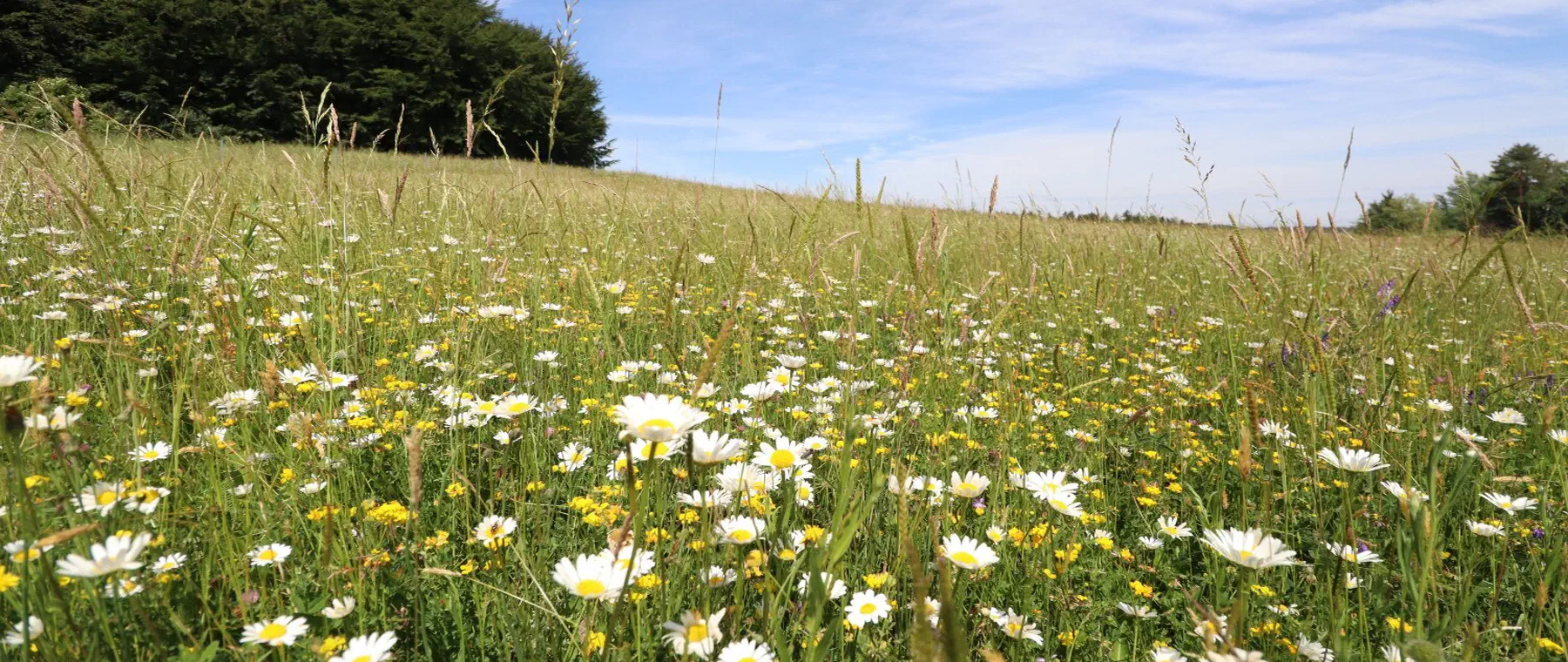
Meadow plots and mountain hay meadows
Development and extensive management of species-rich meadow plots and mountain hay meadows. Adapted, late mowing preserves rare plant and insect communities, as they are typical of the Werdenfelser Land.
Watercourse and floodplain development
Restoration of streams and near-natural development of wild river floodplains on the Loisach, Isar and Ammer. Bank levelling, connection of oxbows and gravel banks create dynamic habitats.
Mountain forest and protection forest
Establishment of site-appropriate, climate-stable mountain and protection forests with structured forest edges. This stabilises slope areas and improves habitats for forest species.
Advance species protection measures
CEF measures according to § 44 BNatSchG, for example new spawning waters for amphibians or warm, dry replacement structures for the sand lizard in the valleys, effective before the impact.
Hedgerows and traditional orchards
Creation of hedgerows, field woodlands and traditional orchard stands in the valley spaces. These elements network habitats and improve the landscape appearance on settlement margins.
Protected species in the Werdenfelser Land
Bats
The district offers diverse roosts for strictly protected bat species in caves, old forests and buildings. In the event of impacts, we secure winter and summer roosts and provide replacement roosts as CEF measures where necessary.
About this species ›Amphibians
In moorland, ponds and wild river floodplains there are numerous protected amphibians. Newly constructed or restored spawning waters with suitable terrestrial habitats are an effective and often demanded measure.
About this species ›Kingfisher
The kingfisher inhabits the near-natural sections of the Loisach, Ammer and Isar. Steep banks as nesting cliffs and low-disturbance, fish-rich watercourse sections are crucial for its protection.
About this species ›Hazel dormouse
The hazel dormouse lives in structured forests, forest edges and hedgerows. The preservation and networking of these wood structures are central components of its protection in construction projects.
About this species ›Sand lizard
Warm, dry slopes, railway embankments and gravel areas in the valleys are habitats of the sand lizard. Where projects affect such structures, relocation and the creation of replacement habitats are required.
About this species ›Black stork
In the large, undisturbed forests of the district, the black stork finds suitable breeding and feeding areas. The protection of quiet valley streams and nest sites is of high importance for it.
About this species ›Which projects trigger a compensation obligation?
Traffic infrastructure
Bypasses and tunnel construction on federal roads, as well as measures on the railway line, intervene in nature and landscape and generate substantial compensation requirements.
Settlement and commercial development
Residential and commercial construction in the narrow valleys of the district municipalities requires compensation for land sealing and loss of habitats.
Tourism infrastructure
Projects involving cable cars, accommodation and leisure facilities in the sensitive Alpine space entail nature protection compensation obligations.
Energy and networks
Hydroelectric plants, as well as the expansion of lines and networks, create impacts that must be compensated in a natural-region-appropriate manner.
From enquiry to monitoring
Contact and enquiry
Tell us your compensation requirement and the natural region. We check availability.
Offer and advice
A transparent offer covering measure types, scope and availability.
Coordination with authorities
Full coordination with the lower nature conservation authority. We handle everything.
Long-term monitoring
Permanent securing of the land, management and documentation across the contract term.
Eco-points in adjoining districts
All about eco-points
in the district of Garmisch-Partenkirchen
Request eco-points in the district of Garmisch-Partenkirchen
We will promptly prepare a transparent offer with matching eco-points held in stock in the district of Garmisch-Partenkirchen.