Eco-points and compensation areas
District of Forchheim
Eco-points available immediately from officially recognised eco-accounts for development in Forchheim district. greeNature solutions is your full-service partner for compensation under BayKompV between Regnitz valley and Franconian Switzerland.
The District of Forchheim at a glance
Forchheim district is located in the administrative region of Upper Franconia on the northern edge of the Nuremberg, Fürth and Erlangen conurbation. Naturally, it divides into three parts: the Regnitz valley to the west, the rising Franconian Alb with Franconian Switzerland to the east, and the intermediate foothills. Forchheim, a large district town, is the district seat and administrative centre.
Geologically, two very different landscapes meet in the district. The western part belongs to the Fränkisches Keuper-Liasland (natural region D59) with the broad floodplains of Regnitz and Wiesent. The eastern part rises towards the Franconian Alb (natural region D61), a karst landscape of white limestone with cliffs, caves, dry valleys and extensive forest slopes.
Ecologically, the district is of great significance. The FFH area Wiesenttal with side valleys (6233-371) and the bird protection area Cliffs and forest slopes in Franconian Switzerland (6233-471) protect calcareous grassland, juniper heaths, natural watercourses, cliff habitats and caves as bat roosts. Franconian Switzerland is one of Bavaria's most species-rich regions. In the Regnitz valley, historically-significant water meadows with their traditional water meadow irrigation create a culturally important landscape of European significance.
Economically, the district benefits from proximity to the Nuremberg metropolitan region. Medical technology and tool manufacturing (including Siemens Healthineers and Kennametal) are major employers, with the intensive fruit growing of Franconian Switzerland, one of Germany's largest contiguous sweet cherry growing areas, also contributing. Industrial settlements, residential development in the dense settlement area and the expansion of transport routes A73 and the Nuremberg, Bamberg railway line regularly generate substantial compensation requirements under BayKompV.
🗺️ Associated natural regions
Go to natural region D61 ›
Go to natural region D59 ›
📍 Selected municipalities
🌿 Ecological features
- FFH area Wiesenttal with side valleys (6233-371) with natural limestone streams and forest slopes
- EU bird protection area Cliffs and forest slopes in Franconian Switzerland (6233-471), habitat for eagle owl and peregrine falcon
- Karst landscape of the Franconian Alb with caves as significant bat roosts
- Calcareous grassland and juniper heaths on the Jurassic slopes of the Franconian Alb
- Historical water meadows in the Regnitz valley as traditional irrigation culture
- Traditional orchard and sweet cherry belt of Franconian Switzerland
- Dry slopes and cliff habitats with thermophilic insect and reptile communities
✅ greeNature on the ground
greeNature solutions is active throughout Bavaria and manages compensation projects in the Upper Franconia region. We understand the natural region characteristics of natural regions D59 (Fränkisches Keuper-Liasland) and D61 (Franconian Alb), the requirements of the lower nature conservation authority at the District office Forchheim and compensation practice between Regnitz floodplain and Franconian Switzerland.
Typical measures in the district of Forchheim
Calcareous grassland and juniper heaths
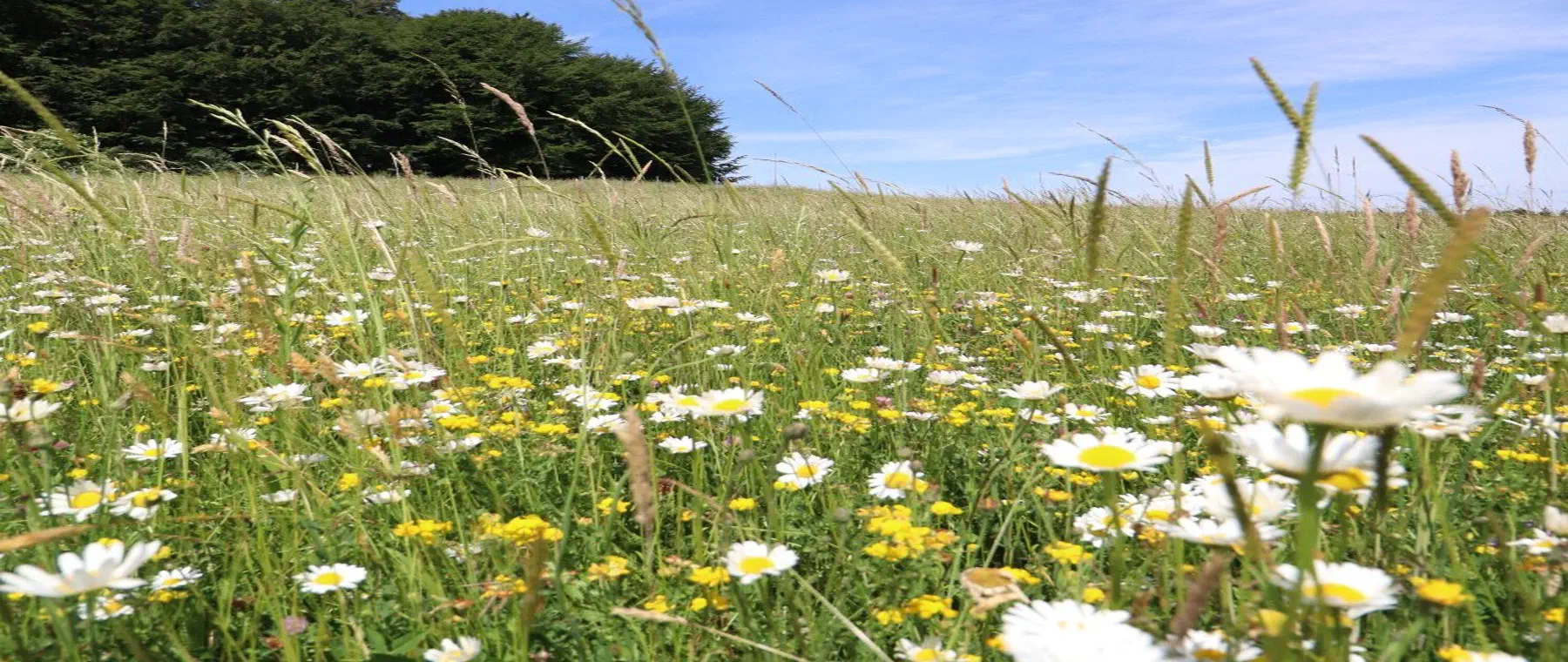
Restoration and management of species-rich dry and semi-dry grassland on the Jurassic slopes of the Franconian Alb through clearing and extensive grazing with sheep and goats, habitat for gentian, silver thistle and rare butterflies.
Traditional orchards
Establishment and reactivation of traditional orchard and cherry stands in the foothills of Franconian Switzerland, habitat for little owl, garden redstart, wryneck and numerous wild bee species.
Water meadows and floodplain restoration
Revitalisation of historical water meadows in the Regnitz valley and restoration of riverbank sections on Wiesent and Regnitz, promotion of meadow-breeding birds and watercourse species.
Cliff and dry habitats
Clearance of cliff tops, installation of stone riggles and dry stone walls on south-facing slopes, targeted habitat improvement for sand lizard and thermophilic species of the Franconian Alb.
Species protection CEF/FCS
Securing and upgrading of cave and cliff roosts for bats, eagle owl and peregrine falcon nest protection, hazel dormouse hedge network, tailored to BayKompV and § 44 BNatSchG.
Forest conversion and new afforestation
Development of site-appropriate deciduous mixed forests on the Franconian Alb with beech, oak and wild service tree and structurally diverse forest edges as habitat network and habitat for European wildcat.
Protected species in the Franconian Switzerland and Regnitz valley
Bats in karst caves
The numerous caves and rock crevices of Franconian Switzerland are significant winter and summer roosts for greater mouse-eared bat, lesser horseshoe bat and other species. Roost securing and undisturbed access are typical CEF measures.
About this species ›Eagle owl and peregrine falcon
The cliffs and forest slopes of bird protection area 6233-471 rank among Bavaria's best breeding sites. Nest protection and visitor management at climbing cliffs are central species protection issues in development planning.
Sand lizard
Dry slopes, grassland, embankments and quarry sites provide ideal habitats for the sand lizard. In infrastructure and settlement projects, it is one of the most common target species for CEF measures under § 44 BNatSchG.
About this species ›Kingfisher
Natural sections of Wiesent and Regnitz with steep banks and clear water provide the kingfisher with breeding and hunting habitats. Riverbank erosion and steep wall modelling are proven compensation measures.
About this species ›European wildcat
The extensive forest slopes of the Franconian Alb are habitat for the strictly protected European wildcat. Structurally diverse forest edges, deadwood and habitat network promote re-expansion.
About this species ›Meadow-breeding birds in the Regnitz valley
The water meadows and wet grassland of the Regnitz floodplain are habitats for northern lapwing and other meadow-breeding birds. Extensification and adjusted water levels are effective compensation measures.
About this species ›Which projects trigger a compensation obligation?
Industry and commerce
Medical technology, tool manufacturing and supplier companies (including Siemens Healthineers and Kennametal) and new industrial areas along routes to Erlangen and Bamberg regularly trigger compensation obligations under BayKompV for business expansions and new settlements.
Infrastructure and transport
Expansion of the A73 (Frankenschnellweg), four-track expansion of the Nuremberg, Bamberg railway line and bypass roads and bridge structures over Regnitz and Wiesent generate substantial compensation and replacement requirements.
Energy and renewables
Photovoltaic free-area installations in the Regnitz valley and on marginal yield sites and wind power planning on the heights of the Franconian Alb require nature conservation compensation and species protection assessments.
Settlement development
Settlement pressure from the Erlangen and Nuremberg dense settlement area leads to residential and commercial development in Forchheim and surrounding municipalities. Owners of suitable land can benefit as land providers for eco-accounts.
From enquiry to monitoring
Contact and enquiry
Tell us your compensation requirement and the natural region. We check availability.
Offer and advice
A transparent offer covering measure types, scope and availability.
Coordination with authorities
Full coordination with the lower nature conservation authority. We handle everything.
Long-term monitoring
Permanent securing of the land, management and documentation across the contract term.
Eco-points in adjoining districts
All about eco-points
in the district of Forchheim
Request eco-points in the district of Forchheim
We will promptly prepare a transparent offer with matching eco-points held in stock in the district of Forchheim.