Eco-points and compensation areas
District of Dingolfing-Landau
In the district of Dingolfing-Landau, greeNature mediates available eco-points and takes on compensation according to BayKompV as a full-service partner. From land search via measure planning and implementation to legally secure recognition and management, we accompany your project.
The District of Dingolfing-Landau at a glance
The district of Dingolfing-Landau is located in the administrative region Lower Bavaria and is traversed by the Isar from west to east. The Aitrach valley flows in from the north and the Vilts valley from the south, both right tributaries to the Danube. Neighbouring districts are Straubing-Bogen to the north, Deggendorf to the east, Rottal-Inn to the south and Landshut to the west. The district seat is Dingolfing, the second large town is Landau an der Isar.
In terms of natural regions, the district belongs to the Lower Bavarian Hilly Country (BfN natural region D65). Characteristic are the fertile plains of the Dungau and the flat to domed Tertiary hilly landscape, which rises to about 500 metres towards the south. The lowest point is about 324 metres near Karlshof, the highest is at the Weinberg near Frontenhausen at about 508 metres. The Lower Isar valley with floodplain forests, steep forested slopes and dry sites forms the ecological main axis.
Ecologically particularly valuable are the Natura 2000 areas along the Lower Isar, including the FFH area Lower Isar between Landau and Plattling and the slopes of the Lower Isar. In addition, there are lowland moorland remnants such as the Königsauer Moos, the Vilts valley between Vilsbiburg and Marklkofen and several greater mouse-eared bat breeding colonies in churches of the hilly country. The district has six nature reserves, eight FFH areas and adjacent bird protection areas.
Economically, the district is strongly characterised by industry. The BMW plant Dingolfing is one of Europe's largest production locations, plus there are significant automobile suppliers and tool and mechanical engineering companies. Plant extensions, commercial and industrial areas, expansion of transport infrastructure and settlement development generate regular compensation and replacement requirements. Anyone planning impacts must compensate according to BayKompV, for which greeNature provides available eco-points and tailored measures.
🗺️ Associated natural regions
Go to natural region D65 ›
📍 Selected municipalities
🌿 Ecological features
- Lower Isar as supraregional habitat network with floodplain forests, slopes and dry sites
- Eight FFH areas, including Lower Isar between Landau and Plattling and slopes of Lower Isar
- Lowland moorland remnants such as Mettenbacher, Grießenbacher and Königsauer Moos
- Greater mouse-eared bat breeding colonies in the Lower Bavarian Hilly Country (FFH area 7839-371)
- Fertile Dungau with intensive agriculture and thus high upgrading potential
- Strong industrial compensation requirements through the BMW plant Dingolfing and suppliers
- Vilts valley between Vilsbiburg and Marklkofen as a structured valley system
✅ greeNature on the ground
greeNature knows the nature conservation framework conditions in the district of Dingolfing-Landau and coordinates measures early with the Lower Nature Conservation Authority (Untere Naturschutzbehörde) at the District Office. We secure suitable areas in the Isar valley, in Dungau and in the Tertiary hilly country, develop BayKompV-compliant upgrades and document eco-points in a reviewable manner. This gives builders, municipalities and industrial companies legally secure compensation from a single source without having to provide their own areas or organise management themselves.
Typical measures in the district of Dingolfing-Landau
Floodplain and bank restoration
Development of floodplain forest, oxbows and near-natural banks along the Lower Isar and at Vils and Aitrach to strengthen watercourse dynamics and habitat network.
Grassland extensification
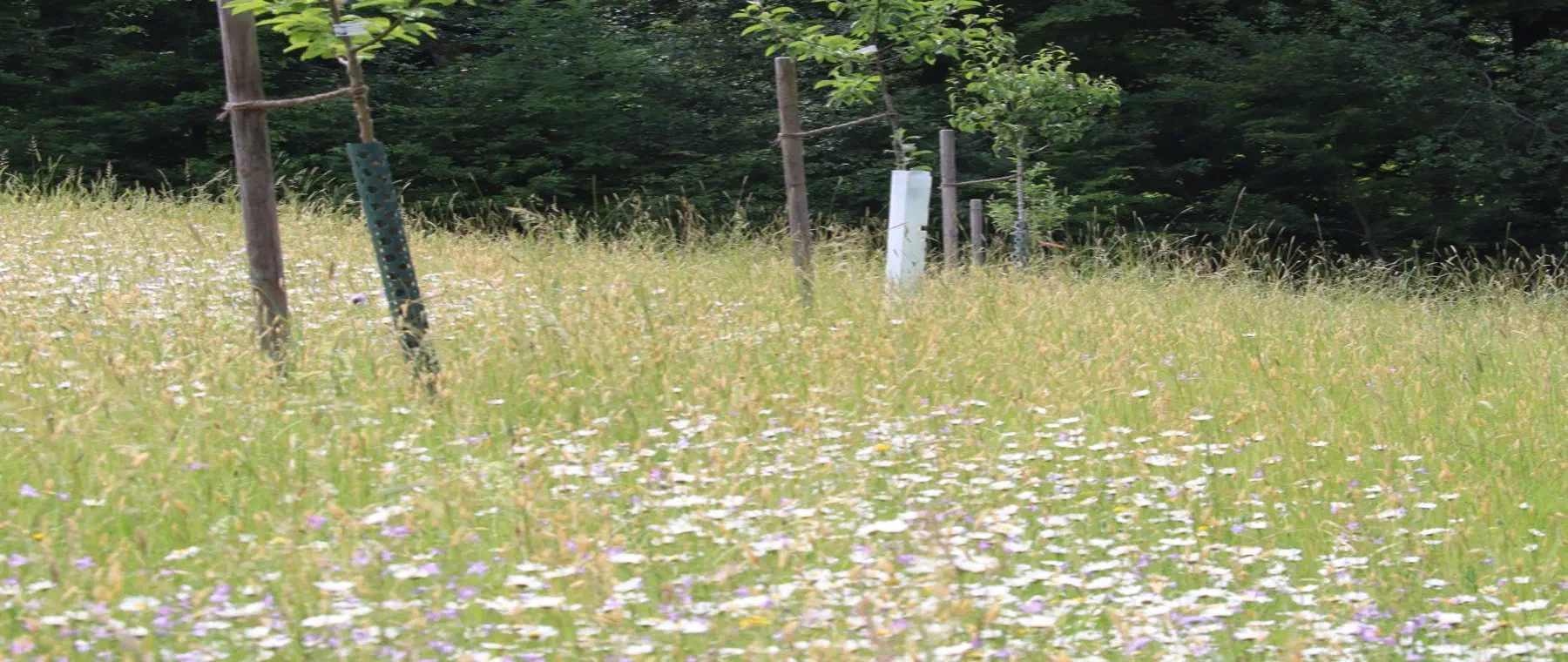
Conversion of intensively used areas in Dungau and lowland moorlands into species-rich extensively managed grassland with adapted mowing and no fertilisation.
Small water bodies and spawning habitats
Creation of sunlit pools and small water bodies as CEF measure for yellow-bellied toad, great crested newt and other amphibians in extraction sites and valley areas.
Dry and barren sites
Management and new creation of calcareous grasslands and margins on the sun-exposed slopes of the Lower Isar as habitat for sand lizard and heat-loving species.
Hedgerows and traditional orchards
Structuring of the cleared plain landscape through hedgerows, field woodlands and traditional orchard meadows for networking habitats and enhancement of landscape appearance.
Species protection for bats
Securing and upgrading roosts, such as greater mouse-eared bat breeding colonies in churches, as well as preservation of hunting habitats in structured forest and valley areas.
Protected species in the Lower Isar valley and Dungau
Yellow-bellied toad
The yellow-bellied toad is specifically protected in the district by the Natura 2000 site Habitats of the yellow-bellied toad and inhabits sunny small ponds, ruts and extraction sites. CEF measures with new breeding ponds are suitable for this species.
About this species ›Greater mouse-eared bat
In the Lower Bavarian Hill Country, significant breeding colonies of the greater mouse-eared bat exist, including in church roof spaces. Securing of roosts and the preservation of hunting habitats are central species protection tasks here.
About this species ›Sand lizard
The sand lizard inhabits the warm, dry slopes and banks along the Lower Isar. In the event of impacts, advanced compensation measures pursuant to § 44 BNatSchG are often required.
About this species ›Great crested newt
The great crested newt occurs in the floodplains and wetlands of the Isar valley and is strictly protected under the Habitats Directive. It benefits from networked, fish-free standing waters.
About this species ›Northern lapwing
The northern lapwing breeds in open lowland moor and meadow landscapes such as Königsauer Moos. Extensification and rewetting significantly improve its breeding success.
About this species ›Kingfisher
The kingfisher breeds on the near-natural sections and steep banks of the Lower Isar. Bank restoration and the preservation of erosion ledges secure its habitat.
About this species ›Which projects trigger a compensation obligation?
Industry and automotive manufacturing
Factory extensions of the BMW site in Dingolfing and the supply industry consume land and trigger extensive compensation requirements under BayKompV.
Commercial and industrial areas
The designation of new commercial and industrial land in municipalities of the district requires compensation for sealing and habitat loss.
Traffic infrastructure
The expansion and new construction of roads and bypass routes have impacts on nature and landscape, necessitating replacement measures.
Renewable energies
Ground-mounted photovoltaic and wind energy installations require ecological support and compensation for the land they consume.
From enquiry to monitoring
Contact and enquiry
Tell us your compensation requirement and the natural region. We check availability.
Offer and advice
A transparent offer covering measure types, scope and availability.
Coordination with authorities
Full coordination with the lower nature conservation authority. We handle everything.
Long-term monitoring
Permanent securing of the land, management and documentation across the contract term.
Eco-points in adjoining districts
All about eco-points
in the district of Dingolfing-Landau
Request eco-points in the district of Dingolfing-Landau
We will promptly prepare a transparent offer with matching eco-points held in stock in the district of Dingolfing-Landau.