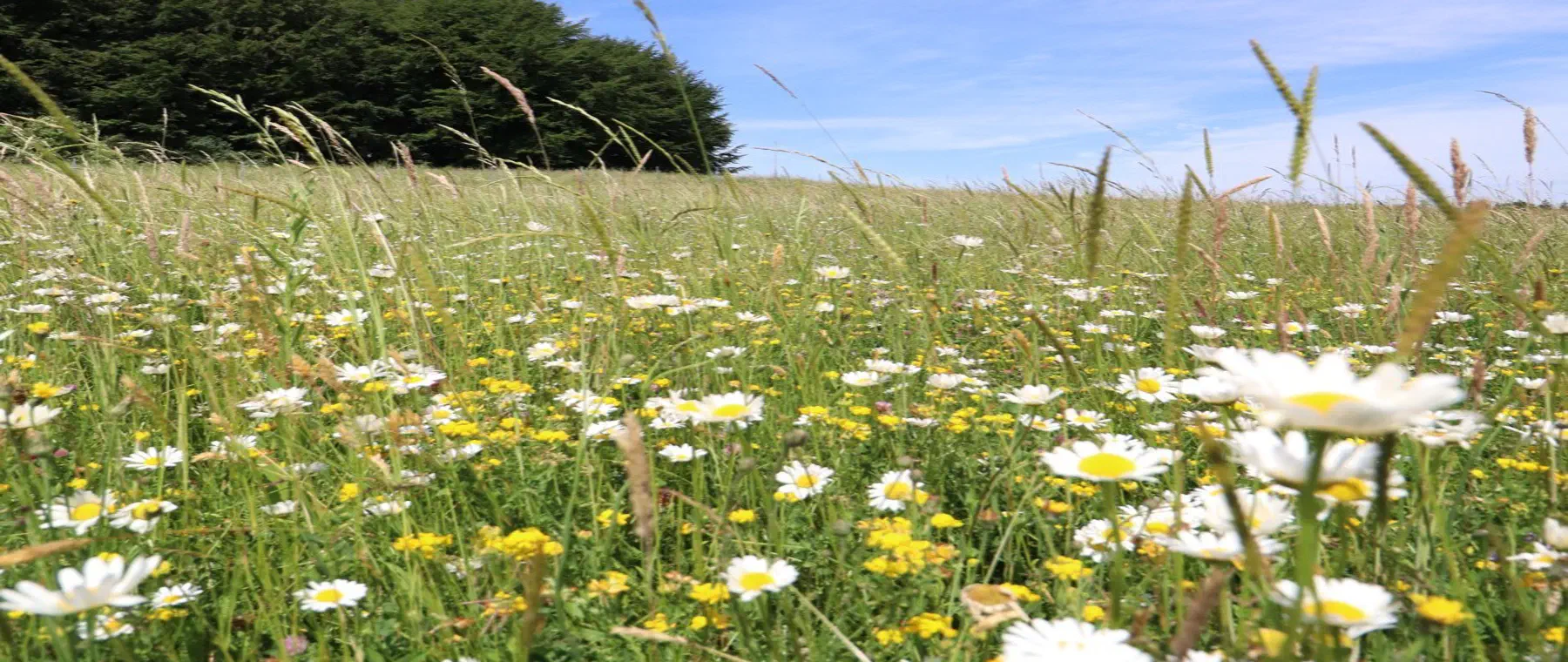
Eco-points and compensation areas
District of Dillingen an der Donau
Eco-points immediately available from officially recognised eco-accounts for the Schwäbisches Donautal and the Donauried. greeNature is your full-service partner for compensation under the BayKompV in the Dillingen an der Donau district.
The District of Dillingen an der Donau at a glance
The Dillingen an der Donau district lies in the northwest of the Schwaben administrative region, along the Donau between Ulm and Donauwörth. The large district town of Dillingen an der Donau forms the economic core together with Lauingen, Gundelfingen, Höchstädt and Wertingen. In the west, the district borders Baden-Württemberg. The Donau, which flows through the district for around 27 kilometres, gives it its name and shapes its landscape.
In landscape terms, the district is divided into three. In the north, the foothills of the Schwäbische Alb (natural region D60) extend into the district with their Jurassic limestone ridges, dry slopes and beech woods. The broad Donau valley in the centre, with its riparian woodland, oxbows and the wide meadow belt of the Donauried, belongs to the Donau-Iller-Lech-Platte (natural region D64), which continues southwards into the loess-covered Zusam hill country and the gravel terraces.
Ecologically, the Donauried is particularly valuable, one of the most important meadow-breeding bird areas in Bavaria. The EU bird protection area Wiesenbrüterlebensraum Schwäbisches Donauried (DE 7330-471) covers around 4,000 hectares of wet meadows and fens. In addition, there are nature reserves such as the Gundelfinger Moos, the Mertinger Höll, the Wittislinger Ried and the Dattenhauser Ried, as well as several FFH sites in the Donau floodplains. These wetland habitats are home to the Eurasian curlew, northern lapwing, corncrake and beaver.
Economically, the district is shaped by mechanical engineering and industry, including the tractor plant of the SAME DEUTZ-FAHR Group in Lauingen, the BSH household appliance plant in Dillingen and the water treatment company Grünbeck in Höchstädt. Business expansions, commercial areas, the expansion of roads and rail in the Donau valley, and ground-mounted photovoltaics on the gravel plains regularly trigger compensation requirements under the BayKompV.
🗺️ Associated natural regions
Go to natural region D64 ›
Go to natural region D60 ›
📍 Selected municipalities
🌿 Ecological features
- EU bird protection area Wiesenbrüterlebensraum Schwäbisches Donauried (DE 7330-471), around 4,000 ha
- FFH site Mertinger Höll und angrenzende Feuchtgebiete (7330-301), fen and core meadow-breeding bird area
- Gundelfinger Moos nature reserve, one of the largest fens on the Swabian Donau
- Donau floodplains with softwood and hardwood riparian forest, oxbows and beaver territories along the Donau
- Wittislinger Ried and Dattenhauser Ried, valuable litter meadows and remnant moorland
- Dry slopes and juniper heaths of the Schwäbische Alb in the north of the district
✅ greeNature on the ground
greeNature is active across the whole of Bavaria for compensation under the BayKompV and also supports the Swabian Donau region. We know the requirements of the lower nature conservation authority at the Landratsamt Dillingen, the nature-conservation priorities in the Donauried and the particular demands of meadow-breeding bird protection. From natural-region allocation (D60/D64) to the provision of land, we handle the entire process.
Typical measures in the district of Dillingen an der Donau
Fen rewetting
Raising water levels in the fens of the Donauried (Mertinger Höll, Gundelfinger Moos, Wittislinger Ried), decommissioning drainage ditches and restoring wet litter meadows as habitat and a carbon sink.
Meadow-breeding bird protection through extensively managed grassland
Converting intensively managed grassland and arable land into late-mown, species-rich wet meadows, with adapted mowing dates and predator management for the Eurasian curlew, northern lapwing and corncrake.
Donau floodplain restoration
Reactivating oxbows and flood channels, creating bank collapses and riparian woodland margins along the Donau, supporting the beaver, kingfisher and fish species typical of floodplains.
Species protection: CEF and FCS
Sand lizard habitats on railway and road embankments, spawning waters for the great crested newt and yellow-bellied toad, bat roosts and replacement habitats, tailored and compliant with the BayKompV.
Riparian woodland and site-appropriate afforestation
Developing softwood and hardwood riparian woodland in the Donau lowlands, and site-appropriate mixed broadleaf woodland with oak, ash and black alder as replacement for clearance and sealing.
Calcareous grassland on the Alb
Managing and newly creating juniper heaths and calcareous grassland on the Jurassic slopes in the north of the district, habitat for warmth-loving insects, butterflies and wild bees.
Protected species in the Schwäbisches Donautal und Donauried
Meadow-breeding birds in the Donauried
The Schwäbisches Donauried is one of the last large refuges for the northern lapwing, Eurasian curlew and corncrake in Bavaria. Typical compensation measures are extensively managed grassland, rewetting and adapted mowing regimes.
About this species ›Skylark and open-land species
The skylark breeds on the arable land of the gravel plains and the Zusam hill country. Flowering and fallow strips, skylark plots and hedgerow structures are proven compensation measures in open land.
About this species ›Kingfisher and beaver on the Donau
Near-natural Donau banks with steep walls and oxbows provide breeding sites for the kingfisher, while the beaver shapes the floodplains with structural richness. Bank restoration and reconnecting oxbows are typical measures here.
About this species ›Sand lizard on rail and road
The sand lizard colonises embankments, gravel areas and railway embankments and is a common target species in infrastructure and commercial projects. CEF measures with stone and sand lenses secure the replacement habitats.
About this species ›Great crested newt in the fens
The great crested newt (Annex II FFH Directive) occurs in the wetlands and small water bodies of the Donauried. Newly created, fish-free spawning waters secure populations where impacts occur.
About this species ›Bats in floodplains and villages
The greater mouse-eared bat, Daubenton's bat and common pipistrelle forage over riparian woodland and waterbodies. Roost aids on buildings and trees, and structurally rich flight lines, are common FCS measures.
About this species ›Which projects trigger a compensation obligation?
Mechanical engineering and industry
The district is a strong industrial location, with the tractor plant of the SAME DEUTZ-FAHR Group in Lauingen, the BSH household appliance plant in Dillingen and the water treatment company Grünbeck in Höchstädt. Business expansions and new production halls regularly generate compensation requirements.
Infrastructure and transport
The expansion of federal and state roads in the Donau valley, bypasses and measures on the Donautalbahn railway and the Donau bridges trigger compensation and replacement obligations under the BayKompV.
Renewable energy
Ground-mounted photovoltaics on the gravel plains and along transport corridors, as well as individual wind power sites, require compensation under nature conservation law and species protection assessments.
Settlement and commerce
Residential development and commercial areas in Dillingen, Lauingen, Wertingen and Höchstädt require compensation measures. Farmers with land in the Donauried or along the Donau can benefit by offering their land.
From enquiry to monitoring
Contact and enquiry
Tell us your compensation requirement and the natural region. We check availability.
Offer and advice
A transparent offer covering measure types, scope and availability.
Coordination with authorities
Full coordination with the lower nature conservation authority. We handle everything.
Long-term monitoring
Permanent securing of the land, management and documentation across the contract term.
Eco-points in adjoining districts
All about eco-points
in the district of Dillingen an der Donau
Request eco-points in the district of Dillingen an der Donau
We will promptly prepare a transparent offer with matching eco-points held in stock in the district of Dillingen an der Donau.