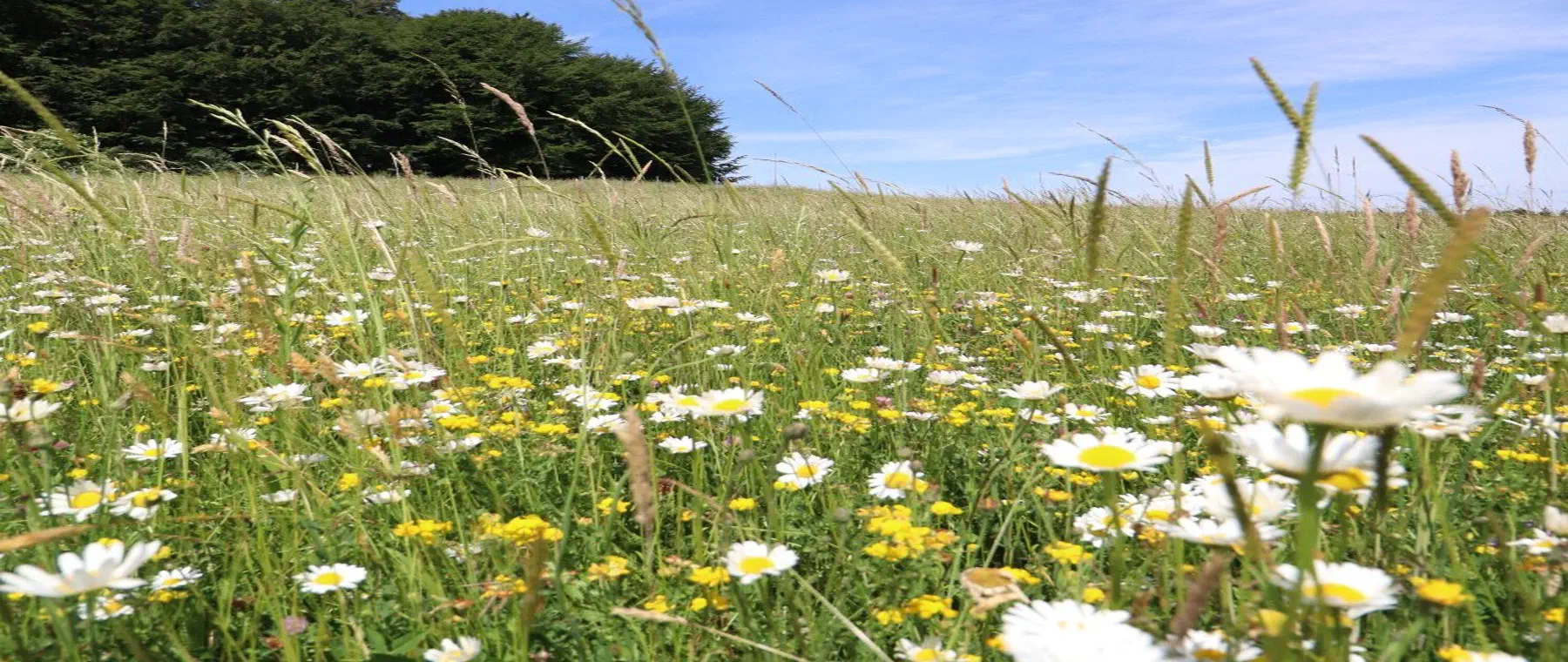
Eco-points and compensation areas
District of Coburg
For impacts in the Landkreis Coburg, statutory nature-conservation compensation under the BayKompV can be handled through officially recognised eco-accounts and eco-points. greeNature supports you as a full-service partner from impact assessment through to permanently secured implementation in natural regions D59 and D56.
The District of Coburg at a glance
The Landkreis Coburg lies in the extreme north-west of Oberfranken on the border with Thuringia. The administrative seat is the independent city of Coburg, which it surrounds but which does not itself belong to the district. Across around 590 km², about 83,700 people live in 17 municipalities, including the Große Kreisstadt Neustadt bei Coburg and the towns of Rödental, Bad Rodach and Seßlach. The rivers Itz, Rodach and Lauter shape the network of valleys and drain into the Main.
In terms of landscape, the district is divided into several units. The south belongs to the Itz-Baunach-Hügelland and thus to the BfN natural region D59 (Fränkisches Keuper-Liasland), with its fertile valley locations and Keuper hills. The western and central area is defined by the Muschelkalk ridge of the Lange Berge and the Werra-Gäuplatten of the Grabfeldgau, which belong to natural region D56 (Mainfränkische Platten). The north, as the foreland of the Thuringian Forest, has a low-mountain character. Geologically, Muschelkalk, Keuper and Lias formations dominate.
Ecologically, the district is shaped by the Grünes Band along the former inner-German border and by lime-rich habitats. Large parts of the Lange Berge are secured as the FFH site Muschelkalkzug (around 1,981 ha) and are home to calcareous grassland, ravine and slope mixed forests, and priority habitat types under the FFH Directive. The cross-border large-scale nature conservation project Rodachtal, Lange Berge und Steinachtal links Bavaria and Thuringia and supports species such as the black stork, European wildcat and woodlark.
Economically, the Coburg area is a significant industrial location, with upholstered furniture manufacturing, automotive suppliers, toys and ceramics. Commercial and industrial developments, the expansion of transport infrastructure, and residential and energy projects regularly generate compensation requirements under the BayKompV. Such impacts require legally sound compensation and replacement measures that fit the natural region and are permanently secured.
🗺️ Associated natural regions
Go to natural region D59 ›
Go to natural region D56 ›
Go to natural region D62 ›
Go to natural region D48 ›
📍 Selected municipalities
🌿 Ecological features
- Two BfN natural regions in the district: D59 (Fränkisches Keuper-Liasland) in the south and D56 (Mainfränkische Platten) in the west and centre.
- Grünes Band along the former inner-German border as a supra-regional habitat network and European wildcat corridor.
- FFH site Muschelkalkzug of the Lange Berge (around 1,981 ha) with calcareous grassland and ravine forests, complemented by the Nationales Naturerbe Lauterberg.
- Cross-border large-scale nature conservation project Rodachtal, Lange Berge und Steinachtal, together with the Thuringian districts of Hildburghausen and Sonneberg.
- The administrative seat is the independent city of Coburg, which is entirely surrounded by the district.
- An industrially shaped area with upholstered furniture, automotive supply and ceramics businesses, and corresponding land requirements.
✅ greeNature on the ground
greeNature is active in Oberfranken and the Franconian natural regions D59 and D56, and knows the requirements of the lower nature conservation authority at the Landratsamt Coburg. We assess your impact under the BayKompV, secure suitable land in the Coburger Land, and align measures with the conservation objectives of FFH sites such as the Muschelkalkzug of the Lange Berge and the Grünes Band.
Typical measures in the district of Coburg
Developing calcareous grassland
Restoration and management of calcareous grassland on the Muschelkalk sites of the Lange Berge, including through scrub clearance and extensive grazing, as high-value compensation in natural region D56.
Creating traditional orchards
Creating new and restoring existing traditional orchards in the Itz and Rodach valley with site-appropriate standard trees, a typical enhancement element in the Coburger Land.
Restoring watercourses
Structural improvement of the Itz, Rodach and Lauter through bank flattening, deadwood and floodplain woodland, creating habitats for the kingfisher and aquatic organisms.
Extensifying grassland
Extensification of wet and valley meadows in the Grabfeld and in the river floodplains to benefit meadow-breeding birds and insects, with long-term management commitments.
Establishing mixed broadleaf forest
Forest conversion towards structurally rich, site-appropriate mixed broadleaf forests with old-growth and deadwood as habitat for the black stork, bats and cavity-nesting birds.
Habitat network on the Grünes Band
Creation of hedgerows, field margins and stepping-stone habitats along the Grünes Band to connect habitats and support the European wildcat.
Protected species in the Coburger Land (Itz and Rodach valley)
European wildcat
The European wildcat uses the forests of the Lange Berge and the Grünes Band as a retreat and movement corridor. Impacts on forest-adjacent corridors require careful assessment under § 44 BNatSchG.
About this species ›Black stork
The black stork breeds in quiet, structurally rich forest areas of the district and depends on undisturbed nest sites and intact stream floodplains as foraging habitat.
About this species ›Kingfisher
On the Itz, Rodach and Lauter, the kingfisher lives on near-natural banks with steep faces. Watercourse development can trigger species protection measures under § 44 BNatSchG.
About this species ›Bats
The lime-rich, forested landscape offers bats roosts in forests, caves and buildings. Clearances and demolitions require CEF measures to secure roosts.
About this species ›Skylark
In the open agricultural landscape of the Grabfeld, the skylark breeds on the ground. For land losses, skylark plots and flowering areas are established as CEF measures.
About this species ›Sand lizard
The sand lizard inhabits nutrient-poor grassland, embankments and field margins on lime. For construction projects, relocation and habitat creation are common as advance measures.
About this species ›Which projects trigger a compensation obligation?
Commerce and industry
Expansion and new establishment of businesses from the upholstered furniture, automotive supply and ceramics sectors, with land sealing and impact assessment under the BayKompV.
Transport and infrastructure
Road expansion and new construction, cycle and path connections, and pipeline and cable routes that use land and require compensation.
Housing and settlement
Development areas and infill development in the growing towns and municipalities of the Coburger Land, with statutory nature-conservation compensation requirements.
Renewable energy
Ground-mounted photovoltaics and wind turbines on the plateaus, whose approval entails the impact mitigation regulation and species protection assessment.
From enquiry to monitoring
Contact and enquiry
Tell us your compensation requirement and the natural region. We check availability.
Offer and advice
A transparent offer covering measure types, scope and availability.
Coordination with authorities
Full coordination with the lower nature conservation authority. We handle everything.
Long-term monitoring
Permanent securing of the land, management and documentation across the contract term.
Eco-points in adjoining districts
All about eco-points
in the district of Coburg
Request eco-points in the district of Coburg
We will promptly prepare a transparent offer with matching eco-points held in stock in the district of Coburg.