Eco-points and compensation areas
City of Bayreuth
Eco-points available immediately from officially recognised eco-accounts for the independent city of Bayreuth. greeNature solutions develops compensation and replacement measures compliant with BayKompV in the Upper Main hilly region and accompanies project developers as a full-service partner active nationwide.
The City of Bayreuth at a glance
Bayreuth is an independent city in the administrative region Upper Franconia and also its seat of government. It lies in the valley of the Red Main on the edge of the Northern Franconian Jura, with roughly 72,000 people living on an area of some 67 square kilometres. As an independent city, Bayreuth is completely enclosed by the like-named district and manages the nature conservation tasks for its city area itself.
In natural region terms, the city area largely belongs to the BfN natural region D62 (Upper Palatinate-Upper Main hilly region), which separates the Franconian Jura from the marginal mountains Frankenwald, Fichtelgebirge and Upper Palatinate Forest to the southwest. To the south, with the Hohe Warte range, foothills of the Franconian Jura (D61) extend into the city area. The geological diversity is characteristic, located on the edge of the Franconian Line, one of the most significant fault zones in Central Europe.
Ecologically significant are especially the river valleys. The Natura 2000 site Red Main, Mistel valley and Ölschnitz valley (6035-372) runs with some 114 hectares through the city area and connects watercourses, wet meadows and riparian woodland into a continuous habitat network axis. In addition, the historical landscape park of the Eremitage with old tree stock and the landscape protection areas in the Upper and Lower Red Main valley supplement this.
Economically, Bayreuth is shaped by the University, administration, services and medium-sized industry. Residential construction projects such as new urban quarters, commercial areas in the Wolfsbach region and infrastructure measures regularly generate compensation requirements according to the Bavarian Compensation Ordinance (BayKompV).
🗺️ Associated natural regions
Go to natural region D62 ›
📍 City districts
🌿 Ecological features
- Natura 2000 site Red Main, Mistel valley and Ölschnitz valley (6035-372), roughly 114 ha in city area
- Natura 2000 site Eremitage, historical landscape park with old tree stock
- Landscape protection areas Upper and Lower Red Main valley
- Hohe Warte range, foothills of the Northern Franconian Jura, predominantly landscape protection area
- Franconian Line, significant geological fault zone at the natural region boundary
- Red Main as a formative watercourse and inner-city habitat network axis
✅ greeNature on the ground
greeNature solutions operates nationwide and is familiar in Upper Franconia with regional conditions. We know Bayreuth's lower nature conservation authority, the Department for Environment and Climate Protection, the natural region features of the Upper Main hilly region and land availability in the surrounding area from project practice.
Typical measures in the city of Bayreuth
Watercourse restoration
Upgrade of Red Main and Mistel streams through naturalised bank structures, connection of oxbows and development of site-appropriate floodplain woodland margins, habitat for kingfisher, fish and dragonflies along the inner-city network axis.
De-sealing and land recycling
Removal of sealed surfaces on brownfields and former industrial sites, restoration of permeable soils and green open areas in densely built urban spaces.
Grassland extensification
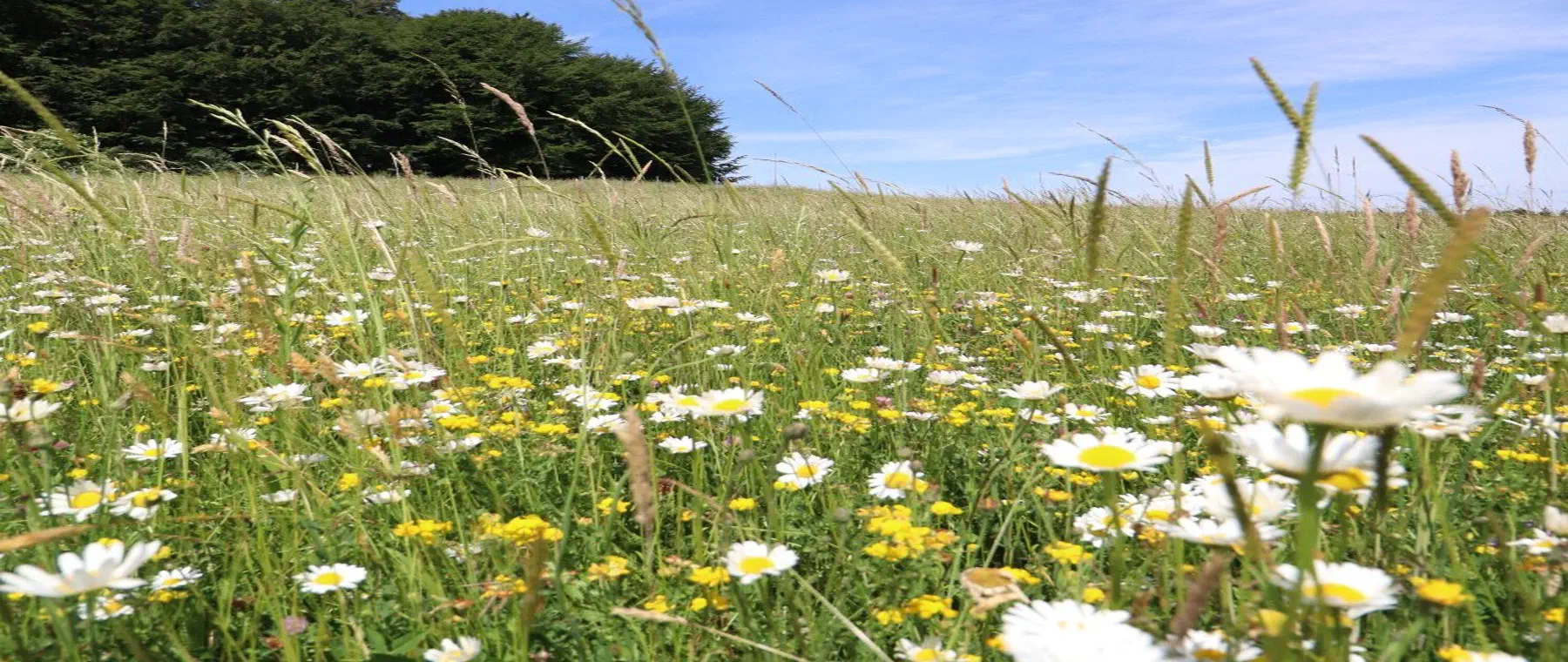
Conversion of intensively used meadows in the surrounding area into species-rich extensively managed grassland in the valley floodplains, habitat for meadow-breeding birds, day-flying butterflies and wild bees.
Traditional orchards and steep meadows
Establishment and management of traditional orchard stands and calcareous grassland on the foothills of the Franconian Jura, for instance at Hohe Warte, as structurally rich stepping-stone habitats.
Species protection CEF/FCS
Sand lizard habitats on railway embankments and slopes, bat roosts in old stocks and cellars, kingfisher steep banks on the Red Main, tailored according to BayKompV and § 44 BNatSchG.
Hedgerows and habitat network
Establishment of hedgerows, field woodland and margins in the denuded open countryside at the city edge, networking of forest, grassland and watercourses into continuous network structures.
Protected species in the University and festival city on the Red Main · Upper Franconia
Kingfisher on the Red Main
The naturalised sections of Red Main and Mistel streams offer the kingfisher feeding and breeding habitats. Typical CEF measures are modelling of steep banks and bank collapse areas as well as structurally rich riparian woodland.
About this species ›Bats in park and old stock
The old tree stock of the Eremitage and historical cellar vaults in the city area serve species such as common pipistrelle and brown long-eared bat as roosts and hunting grounds. Roost losses in construction projects can be offset by replacement roosts.
About this species ›Amphibians in the Red Main floodplains
In the damp areas of Red Main and Mistel valley, common toad, common frog and other amphibians occur. Newly established spawning waters and terrestrial habitats are proven compensation measures.
About this species ›Sand lizard on railway and slope
Railway embankments, dry slopes and south-facing slopes in the city area are habitat for the strictly protected sand lizard, a common target species in transport and settlement projects. CEF measures include replacement habitats with shelter and egg-laying sites.
About this species ›Skylark of the farmland
In the open agricultural landscape at the city edge, the skylark breeds. Skylark patches, flowering strips and extensive arable margins are typical CEF measures for construction and infrastructure projects.
About this species ›Hazel dormouse in hedgerow and forest edge
Structurally rich hedgerows, forest edges and woodland fringes on the Franconian Jura foothills provide habitat for the hazel dormouse. Retention and new establishment of networked woodland structures secure its migration corridors.
About this species ›Which projects trigger a compensation obligation?
Residential construction and urban quarters
New residential quarters and densifications, including plans for several hundred residential units, trigger nature conservation compensation obligations. greeNature provides suitable eco-points and undertakes coordination with the lower nature conservation authority.
Commerce and industry
Commercial area development and business expansions, for instance in the Wolfsbach industrial area, generate compensation requirements for sealing and woodland loss, which greeNature covers through compensation and replacement measures.
University and research
The expansion of university and research facilities, including battery and technology sites, brings construction measures requiring compensation compliant with BayKompV.
Traffic and infrastructure
Road and railway construction measures, bridge structures and pipeline routes in the city area trigger compensation and replacement obligations as well as species protection CEF measures.
From enquiry to monitoring
Contact and enquiry
Tell us your compensation requirement and the natural region. We check availability.
Offer and advice
A transparent offer covering measure types, scope and availability.
Coordination with authorities
Full coordination with the lower nature conservation authority. We handle everything.
Long-term monitoring
Permanent securing of the land, management and documentation across the contract term.
Eco-points in adjoining districts
All about eco-points
in the city of Bayreuth
Request eco-points in the city of Bayreuth
We will promptly prepare a transparent offer with matching eco-points held in stock in the city of Bayreuth.