Eco-points and compensation areas
District of Bad Kissingen
Eco-points immediately available from officially recognised eco-accounts in the Bavarian Rhön and the Fränkisches Saaletal. greeNature is your full-service partner for compensation under the BayKompV in the district of Bad Kissingen.
The District of Bad Kissingen at a glance
The district of Bad Kissingen lies in northern Unterfranken and stretches from the wooded heights of the Bayerische Rhön in the north to the open arable landscapes of the Mainfränkische Platten in the south. It borders the Hessian districts of Fulda and Main-Kinzig, as well as the Bavarian districts of Rhön-Grabfeld, Schweinfurt and Main-Spessart. The deeply incised valley of the Fränkische Saale, which runs through the district from northeast to southwest, is a defining feature.
Geologically, the volcanic basalt of the Rhön meets the escarpments of Buntsandstein and Muschelkalk here. This diversity creates a close juxtaposition of base-rich calcareous grassland and juniper heaths on the Muschelkalk slopes, extensive beech and mixed woodland over Buntsandstein, and the open plateaus of the Lange Rhön. The district belongs to the two BfN natural regions D47 (Osthessisches Bergland, Vogelsberg and Rhön) and D56 (Mainfränkische Platten).
Ecologically, the district is part of the UNESCO Rhön Biosphere Reserve. With the Bayerische Hohe Rhön FFH site (5526-371), Unterfranken's largest FFH site, the Wildflecken military training area as extensive open land, and the Fränkische Saale between Heustreu and Steinach FFH site (5627-371), it has a dense network of Natura 2000 areas. Calcareous grassland, mountain hay meadows, near-natural beech woodland and the meandering Saale form a high-quality habitat mosaic.
Economically, the three state spa towns of Bad Kissingen, Bad Brückenau and Bad Bocklet shape the district with spa and health tourism, complemented by small and medium-sized businesses, automotive suppliers and food processing. The A7 motorway crosses the district. Infrastructure expansion, commercial and residential land, raw material extraction and energy transition projects regularly generate a compensation requirement here under the BayKompV.
🗺️ Associated natural regions
Go to natural region D55 ›
Go to natural region D56 ›
Go to natural region D47 ›
📍 Selected municipalities
🌿 Ecological features
- UNESCO Rhön Biosphere Reserve, with core zones in the district
- Bayerische Hohe Rhön FFH site (5526-371), Unterfranken's largest FFH site
- Fränkische Saale between Heustreu and Steinach FFH site (5627-371)
- Calcareous grassland and juniper heaths on the Muschelkalk slopes of the Saale valley
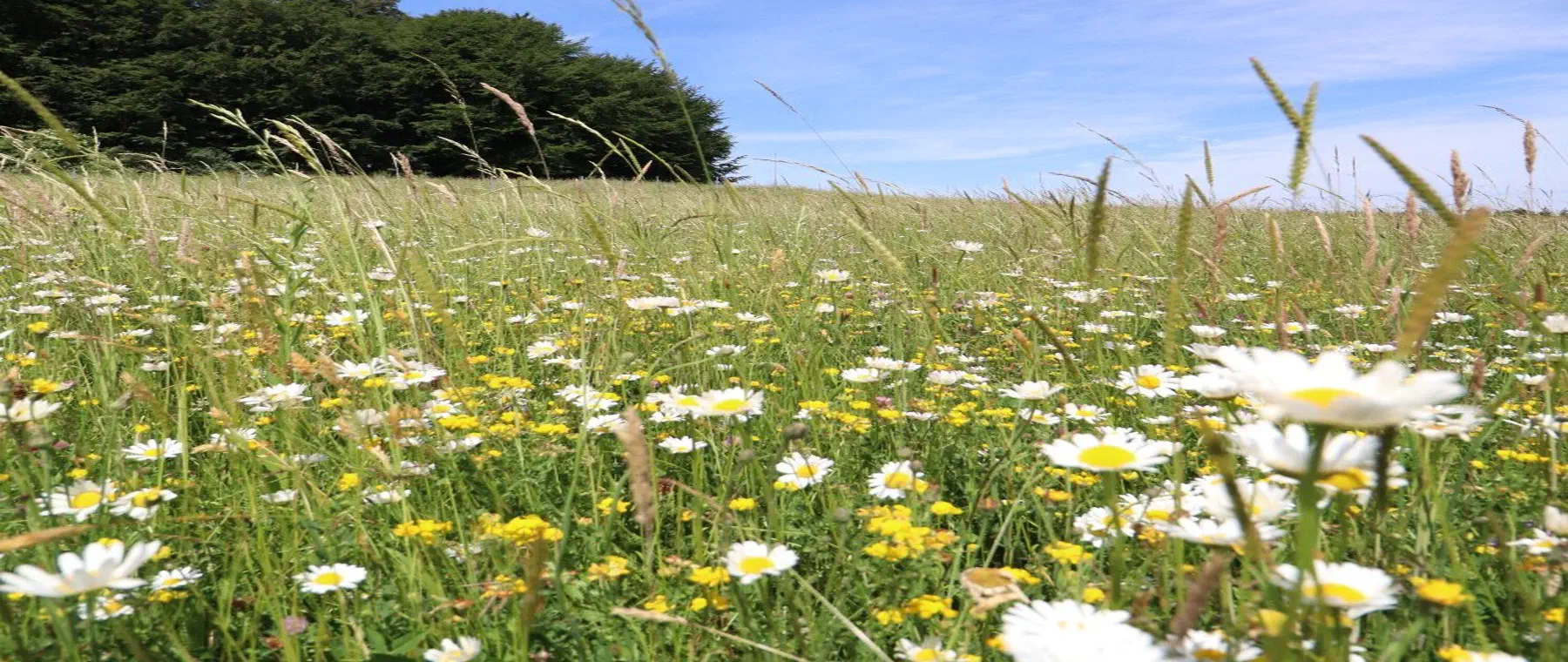
- Mountain hay meadows and open land of the Lange Rhön, habitat of rare meadow-breeding birds
- Near-natural beech woodland over Buntsandstein, a refuge for the European wildcat and black stork
- Wildflecken military training area as extensive, undisturbed open land
✅ greeNature on the ground
greeNature supports compensation projects throughout Bavaria and knows the ecological particularities of the Rhön and the Fränkisches Saaletal from practical experience. We coordinate measures with the lower nature conservation authority at the Bad Kissingen District Office, correctly assign impacts to natural regions D47 and D56, and handle land procurement from regional eco-accounts.
Typical measures in the district of Bad Kissingen
Restoration of the Fränkische Saale
Revitalising bank sections, reconnecting oxbows and developing near-natural floodplain structures along the Fränkische Saale, habitat for kingfisher, bullhead and freshwater pearl mussel.
Management of calcareous grassland
Clearing scrub and extensively grazing juniper heaths and calcareous grassland on the Muschelkalk slopes of the Saale valley, habitat for warmth-loving orchids, insects and reptiles.
Near-natural forest conversion
Developing structurally rich beech and mixed broadleaf woodland with old and dead wood over Buntsandstein, a refuge for the European wildcat, Bechstein's bat and black stork.
Mountain meadows and grassland extensification
Converting intensively used grassland into species-rich mountain and wet meadows on the Rhön plateaus, supporting meadow-breeding birds and flower-rich meadow communities.
Traditional orchard and hedgerow network
Establishing and managing Franconian traditional orchards and hedgerow structures in the open farmland, stepping-stone habitats and habitat network between the Saale valley and the edge of the Rhön.
Species protection CEF/FCS
Tailored measures under the BayKompV, such as habitat structures for the European wildcat and hazel dormouse, bat roosts, amphibian waters and sand lizard habitats along railway and road routes.
Protected species in the Bayerische Rhön and Fränkisches Saaletal
European wildcat
The continuous beech and mixed woodland of the Rhön and the edge of the Spessart are among the core occurrences of the European wildcat. Woodland edge structures, dead wood and a habitat network are typical FCS measures for connecting populations.
About this species ›Black stork
The black stork breeds in the undisturbed old-growth stands of the Rhön and hunts along near-natural forest streams and in the Saale floodplains. Retaining old broadleaf woodland and undisturbed watercourses secures its habitat.
About this species ›Skylark and meadow-breeding birds
The open plateaus of the Lange Rhön and the Grabfeld are home to the skylark and other meadow-breeding birds. Extensive grassland management and avoiding early mowing secure successful breeding.
About this species ›Bats
Bechstein's bat and the greater mouse-eared bat use the old beech woodland as maternity roosts and hunting habitat. Retaining cavity trees and securing roosts are common compensation measures.
About this species ›Kingfisher on the Saale
The meandering Fränkische Saale with its steep banks offers the kingfisher breeding sites. CEF measures include creating steep faces, eroding banks and structurally rich watercourse margins.
About this species ›Amphibians and great crested newt
The great crested newt, yellow-bellied toad and other amphibians live in the ponds and wetland habitats of the Rhön. Newly created, sunlit small water bodies are effective compensation measures for impacts on wetland habitats.
About this species ›Which projects trigger a compensation obligation?
Infrastructure and transport
The A7 motorway, as well as federal and state roads, cross the district. Expansion measures, bypasses and bridge structures over the Fränkische Saale regularly trigger compensation and replacement obligations under the BayKompV.
Commerce and settlement
New commercial and residential development areas in Bad Kissingen, Hammelburg and Münnerstadt, as well as expansions of automotive suppliers and food businesses, require statutory nature conservation compensation. Landowners can benefit by offering compensation areas.
Raw material extraction
The extraction of basalt, sand and limestone in the Rhön and the Saale valley impacts nature and landscape. Restoring extraction sites and accompanying compensation measures are among the typical compensation tasks.
Renewable energy
Ground-mounted photovoltaic installations and wind energy projects on the edge of protected areas require ecological assessments, as well as CEF and FCS measures, particularly for wind-energy-sensitive species.
From enquiry to monitoring
Contact and enquiry
Tell us your compensation requirement and the natural region. We check availability.
Offer and advice
A transparent offer covering measure types, scope and availability.
Coordination with authorities
Full coordination with the lower nature conservation authority. We handle everything.
Long-term monitoring
Permanent securing of the land, management and documentation across the contract term.
Eco-points in adjoining districts
All about eco-points
in the district of Bad Kissingen
Request eco-points in the district of Bad Kissingen
We will promptly prepare a transparent offer with matching eco-points held in stock in the district of Bad Kissingen.