Eco-points and compensation areas
City of Ansbach
Eco-points available immediately from officially recognised eco-accounts. greeNature solutions, your full-service partner for statutory nature-conservation compensation under the BayKompV in the independent city of Ansbach and in the Middle Franconian Basin.
The City of Ansbach at a glance
The independent city of Ansbach is the seat of the Regierung von Mittelfranken (Middle Franconia regional government) and of the Bezirk Mittelfranken (Middle Franconia district authority). It lies on the Fränkische Rezat in the south-western Middle Franconian Basin, where the wooded hills of the Frankenhöhe give way to the open basin land. In natural-region terms, the city area belongs to the Fränkisches Keuper-Liasland (natural region D59).
Geologically, the subsoil is dominated by Keuper sandstones and clay marl layers. Over large areas these have produced nutrient-poor, sandy soils which, alternating with woodland, arable land and grassland, form a fine-grained landscape mosaic. The floodplain of the Fränkische Rezat runs as a damp band through the city area, connecting the districts with the surrounding area.
Ecologically significant is the transition to the Frankenhöhe Nature Park, which extends into the north-west of the city area. In addition, there is the traditional pond and small-lake landscape of the Frankenhöhe, traditional orchard belts on the edges of the incorporated villages, and warmth-loving field margins on the sandy slopes. These structures provide habitat for numerous species protected under § 44 BNatSchG.
As an administrative, university and garrison town, Ansbach continues to develop steadily. Residential and commercial sites, the redevelopment of former military conversion sites, and transport and infrastructure projects regularly generate impacts for which statutory nature-conservation compensation in value points must be provided under the Bavarian Compensation Ordinance (BayKompV).
🗺️ Associated natural regions
Go to natural region D59 ›
📍 City districts
🌿 Ecological features
- Frankenhöhe Nature Park extends into the north-west of the city area
- Floodplain of the Fränkische Rezat runs through the city area with wet grassland and riparian woodland
- Traditional pond and small-lake landscape of the Frankenhöhe in the surrounding area (carp pond farming)
- Traditional orchard belts on the edges of the incorporated villages
- Conversion sites of former military use with ruderal and dry sites
- Warmth-loving field margins and nutrient-poor sites on sandy Keuper soils
✅ greeNature on the ground
greeNature has been active in Middle Franconia for many years and knows the lower nature conservation authority of the City of Ansbach, the regional land pools and the requirements of the Bavarian Compensation Ordinance from practical experience. We secure and develop suitable land in the Rezat valley and on the Frankenhöhe, coordinate measures with the municipal environmental office and landowners, and support project developers from requirement assessment through natural-region allocation (D59) to permanent management and documentation. Because the BayKompV provides for a natural-region-based assessment in value points, we ensure that compensation takes effect within the affected natural region wherever possible. Where a species protection requirement arises under § 44 BNatSchG, we design advance CEF measures that continuously safeguard the ecological function for the species affected.
Typical measures in the city of Ansbach
Restoration of the Fränkische Rezat
Removal of bank reinforcement, creation of watercourse buffer strips and floodplain woodland, reconnection of oxbows. This creates spawning and breeding habitats within the city area, and the water body is upgraded in line with the objectives of the Water Framework Directive.
Desealing and conversion
Removal of sealed surfaces on former military, railway and commercial sites, soil loosening and site-appropriate greening. A particularly effective form of compensation for new impacts within the densely built-up urban area.
Grassland upgrading in the surrounding area
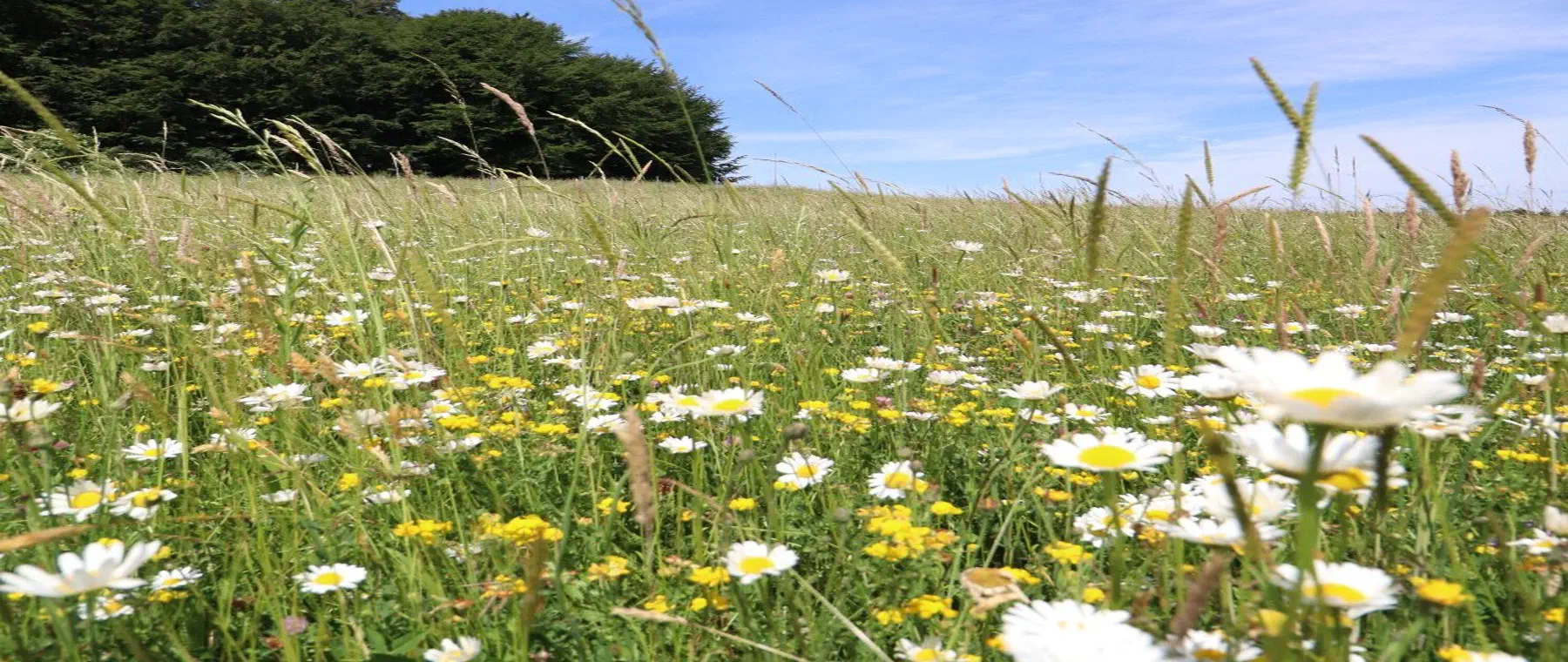
Extensification of intensively used meadows in the Rezat floodplain and on the village edges, later mowing dates and foregoing fertiliser use. Habitat for meadow-breeding birds and flower-visiting insects.
Traditional orchards and village-edge greenery
Creation and management of traditional orchards with regional varieties on the edges of the incorporated villages, complemented by dry stone walls and field margins as habitat for cavity-dwelling species.
Species protection, CEF and FCS
Roosts and nesting sites for building-nesting birds and bats on existing buildings, replacement habitats for sand lizards on conversion and railway land, spawning waters for amphibians. Tailored to § 44 BNatSchG and the BayKompV.
Hedgerows and habitat network
Creation of hedgerows, field copses and stepping-stone habitats in the cleared farmed landscape of the surrounding area, to connect the Rezat floodplain with the woodland edges of the Frankenhöhe.
Protected species in the Fränkische Rezat and Frankenhöhe
Northern lapwing in the Rezat floodplain
Wet meadows and low-lying arable hollows of the Fränkische Rezat offer breeding habitats for the northern lapwing. Extensification, rewetting and the retention of bare ground are typical measures to support it.
About this species ›Skylark of the arable landscape
The open farmed landscape in the surrounding area of the incorporated villages is habitat for the skylark. Skylark plots, fallow strips and flower-rich field margins secure its breeding success as a CEF measure.
About this species ›Kingfisher on the Fränkische Rezat
Near-natural bank sections with steep banks and fish-rich water offer the kingfisher breeding and hunting opportunities. Restored cut banks and perches support its establishment.
About this species ›Bats in the city and traditional orchards
Common pipistrelle, brown long-eared bat and other species use older buildings, church towers and traditional orchards as roosts and hunting grounds. Roost boxes and the retention of hollow trees are proven measures.
About this species ›Sand lizard on conversion sites
Sandy, warmth-favoured ruderal, railway and conversion sites are ideal habitats for the sand lizard. It is a frequent target species in construction and infrastructure projects and requires advance translocation.
About this species ›Amphibians of the pond landscape
Small lakes and ponds of the Frankenhöhe, as well as floodplain waters of the Rezat, are home to common toad, common frog and the strictly protected great crested newt. Newly created spawning waters are effective compensation measures.
About this species ›Which projects trigger a compensation obligation?
Housing and infill development
New residential quarters and inner-area development within the city area require compensation and replacement measures. Owners of suitable land in the surrounding area can participate by offering their land for eco-accounts.
Commerce and conversion
The redevelopment of former military sites (for example in the Urlas area) and the expansion of commercial areas trigger compensation obligations. Desealing and habitat upgrading are particularly suitable here.
Transport and infrastructure
As a railway hub and junction of several federal highways, Ansbach continually develops its transport infrastructure further. Road, rail and utility line projects regularly generate impacts requiring compensation.
Public buildings and facilities
As the seat of the Regierung von Mittelfranken and home to Ansbach University of Applied Sciences, administrative, educational and clinical buildings are constructed, the land take of which must be compensated under the BayKompV.
From enquiry to monitoring
Contact and enquiry
Tell us your compensation requirement and the natural region. We check availability.
Offer and advice
A transparent offer covering measure types, scope and availability.
Coordination with authorities
Full coordination with the lower nature conservation authority. We handle everything.
Long-term monitoring
Permanent securing of the land, management and documentation across the contract term.
Eco-points in adjoining districts
All about eco-points
in the city of Ansbach
Request eco-points in the city of Ansbach
We will promptly prepare a transparent offer with matching eco-points held in stock in the city of Ansbach.