Eco-points and compensation areas
District of Amberg-Sulzbach
Immediately available eco-points from officially recognised eco-accounts in the Palatinate Jura. greeNature is your full-service partner for compensation under BayKompV in Amberg-Sulzbach district.
The District of Amberg-Sulzbach at a glance
Amberg-Sulzbach district is located in the west of the Palatinate and belongs to the Nuremberg metropolitan region. It surrounds the independent city Amberg, which is also the seat of the District Office but itself does not form part of the district territory. The largest town within the district is Sulzbach-Rosenberg. The alternation between the forest-rich highlands of the Palatinate Jura and the open valleys of Vils and Pegnitz is characteristic.
Geographically, the district is divided into three areas. The Palatinate Jura (BfN major landscape D61, Franconian Alb) takes up the largest part, with limestone and dolomite, karst features, caves and dry limestone slopes. The Palatinate-Upper Main hill country (D62) follows in the north-east; in the east, the Naab mountains, the western extension of the Palatinate Forest (D63) with crystalline bedrock, reach in.
Ecologically, the district is part of the EU-wide Natura 2000 network with 18 Habitats and Avifaunal Directive sites. Outstanding is the Vilseck Basin (Habitats Directive site DE-6337-371, Avifaunal Directive site DE-6336-471) with wet meadows, pools and swamp forests. The calcareous grasslands and juniper heaths of the Jura, managed under the Juradistl biodiversity project among others, as well as the karst caves as bat roosts count among the region's most valuable habitats.
Economically, the region was long characterised by ore mining and iron processing (Maxhütte in Sulzbach-Rosenberg). Today, kaolin and feldspar extraction around Hirschau and Schnaittenbach, limestone and dolomite quarries in the Jura as well as commerce along motorway A6 characterise the landscape. Raw material extraction, transport projects, wind power on the Jura heights and settlement development regularly generate compensation requirements under BayKompV.
🗺️ Associated natural regions
Go to natural region D61 ›
Go to natural region D62 ›
Go to natural region D63 ›
📍 Selected municipalities
🌿 Ecological features
- Palatinate Jura with calcareous grasslands and juniper heaths (Juradistl project area)
- Karst caves in the Jura as significant winter quarters for bats
- Vilseck Basin as a Habitats Directive site and Avifaunal Directive site with wet meadows and pool landscape
- Vils and Pegnitz as near-natural flowing waters, habitat for kingfisher and freshwater mussel
- Naab mountains as the western extension of the Palatinate Forest with crystalline bedrock
- Kaolin extraction near Hirschau and Schnaittenbach with mining restoration landscapes (Monte Kaolino)
- Orchard stands and dry stone walls of the Jura cultural landscape
✅ greeNature on the ground
greeNature supports compensation projects throughout the Palatinate and knows the nature conservation requirements in the Palatinate Jura from practice. We coordinate with the lower nature conservation authority at Amberg-Sulzbach District Office and the Palatinate Government and have access to suitable areas and eco-accounts in the region.
Typical measures in the district of Amberg-Sulzbach
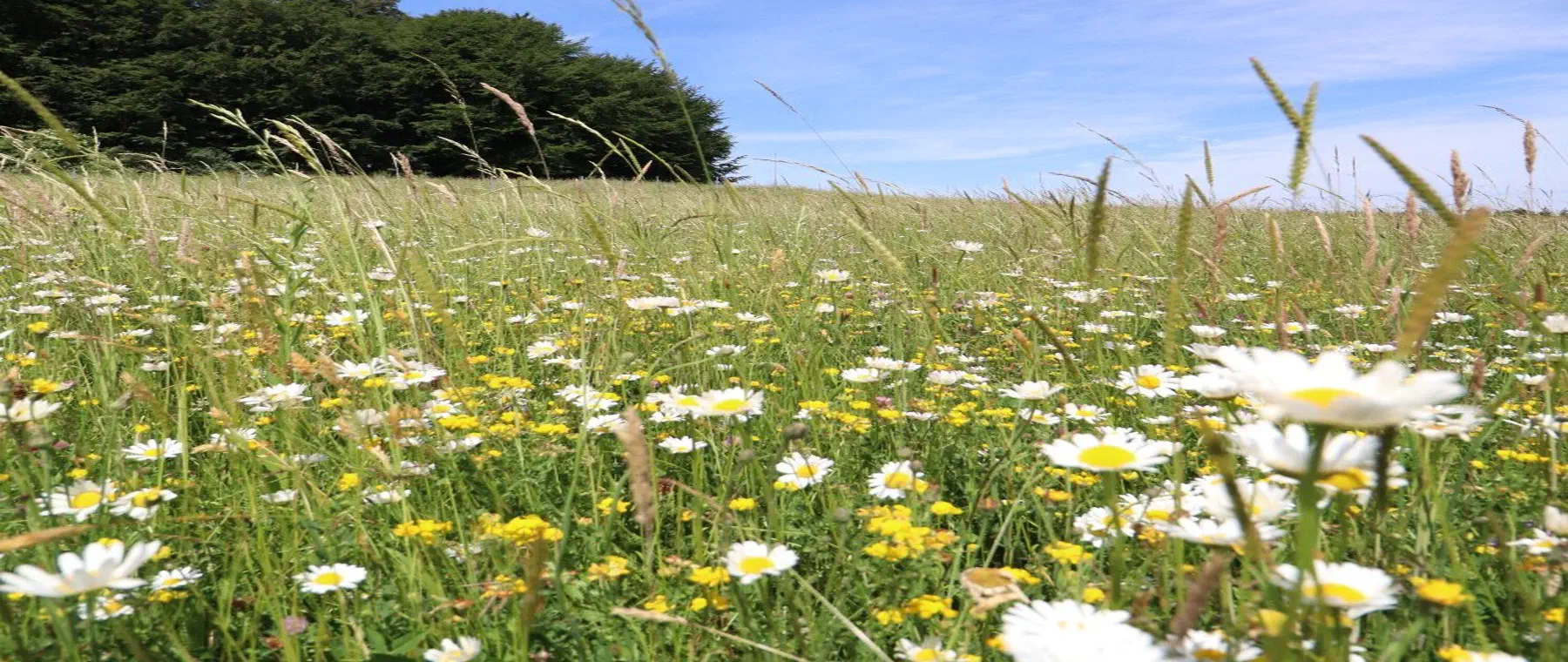
Calcareous grasslands and juniper heaths
Management and restoration of species-rich dry grasslands and juniper heaths of the Palatinate Jura through removal of encroaching vegetation and extensive grazing, in conjunction with the Juradistl biodiversity project.
Wet and damp meadows
Extensification of grassland in the Vils valley and Vilseck Basin as habitat for meadow-breeding birds, corncrake and rare butterflies, with adapted mowing dates and no fertilisation.
Water body restoration
Restoration of Vils, Pegnitz and tributary streams with riparian vegetation, channel raising and creation of breeding waters for fish, amphibians and dragonflies.
Forest conversion and new afforestation
Development of site-appropriate broadleaf mixed forests on Jura limestone sites and the bedrock soils of the Naab mountains, climate-resilient and long-term secured.
Species protection CEF/FCS
Sand lizard on extraction and railway areas, securing of bat roosts in caves and tunnels, new amphibian breeding ponds, tailored according to BayKompV and § 44 BNatSchG.
Hedgerows, dry stone walls and habitat networks
Networking of the cultural landscape through hedgerows, field copses and dry stone walls as stepping-stone habitats for wild bees, reptiles and birds.
Protected species in the Palatinate Jura and Vils valley
Bats in Jura caves
The karst caves and tunnels of the Palatinate Jura are significant winter quarters for bats, including the greater mouse-eared bat and Bechstein's bat. Typical measures are securing cave and tunnel entrances as well as roosts in forests and orchard stands.
About this species ›Sand lizard on dry and extraction areas
Calcareous grasslands, quarries and the sand areas of the kaolin extraction regions around Hirschau provide warmth-loving reptiles with habitat. For the strictly protected sand lizard (Annex IV Habitats Directive), stone heaps, sand lenses and habitat relocation are frequent CEF measures.
About this species ›Black stork and white stork
The low-disturbance forests of the Jura and the wetlands of the Vilseck Basin are habitat for black stork and white stork as well as numerous raptors. For projects near forests, nest protection and securing of undisturbed feeding habitats are options.
About this species ›Kingfisher on Vils and Pegnitz
On the near-natural sections of Vils and Pegnitz, the kingfisher breeds in steep banks. Restored water sections, bank collapses and created breeding banks are effective compensation and CEF measures.
About this species ›Great crested newt in the pool landscape
The pools and wet meadows of the Vilseck Basin are home to amphibians such as the great crested newt (Annex II Habitats Directive), tree frog and yellow-bellied toad. Newly created, fish-free breeding ponds are typical measures for securing populations.
About this species ›Skylark and meadow-breeding birds
On the open arable land of the Jura highlands, the skylark breeds; in the wet meadows of the Vils valley, the corncrake also breeds. Skylark gaps, flower strips and late mowing secure as CEF measures the breeding sites.
About this species ›Which projects trigger a compensation obligation?
Raw material extraction
Kaolin and feldspar extraction around Hirschau and Schnaittenbach as well as limestone and dolomite quarries in the Jura are among the defining impacts. Extraction projects and extensions regularly trigger compensation and restoration obligations.
Infrastructure and transport
Motorway A6, federal roads B85 and B299, bypass routes and work on the Nuremberg, Schwandorf and Regensburg railway line create compensation and replacement requirements under BayKompV.
Energy and renewables
Wind power sites on the forested Jura heights and ground-mounted photovoltaic installations require nature conservation compensation and species protection assessments, for example for bats and raptors.
Commerce and settlement
As part of the Nuremberg metropolitan region, the district develops commercial areas along the A6 and residential land in Sulzbach-Rosenberg and Kümmersbruck, linked with compensation obligations.
From enquiry to monitoring
Contact and enquiry
Tell us your compensation requirement and the natural region. We check availability.
Offer and advice
A transparent offer covering measure types, scope and availability.
Coordination with authorities
Full coordination with the lower nature conservation authority. We handle everything.
Long-term monitoring
Permanent securing of the land, management and documentation across the contract term.
Eco-points in adjoining districts
All about eco-points
in the district of Amberg-Sulzbach
Request eco-points in the district of Amberg-Sulzbach
We will promptly prepare a transparent offer with matching eco-points held in stock in the district of Amberg-Sulzbach.