Eco-points and compensation areas
City of Amberg
Eco-points available immediately from officially recognised eco-accounts. greeNature is your full-service partner for compensation under the BayKompV in the independent city of Amberg and in the Upper Palatinate Hill Country on the Vils.
The City of Amberg at a glance
Amberg is an independent city in the Upper Palatinate administrative region and lies on the Vils, a tributary of the Naab. Around 42,600 people live within its roughly 50 square kilometres. The city is completely enclosed by the district of Amberg-Sulzbach and, alongside its compact old town, comprises numerous village-like city districts such as Raigering, Karmensölden and Unterammersricht.
In natural-region terms, Amberg belongs to BfN natural region D62 (Upper Palatinate-Upper Main Hill Country), here to the Upper Palatinate Hill Country with the Sulzbach-Amberg-Freihölser Chalk Basin and the Hahnbach Depression. The Upper Palatinate Forest adjoins to the east. The subsoil is finely structured, with sand, chalk and Jurassic layers, producing a mosaic of woodland, arable land, grassland and dry sites.
The ecological backbone of the city is the Vils valley. Along its entire length, the Vils is designated as an FFH site and forms part of the European Natura 2000 network, connecting the city with the Hirschwald Nature Park adjoining to the west. Wet meadows, oxbows and riparian woodland along the river, as well as former mining spoil heaps and dry sites, provide habitat for numerous protected species.
Amberg has historically been shaped by iron ore mining and iron processing in the Amberg-Sulzbach coalfield and today is a centre for the glass and electrical industries, administration, trade and higher education. Housing, commercial development and transport projects regularly trigger impacts within the built-up urban area, for which compensation must be provided under the Bavarian Compensation Ordinance (BayKompV).
🗺️ Associated natural regions
Go to natural region D62 ›
Go to natural region D61 ›
📍 City districts
🌿 Ecological features
- Vils FFH site, European protected area along the entire course of the river
- Vils valley with wet meadows, oxbows and riparian woodland forming a habitat network
- Hirschwald Nature Park adjoining to the west, a supra-regional recreation and natural area
- Upper Palatinate Hill Country with chalk basin and Hahnbach Depression (natural region D62)
- Transition to the Upper Palatinate Forest east of the city
- Former ore mining spoil heaps and dry sites as habitat for warmth-loving species
- Historic old town with building roosts for bats and building-nesting birds
✅ greeNature on the ground
greeNature operates nationwide and is rooted in Bavaria. We know the requirements of compensation under the BayKompV in the Upper Palatinate from practical experience, work with the lower nature conservation authority of the City of Amberg and the specialist bodies in the surrounding area, and take into account the particularities of natural region D62 and the Vils valley in planning and implementation.
Typical measures in the city of Amberg
Restoration on the Vils
Removal of bank reinforcement, reconnection of oxbows and allowing self-dynamic watercourse development in the Vils valley. This creates steep banks, gravel bars and floodplain woodland as habitat for kingfisher, fish and amphibians within the Vils FFH site.
Desealing within the urban area
Removal of disused surfaces, yards and derelict land and their conversion into permeable, green areas. Desealing is an effective way of upgrading soil, water balance and microclimate within the densely built-up city area.
Grassland upgrading in the surrounding area
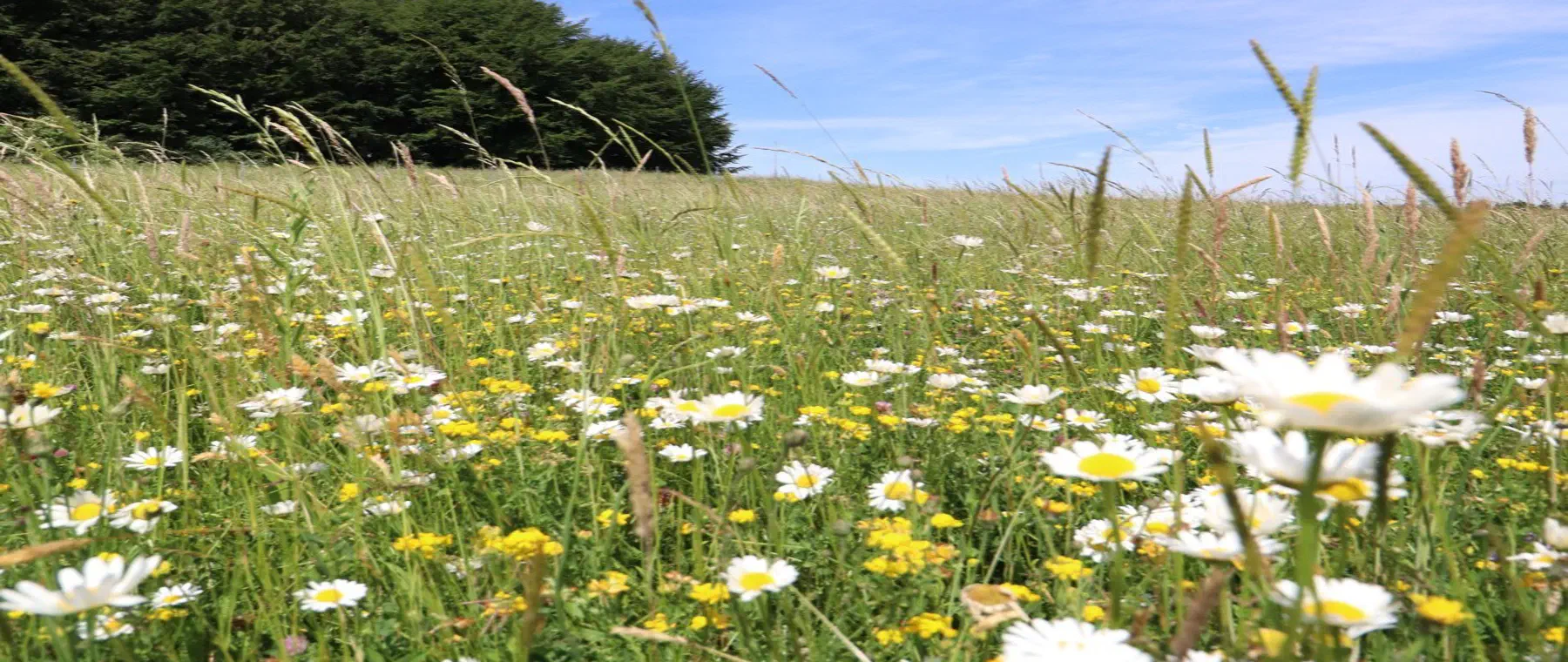
Extensification of intensively used meadows and arable land in the city districts through adapted mowing regimes, foregoing fertiliser use, and development of species-rich meadows. Such areas are habitat for skylark, meadow-breeding birds and insects.
Hedgerows, traditional orchards and habitat network
Creation of hedgerows, field copses and traditional orchards on the slopes of the city districts. These structures connect habitats, create stepping-stone habitats and upgrade the farmed landscape on the edge of the city.
Dry sites and mining relics
Management and development of calcareous grassland, embankments and former mining spoil heaps as sun-exposed dry habitats. They are habitat for sand lizard, wild bees and warmth-loving plants and can be specifically developed as compensation areas.
Species protection, CEF and FCS
Bat roosts on buildings and in cellars of the old town, kingfisher nesting banks on the Vils, and replacement habitats for the sand lizard on railway embankments and embankments, each implemented as an advance CEF measure or population-supporting FCS measure under § 44 and § 45 BNatSchG.
Protected species in the Upper Palatinate Hill Country on the Vils
Kingfisher on the Vils
The near-natural bank sections of the Vils offer steep banks as nesting sites. For impacts on watercourses, such as bridge or bank construction, modelling of steep banks and bank restoration are typical CEF measures for the strictly protected kingfisher.
About this species ›Bats in the old town
Common pipistrelle, brown long-eared bat and other species use roof structures, cellars and wall crevices in the historic old town. All species are strictly protected (Annex IV of the FFH Directive); during renovation and demolition, replacement roosts are required as a CEF measure.
About this species ›Sand lizard on dry sites
Railway embankments, embankments and former mining spoil heaps offer sun-exposed habitats for the strictly protected sand lizard. For construction and infrastructure projects, translocation and creation of replacement habitats with shelter and egg-laying structures are regularly required as a CEF measure.
About this species ›Amphibians in the Vils floodplains and ponds
Common frog, common toad and yellow-bellied toad inhabit oxbows, ponds and seasonally wet hollows in the Vils valley. Replacement spawning waters and terrestrial habitats in spatial proximity secure their breeding sites during construction and infrastructure projects.
About this species ›Skylark in open farmland
The skylark breeds on the open arable and grassland areas of the city districts on the outskirts. Where land is taken up, skylark plots, extensively managed field margins and the upgrading of open farmland are typical compensation measures for this declining species.
About this species ›Beaver in the Vils valley
The beaver (Annexes II and IV of the FFH Directive) has colonised the Vils and its side waters and actively reshapes floodplain habitats. Beaver conflict management and the development of watercourse buffer strips are proven components of compensation planning.
Which projects trigger a compensation obligation?
Housing development
New residential development areas and infill development in Amberg and its city districts, for example in the Raigeringer Höhe area, lead to land take and require statutory nature-conservation compensation under the BayKompV as part of urban land-use planning.
Commerce and industry
Expansions and newly designated commercial and industrial sites, among others in the east of the city, generate a compensation requirement. Owners of suitable land in the surrounding area can benefit by offering their land for compensation measures.
Transport and infrastructure
The expansion and refurbishment of federal and state roads, bypasses, bridge structures over the Vils, and rail line projects trigger compensation and replacement obligations, often combined with CEF measures for species bound to watercourses and open land.
Public and commercial building projects
Projects by the university, administration, trade and utility services within the city area affect soil and green structures. Here too, compensation must be provided under the BayKompV, often through desealing and inner-city green space upgrading.
From enquiry to monitoring
Contact and enquiry
Tell us your compensation requirement and the natural region. We check availability.
Offer and advice
A transparent offer covering measure types, scope and availability.
Coordination with authorities
Full coordination with the lower nature conservation authority. We handle everything.
Long-term monitoring
Permanent securing of the land, management and documentation across the contract term.
Eco-points in adjoining districts
All about eco-points
in the city of Amberg
Request eco-points in the city of Amberg
We will promptly prepare a transparent offer with matching eco-points held in stock in the city of Amberg.