Eco-points and compensation areas
District of Altötting
Immediately available eco-points in stock from officially recognised eco-accounts. greeNature solutions, your full-service partner for compensation in the Chemical Triangle and the Inn-Salzach region.
The District of Altötting at a glance
The district of Altötting lies in the south-east Bavarian Inn valley between Munich and Salzburg and belongs to the Upper Bavaria administrative region. It is shaped by the Inn valley landscape, with its broad gravel terraces, fertile loess slopes and near-natural Inn floodplain.
Geologically, the district is shaped by glacial moraines and gravel fields deposited by the Inn over millennia. This structural diversity creates a unique mosaic of dry slopes, damp lower terraces and dynamic floodplain areas.
Ecologically significant: the Inn as a European bird migration route, the Inn reservoirs at Tüssling and Haiming are internationally important resting and overwintering sites for waterbirds. The Inn EU bird sanctuary (DE-7742-471) attracts hundreds of thousands of migratory birds every year.
The economy is strongly shaped by the Chemical Triangle (Burghausen/Töging), home to the world's largest contiguous chemical plant (WACKER Chemie), stretching 6 km. Infrastructure and industrial projects here regularly generate considerable compensation requirements under BayKompV.
🗺️ Associated natural regions
Go to natural region D65 ›
Go to natural region D66 ›
📍 Selected municipalities
🌿 Ecological features
- Inn EU bird sanctuary (DE-7742-471), migratory and resting bird route
- Tüssling & Haiming Inn reservoirs, internationally important (Ramsar criteria)
- Alz river floodplains, FFH habitat with beaver and kingfisher
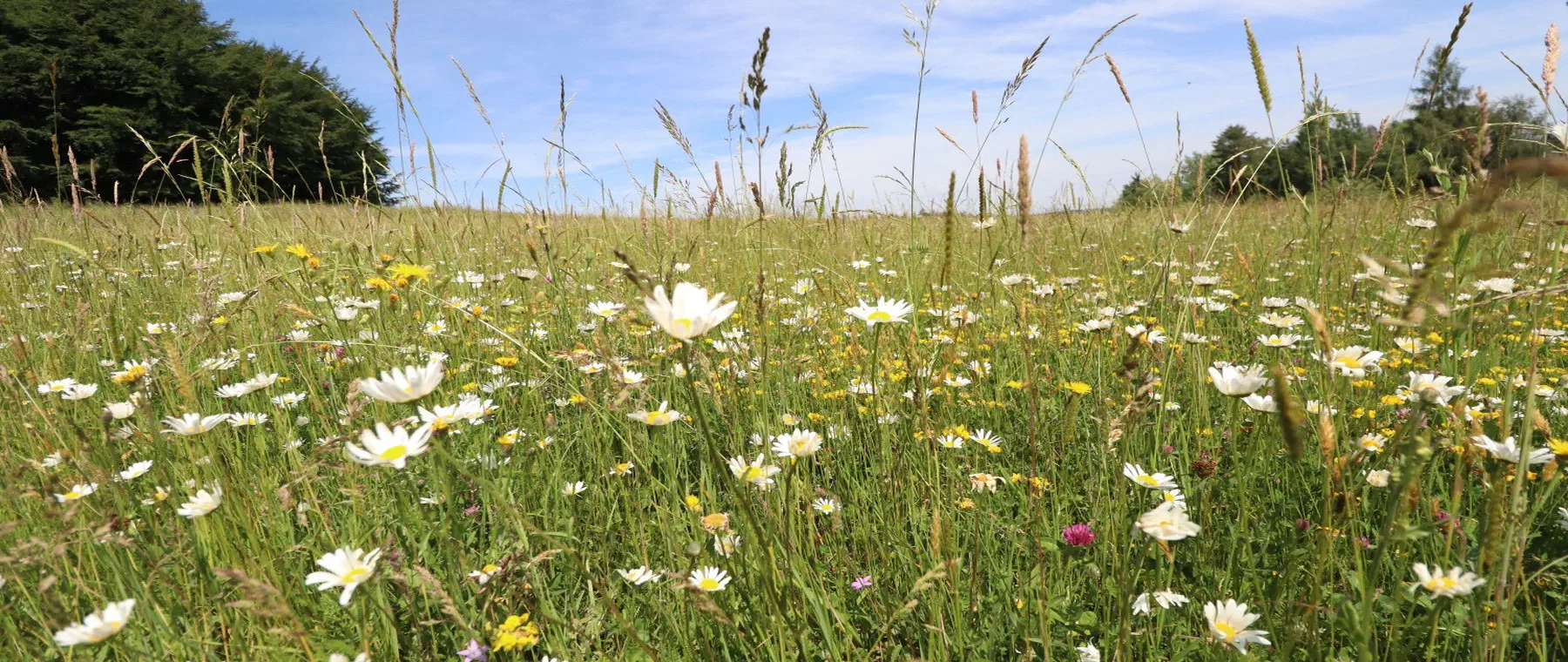
- Moraine hill landscape with traditional orchards and calcareous grassland
- Loess loam slopes, warmth-loving insect communities
- Burghausen Salzach, border watercourse with particular dynamics
✅ greeNature on the ground
Our site in Bavaria (Kastl, district of Altötting) is right here in the district. We know the lower nature conservation authority in Altötting, the regional land pools and the particularities of compensation law in the Inn-Salzach region from daily practice.
Typical measures in the district of Altötting
Inn floodplain restoration
Revitalisation of oxbows and eroding banks along the Inn, creating spawning habitats for fish and breeding habitats for little ringed plover and common sandpiper.
Grassland extensification
Conversion of intensively managed lower and higher terraces into species-rich meadows, habitat for meadow-breeding birds such as northern lapwing, whinchat and corncrake.
Traditional orchards
Establishment and reactivation of traditional orchards on moraine slopes and loess loam terraces, habitat for little owl, hoopoe and rare wild bee species.
CEF/FCS species protection
Beaver conflict management on the Alz and Inn, kingfisher nesting banks, bat roosts in orchards, sand lizard on railway embankments, all tailored under BayKompV.
New afforestation
Site-appropriate mixed broadleaf woodland on marginal land, oak, lime and hornbeam on dry slopes; black alder and ash on lower terrace locations.
Hedgerows and habitat network
Establishment of hedgerow structures in the cleared arable land of the Inn valley, stepping-stone habitats for grey partridge, brown hare and wild bees between the Inn and the Alz.
Protected species in the Chemical Triangle and Inn-Salzach region
Migratory and waterbirds on the Inn
The Inn reservoirs are internationally important for pochard, tufted duck, goosander and great white egret. Tüssling is one of Bavaria's most important waterbird resting sites, with up to 20,000 ducks at once.
Kingfisher & little ringed plover
Dynamic Inn banks with natural steep faces provide ideal nesting sites. CEF measures include shaping steep banks, eroding banks and gravel islands for the common sandpiper.
About this species ›Otter & beaver
The Alz, the Inn and their tributaries are core habitats for otter (Annex II Habitats Directive) and beaver. Newly created otter passages and beaver waters are typical compensation measures.
Bats in orchards
Greater mouse-eared bat, common pipistrelle and brown long-eared bat use the traditional orchards of the foothills as hunting grounds, with roosts in tree cavities and old livestock buildings.
About this species ›Amphibians & reptiles
Tree frog, yellow-bellied toad and common toad in the Inn floodplain waters. Sand lizard on railway embankments and gravel extraction sites, a common target species for infrastructure projects in the Chemical Triangle.
About this species ›Birds of prey & white stork
Red kite, common buzzard and white stork use the extensive grassland along the Alz floodplains as hunting ground, typical FCS measures for wind power projects in the Inn valley.
About this species ›Which projects trigger a compensation obligation?
Chemicals & industry (Chemical Triangle)
The Burghausen/Töging/Waldkraiburg Chemical Triangle is one of Bavaria's largest industrial areas. Business expansions, new production facilities and pipeline routes (WACKER, Clariant, OMV) regularly generate high compensation requirements, greeNature is a long-standing partner for compensation land management in the chemical industry.
Infrastructure & transport
Expansion of the B12 (Inntalstraße), bypasses, new bridges over the Inn and Alz, and the double-tracking of the Munich to Salzburg railway line trigger compensation and replacement obligations.
Energy & renewables
Hydropower expansion on the Inn, ground-mounted photovoltaic systems on gravel terraces, and wind power projects on moraine hills require compensation under nature conservation law and CEF measures for birds of prey.
Settlement development
Housing areas in Altötting, Neuötting and Burghausen, as well as commercial area designations, require compensation measures under nature conservation law. Owners of arable land in the Inn valley may benefit attractively as land providers.
From enquiry to monitoring
Contact and enquiry
Tell us your compensation requirement and the natural region. We check availability.
Offer and advice
A transparent offer covering measure types, scope and availability.
Coordination with authorities
Full coordination with the lower nature conservation authority. We handle everything.
Long-term monitoring
Permanent securing of the land, management and documentation across the contract term.
Eco-points in adjoining districts
All about eco-points
in the district of Altötting
Request eco-points in the district of Altötting
We will promptly prepare a transparent offer with matching eco-points held in stock in the district of Altötting.