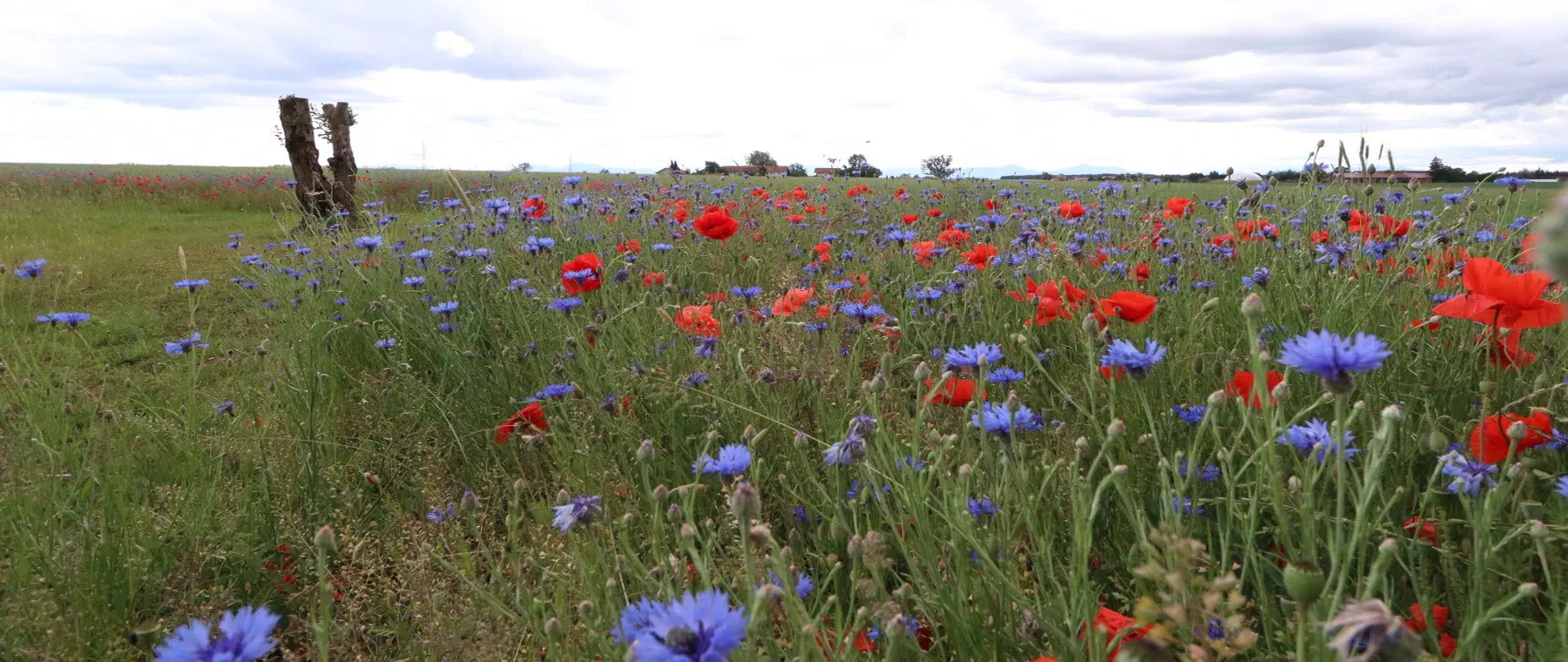
Eco-points and compensation areas
District of Aichach-Friedberg
Eco-points in the Aichach-Friedberg district are available from greeNature at short notice. As a full-service partner, we handle compensation under the BayKompV, from selecting the area through to legally sound recognition by the lower nature conservation authority.
The District of Aichach-Friedberg at a glance
The Aichach-Friedberg district, historically known as Wittelsbacher Land, lies in the east of the Schwaben administrative region and borders directly on the Augsburg conurbation. In the west, the Lech forms the district boundary, and in the south the district extends into the built-up area between Augsburg and München. The district seat is Aichach, while Friedberg, the largest town, is closely interwoven with the Augsburg hinterland. This location within the catchment of two major centres shapes both settlement development and the demand for compensation areas.
The district's landscape is varied. Along the Lech stretch the gravel terraces and floodplains of the Lechfeld, while in the northwest the Aindling terrace staircase rises more than a hundred metres to the loess-covered Tertiary hill country. The Paar runs through the district from southwest to northeast, and in the north lies the post-glacial Donaumoos with its fen soils. In natural-region terms, the district belongs to the Donau-Iller-Lech-Platten (D64) and the Unterbayerisches Hügelland (D65), which explains the range of floodplains, nutrient-poor sites, moorland and structurally rich hill country.
Ecologically, the river and floodplain systems of the Lech and Paar are particularly significant. The district includes several FFH sites of the European Natura 2000 network, among them the Lech floodplains and the floodplains of Paar and Ecknach, as well as nature reserves and landscape protection areas. The Lechheiden, the wet meadows of the Donaumoos and the watercourse margins are home to numerous species strictly protected under the BNatSchG. Impacts on these habitats regularly trigger species protection assessments under § 44 BNatSchG and function-preserving measures.
Economically, Aichach-Friedberg is shaped by a broad base of small and medium-sized businesses, skilled trades and growing commercial sites, and benefits from its proximity to Augsburg and good connections via the A8, B300 and the railway lines towards München and Ingolstadt. Ongoing settlement and commercial pressure in the Augsburg hinterland means that development plans, transport projects and renewable energy installations continually require compensation and replacement measures. The district therefore has a continuous need for recognised eco-points and legally sound compensation concepts.
🗺️ Associated natural regions
Go to natural region D65 ›
Go to natural region D64 ›
📍 Selected municipalities
🌿 Ecological features
- Location within the combined built-up area of Augsburg and München, with high settlement and commercial pressure
- The Lech as the western district boundary, with extensive floodplains and valuable Lechheiden
- The Paar and Ecknach as defining watercourses, with FFH floodplains in the Natura 2000 network
- The Donaumoos in the north, with fen soils and worthy-of-protection wet grassland
- The Aindling terrace staircase and loess-covered Tertiary hill country as structurally rich cultural landscape
- Naturally divided between the Donau-Iller-Lech-Platten (D64) and the Unterbayerisches Hügelland (D65)
✅ greeNature on the ground
greeNature supports project developers across the whole of Wittelsbacher Land, from Aichach and Friedberg to the commercial sites in the Augsburg hinterland and the rural north around Pöttmes and the Donaumoos. We know the natural conditions between the Lech, Paar and Tertiary hill country and coordinate compensation concepts at an early stage with the lower nature conservation authority of the Landratsamt Aichach-Friedberg. This allows us to secure suitable compensation areas and eco-points that are a professional match for the habitats and species affected in the district.
Typical measures in the district of Aichach-Friedberg
Floodplain restoration on the Lech and Paar
Reactivating oxbows, unfettering riverbanks and developing riparian woodland and wet grassland along the district's defining rivers. Such measures enhance the FFH floodplains and create permanently creditable eco-points.
Rewetting in the Donaumoos
Raising water levels and extensively managing grassland on fen soils preserve wet meadows, bind carbon and support meadow-breeding birds such as the northern lapwing.
Managing Lechheiden and calcareous grassland
Scrub clearance, mowing and grazing of nutrient-poor gravel sites secure warmth-loving habitats and serve as CEF measures for the sand lizard.
Watercourse margins on the Ecknach and Paar
Creating riparian buffer strips, steep banks and structurally rich embankments improves habitat for the kingfisher and amphibians and buffers nutrient inputs.
Hedgerows and traditional orchards in the Tertiary hill country
Connecting hedgerows, field copses and traditional orchards add structure to the cleared agricultural landscape and create habitat for the skylark, hazel dormouse and bats.
Creating spawning waters
New small water bodies and ponds at suitable sites secure populations of the great crested newt and other amphibians and can be credited as function-preserving measures.
Protected species in the Wittelsbacher Land
Skylark
A characteristic species of the open arable landscape in the hill country and on the Lechfeld. Skylarks are frequently affected by habitat loss from development plans and ground-mounted installations, and must be compensated for through CEF measures.
About this species ›Northern lapwing
A meadow-breeding bird of the wet meadows and fen areas in the Donaumoos and the Paar meadows. The northern lapwing is sensitive to drainage and intensification of use.
About this species ›Sand lizard
Colonises the Lechheiden, gravel and railway embankments, and sunny field margins. It is one of the species strictly protected under § 44 BNatSchG and regularly requires CEF measures where impacts occur.
About this species ›Kingfisher
Breeds on the steep banks of the Paar, Ecknach and Lech, and on gravel-pit lakes. The kingfisher depends on structurally rich, clean waters and benefits from near-natural bank development.
About this species ›Great crested newt
Lives in sun-exposed standing waters of the Donaumoos and the floodplains. As a species listed in Annex II of the FFH Directive, the great crested newt requires the preservation and creation of suitable spawning waters where impacts occur.
About this species ›Bats
Several strictly protected species use riparian woodland, waterbodies and buildings in the district as foraging territory and roosts. Roosts must be assessed and replaced on a function-preserving basis in the event of demolition and clearance.
About this species ›Which projects trigger a compensation obligation?
Commercial and industrial development
New commercial areas in the Augsburg hinterland and along the A8 and B300 seal open land and trigger compensation and replacement obligations under the BayKompV.
Residential development and settlement expansion
Growth pressure in Friedberg, Mering, Kissing and the Augsburg commuter belt is leading to development plans with substantial compensation requirements.
Transport and rail infrastructure
The expansion of roads and the railway lines towards München and Ingolstadt encroaches on floodplains and open land and requires species protection measures.
Renewable energy
Ground-mounted photovoltaics and wind turbines take up land in the hill country and moorland and require nature-conservation compensation.
From enquiry to monitoring
Contact and enquiry
Tell us your compensation requirement and the natural region. We check availability.
Offer and advice
A transparent offer covering measure types, scope and availability.
Coordination with authorities
Full coordination with the lower nature conservation authority. We handle everything.
Long-term monitoring
Permanent securing of the land, management and documentation across the contract term.
Eco-points in adjoining districts
All about eco-points
in the district of Aichach-Friedberg
Request eco-points in the district of Aichach-Friedberg
We will promptly prepare a transparent offer with matching eco-points held in stock in the district of Aichach-Friedberg.