Eco-points and compensation areas
District of Waldshut
Eco-points for the Waldshut district from officially recognised eco-accounts, assessed under the Baden-Württemberg Ökokonto-Verordnung (ÖKVO). greeNature solutions plans, secures and manages compensation under nature conservation law on the Hochrhein and in the southern Black Forest, operating nationwide.
The District of Waldshut at a glance
The Waldshut district lies in the far south of Baden-Württemberg on the Hochrhein and forms the border with Switzerland over a long stretch, covering around 1,130 km². It belongs to the Freiburg administrative region, and the district administration is seated in the major district town of Waldshut-Tiengen.
In landscape terms, the district ranges from the mild Rhine valley up into the higher elevations of the southern Black Forest. Defining features are the Hotzenwald with mountain meadows and raised bogs, the deeply cut valleys of the Wutach, Schlücht, Schwarza and Alb, and the mild, warmth-favoured Klettgau in the east. In natural-region terms, the district spans from the Black Forest (D54) to the Hochrhein area (D69).
Ecologically significant sites include the FFH site Hochrhein östlich Waldshut, the near-natural gorge woodland and watercourses around the Wutach, and numerous wet and marginal sites. The district has 36 nature reserves, plus extensive woodland of the southern Black Forest and floodplains along the Rhine.
The economy is shaped by small and medium-sized businesses, with focuses on metal processing, mechanical engineering, chemicals and wood processing, alongside strong tourism. The expansion of renewable energy, infrastructure projects and settlement development regularly create compensation requirements under the impact mitigation regulation, met through eco-points under the ÖKVO.
🗺️ Associated natural regions
Go to natural region D54 ›
Go to natural region D57 ›
Go to natural region D60 ›
📍 Selected municipalities
🌿 Ecological features
- FFH site Hochrhein östlich Waldshut with near-natural watercourse stretches and dry slopes
- Wutach, Schlücht and Schwarza, deeply cut gorge valleys with high structural and species diversity
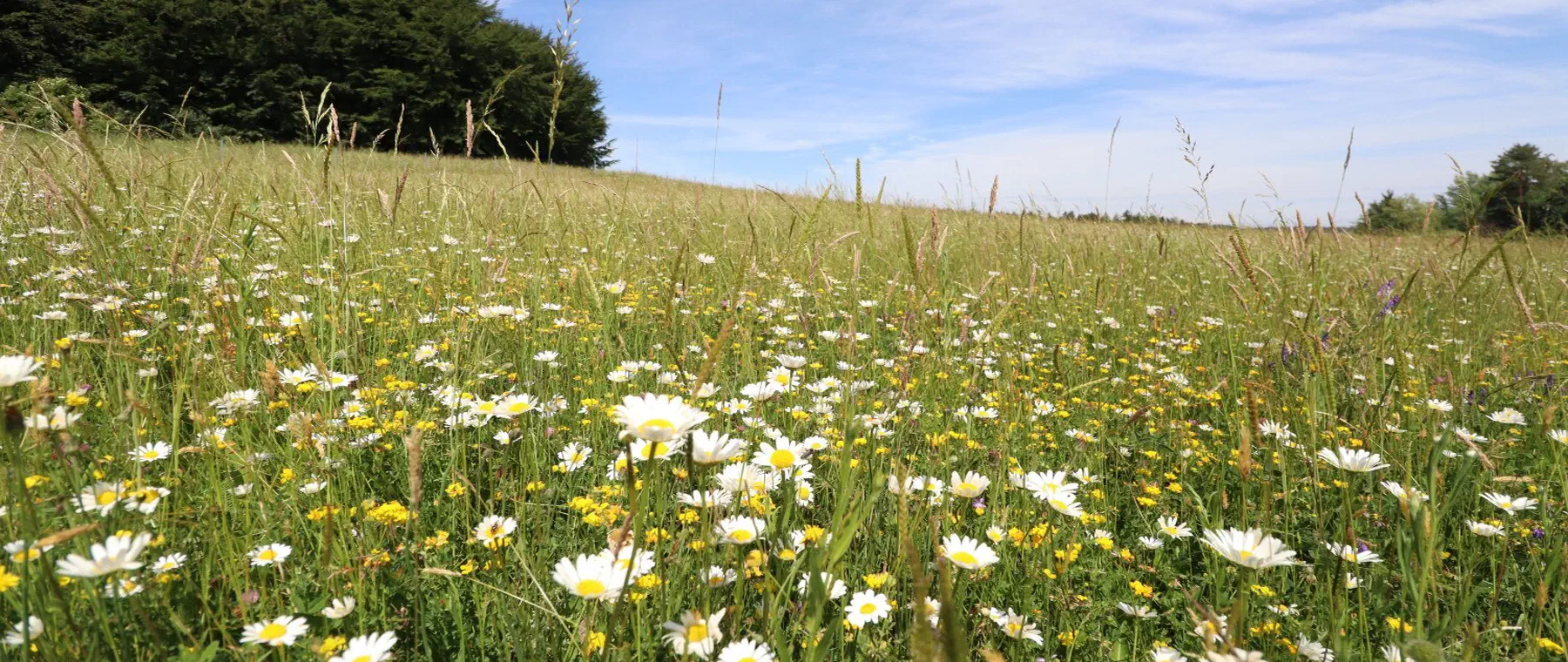
- Hotzenwald with mountain meadows, raised bogs and old pasture land in the southern Black Forest
- Rhine as the border watercourse with Switzerland, with floodplains, oxbows and impounded reaches
- Klettgau in the east, warmth-favoured limestone sites with dry grassland and traditional orchards
- 36 nature reserves covering around 3,850 hectares, extensive woodland of the southern Black Forest
✅ greeNature on the ground
greeNature solutions operates nationwide and supports project developers, municipalities and landowners in the Waldshut district with compensation under Baden-Württemberg law. We know the eco-point assessment under the Ökokonto-Verordnung (ÖKVO), the requirements of the lower nature conservation authority at Landratsamt Waldshut, and the natural-region particulars between the Hochrhein and the southern Black Forest.
Typical measures in the district of Waldshut
Watercourse restoration
Removing reinforcement and developing near-natural banks on the Wutach, Schlücht, Schwarza and Alb, creating spawning habitats and floodplain woodland margins to enhance watercourse dynamics.
Mountain meadows and extensification
Restoring species-rich mountain and wet meadows in the Hotzenwald through adapted mowing and grazing, preserving the traditional pasture land of the southern Black Forest.
Traditional orchards and dry sites
Creating and managing traditional orchards and calcareous grassland in the Klettgau and on the Hochrhein, habitat for warmth-loving insects, reptiles and birds of the open cultural landscape.
Near-natural woodland conversion
Developing structurally rich, site-appropriate broadleaf and mixed woodland in the southern Black Forest, enriching old and dead wood and woodland edges to promote woodland species diversity.
Species protection CEF/FCS
Tailored measures for bats, hazel dormouse, sand lizard and amphibians, for example roosts, winter habitats, replacement habitats and guiding structures, aligned with § 44 BNatSchG.
Hedgerows and habitat network
Creating hedgerows, field copses and dry stone walls to connect habitats between the Rhine floodplain, the Klettgau and the slopes of the Hotzenwald.
Protected species in the Hochrhein, southern Black Forest and Hotzenwald
Bats on the Hochrhein
Caves, tunnels and old buildings on the Hochrhein and in the southern Black Forest provide important roosts, including for the greater and lesser horseshoe bat. Roost protection and foraging habitats are typical CEF measures.
About this species ›European wildcat in the southern Black Forest
The European wildcat is spreading again in the structurally rich woodland of the southern Black Forest. Woodland edges, deadwood and connected woody structures promote its spread as a target species in the habitat network.
About this species ›Hazel dormouse in the Hotzenwald
The hazel dormouse inhabits woodland edges, hedgerows and thickets of the Hotzenwald. It is sensitive to clearance and a frequent target species for impacts, for which replacement habitats and guiding structures are created.
About this species ›Kingfisher on the Rhine and Wutach
The kingfisher breeds in steep banks along the near-natural stretches of the Rhine, Wutach and Schlücht. Bank scarps, steep faces and structurally rich watercourse margins are proven enhancement measures.
About this species ›Amphibians of the Black Forest valleys
Yellow-bellied toad, fire salamander and other amphibians use spring streams, pools and forest tracks of the Black Forest valleys. Newly created small water bodies and spawning habitats are common compensation measures.
About this species ›Sand lizard in the Klettgau
The sand lizard lives on warmth-favoured embankments, railway banks and dry sites in the Klettgau and on the Hochrhein. It is a frequent target species for infrastructure and development projects requiring replacement habitats.
About this species ›Which projects trigger a compensation obligation?
Renewable energy
The district is driving forward wind energy in the higher elevations of the southern Black Forest and ground-mounted photovoltaics in the Klettgau and on the Hochrhein. Each installation triggers compensation and replacement obligations, met through eco-points under the ÖKVO.
Infrastructure and transport
Expansion works on the Hochrheinstraße (B 34), bypasses and the electrification of the Hochrheinbahn railway require compensation under nature conservation law and species protection measures along the routes.
Industry and commerce
Expansions of small and medium-sized businesses in metal processing, mechanical engineering and chemicals, along with new commercial areas, create compensation requirements, which greeNature meets through eco-account land true to the natural region.
Settlement development
Residential and commercial land in Waldshut-Tiengen, Bad Säckingen and the Rhine municipalities requires compensation measures. Farmers and landowners can offer suitable land as eco-account areas.
From enquiry to monitoring
Contact and enquiry
Tell us your compensation requirement and the natural region. We check availability.
Offer and advice
A transparent offer covering measure types, scope and availability.
Coordination with authorities
Full coordination with the lower nature conservation authority. We handle everything.
Long-term monitoring
Permanent securing of the land, management and documentation across the contract term.
Eco-points in adjoining districts
All about eco-points
in the district of Waldshut
Request eco-points in the district of Waldshut
We will promptly prepare a transparent offer with matching eco-points held in stock in the district of Waldshut.