Eco-points and compensation areas
District of Sigmaringen
Eco-points from officially recognised eco-accounts for projects between the Swabian Jura and Oberschwaben. greeNature solutions supports compensation under the Baden-Württemberg Ökokonto-Verordnung (ÖKVO) in the Sigmaringen district as a full-service partner, experienced nationwide and versed in state law.
The District of Sigmaringen at a glance
The Sigmaringen district lies in the south of Baden-Württemberg and belongs to the Tübingen administrative region. It stretches from the southern edge of the Swabian Jura across the Obere Donautal to the hill country of Oberschwaben. The district seat is Sigmaringen, with other larger towns including Bad Saulgau, Pfullendorf, Mengen and Meßkirch.
Two very different natural regions meet within the district. The north belongs to the Swabian Jura (natural region D60) with karstified limestone plateaus, dry valleys, juniper heaths and the striking Danube gorge. The south lies in the Voralpines Moor- und Hügelland (natural region D66), a glacially shaped moraine landscape with wetlands, ponds and fen areas.
Ecologically significant sites include the FFH site Oberes Donautal zwischen Beuron und Sigmaringen (DE-7920-342) with its limestone cliffs, slope woodland and near-natural river stretches, as well as the Pfrunger-Burgweiler Ried, one of the largest moor areas in south-west Germany. Large parts of the northern district lie within the Naturpark Obere Donau, and the district has 24 nature reserves in total.
The district is predominantly rural, with agriculture and forestry, small and medium-sized businesses, and tourism. Compensation requirement under §§ 13 to 15 BNatSchG arises mainly from transport and infrastructure projects, residential and commercial development, renewable energy installations and mineral extraction. Assessment and compensation in Baden-Württemberg follow the Ökokonto-Verordnung (ÖKVO), expressed in eco-points.
🗺️ Associated natural regions
Go to natural region D64 ›
Go to natural region D60 ›
Go to natural region D66 ›
📍 Selected municipalities
🌿 Ecological features
- FFH site Oberes Donautal zwischen Beuron und Sigmaringen (DE-7920-342)
- Naturpark Obere Donau, shaping large parts of the northern district
- Pfrunger-Burgweiler Ried, one of the largest moor areas in south-west Germany
- Danube gorge with limestone cliffs, slope woodland and dry grassland
- Juniper heaths and calcareous grassland of the Swabian Jura
- Donauried and Ablachtal, damp lowland habitats
- 24 nature reserves in the district
✅ greeNature on the ground
greeNature solutions operates nationwide and is versed in Baden-Württemberg's compensation law. We work with the Ökokonto-Verordnung (ÖKVO) and its eco-point assessment, know the requirements of the lower nature conservation authority at Landratsamt Sigmaringen, and coordinate measures for the Jura, the Danube valley and Oberschwaben on a sound technical basis.
Typical measures in the district of Sigmaringen
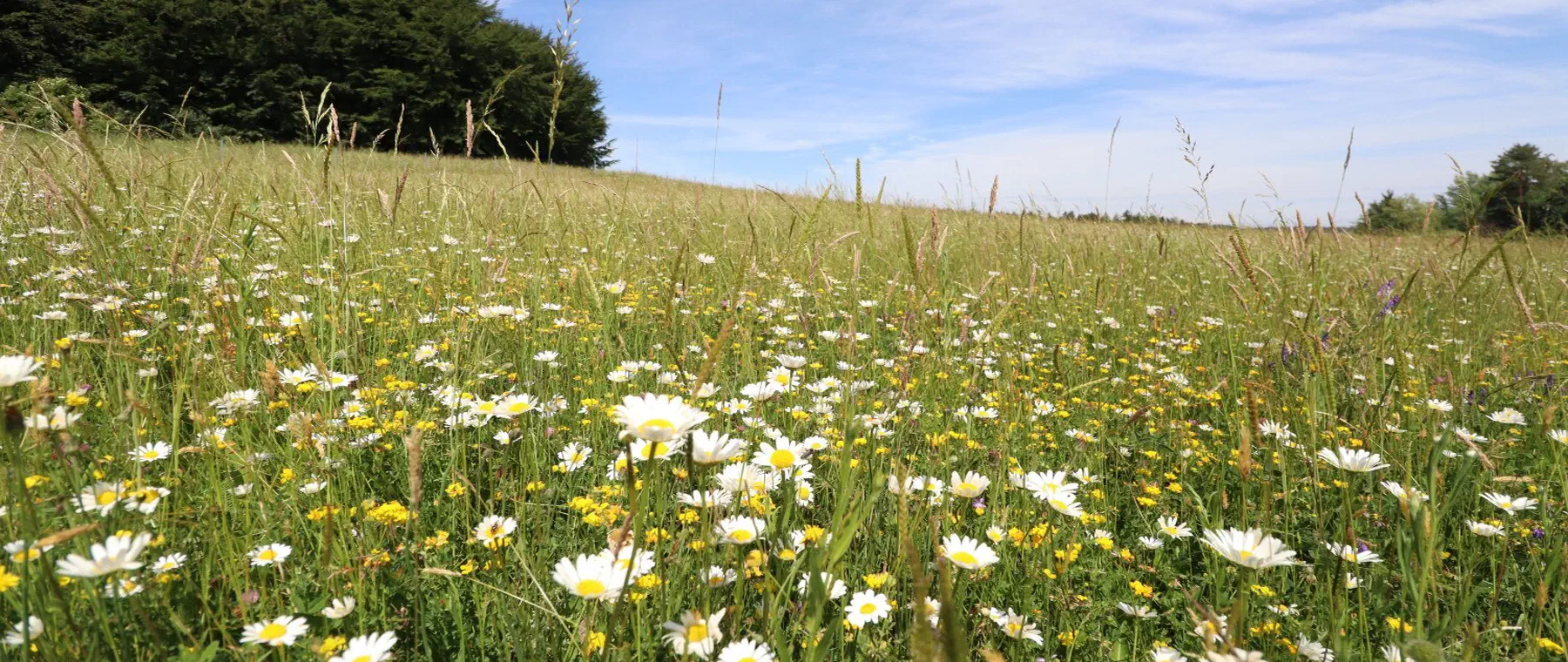
Juniper heaths and calcareous grassland
Management and restoration of calcareous grassland and juniper heaths on the Swabian Jura through scrub clearance and extensive grazing, habitat for warmth-loving insects, orchids and reptiles.
Watercourse restoration
Removal of bank reinforcement and creation of near-natural structures on the Danube, Ablach and Andelsbach, promoting gravel banks, steep banks and floodplain habitats for fish, kingfisher and dipper.
Moor and fen restoration
Rewetting of drained moor and fen areas around the Pfrunger-Burgweiler Ried, carbon sequestration and habitat enhancement for amphibians, dragonflies and meadow-breeding birds.
Traditional orchards
Creation and reactivation of traditional orchards on the slopes and settlement edges of the Jura and Oberschwaben, habitat for cavity-nesting birds, bats and rare wild bee species.
Grassland and habitat network
Extensification of grassland in the Donauried and creation of hedgerows and field copses as stepping-stone habitats, connecting isolated habitats in the agricultural landscape.
Species protection CEF/FCS
CEF measures and measures to maintain favourable conservation status (FCS) under § 44 BNatSchG, for example sand lizard habitats, bat roosts and amphibian ponds, documented precisely under the ÖKVO.
Protected species in the Obere Donau and Oberschwaben
Kingfisher and dipper
The near-natural stretches of the Obere Donau and its tributaries provide breeding and foraging habitat. CEF measures: creating steep banks and gravel bars, preserving structurally rich bank areas.
About this species ›Bats in the Danube valley
Caves, rock crevices and old slope woodland in the Obere Donautal are important roosts, including for the greater mouse-eared bat and horseshoe bats. Measures: roost protection, preserving foraging habitats and traditional orchards.
About this species ›Great crested newt and amphibians
The ponds, fens and wetlands of Oberschwaben are home to the great crested newt, tree frog and other amphibians. Typical measures are creating and connecting new spawning waters.
About this species ›Sand lizard
Calcareous grassland, embankments and railway banks are important habitats. In the case of impacts, the sand lizard is a frequent target species for CEF measures such as replacement habitats with basking and refuge structures.
About this species ›Meadow-breeding birds in the Donauried
The damp lowlands of the Donauried provide habitat for meadow-breeding birds such as the northern lapwing. Extensification of grassland and adapted mowing regimes secure breeding and rearing success.
About this species ›Eagle owl and peregrine falcon
The limestone cliffs of the Danube gorge are traditional breeding sites for the eagle owl and peregrine falcon. Protection is achieved through visitor management, climbing restrictions and preserving undisturbed rock faces.
Which projects trigger a compensation obligation?
Infrastructure and transport
Expansion and conversion of federal and state roads (such as the B32, B311, B313), bypasses and works on the Donautalbahn railway trigger compensation and replacement obligations under §§ 13 to 15 BNatSchG.
Settlement and commerce
New residential and commercial areas in Sigmaringen, Bad Saulgau, Pfullendorf and Mengen require compensation under nature conservation law. Land can be provided via eco-accounts under the ÖKVO.
Energy and renewables
Wind energy projects on the elevated areas of the Jura and the Heuberg, and ground-mounted photovoltaic installations, create compensation requirements and can require CEF and FCS measures under species protection law.
Mineral extraction
Gravel and limestone extraction in the Danube valley and the gravel plains of Oberschwaben involves impacts requiring restoration, reclamation and eco-point compensation.
From enquiry to monitoring
Contact and enquiry
Tell us your compensation requirement and the natural region. We check availability.
Offer and advice
A transparent offer covering measure types, scope and availability.
Coordination with authorities
Full coordination with the lower nature conservation authority. We handle everything.
Long-term monitoring
Permanent securing of the land, management and documentation across the contract term.
Eco-points in adjoining districts
All about eco-points
in the district of Sigmaringen
Request eco-points in the district of Sigmaringen
We will promptly prepare a transparent offer with matching eco-points held in stock in the district of Sigmaringen.