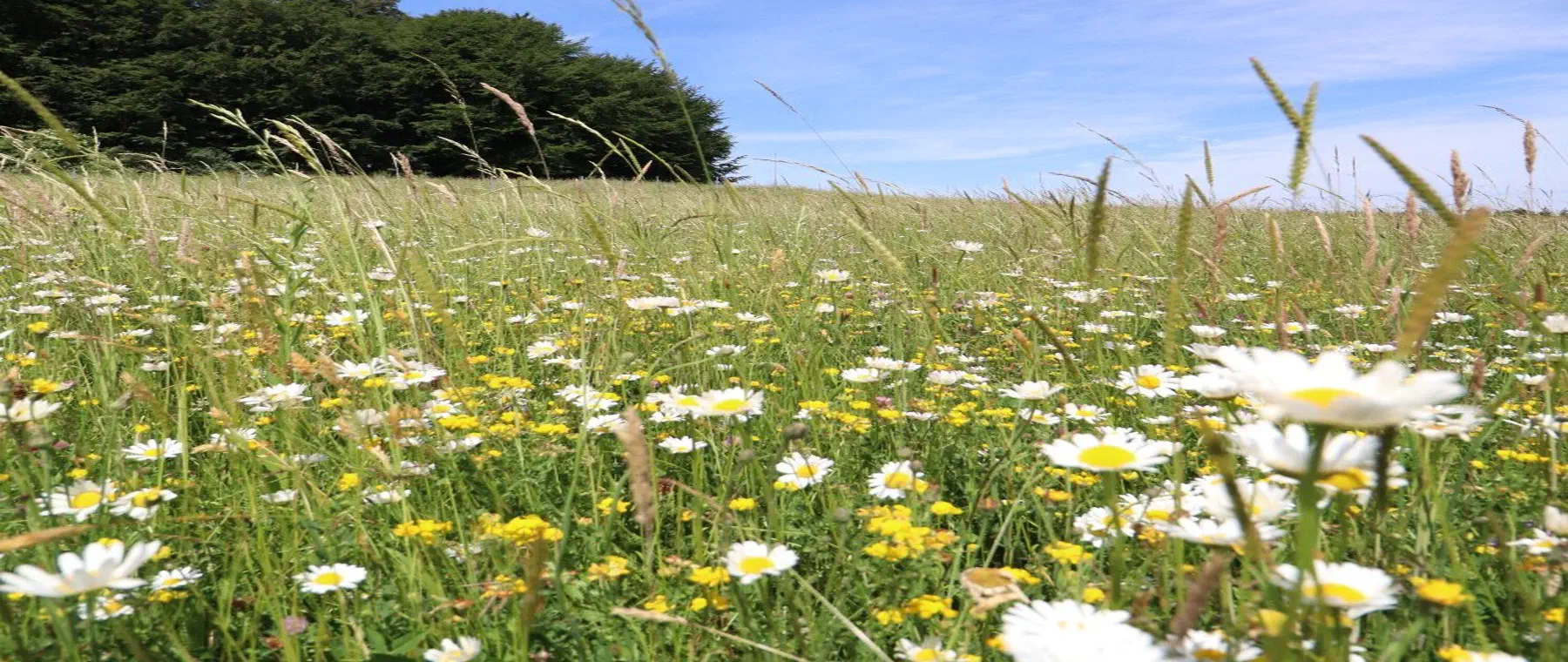
Eco-points and compensation areas
District of Rems-Murr-Kreis
Eco-points immediately available from officially recognised eco-accounts for impacts in the Rems-Murr district. greeNature supports your compensation under the Eco-Account Ordinance (ÖKVO) as a nationwide full-service partner, from impact assessment through land allocation to recognition by the lower nature conservation authority (Untere Naturschutzbehörde).
The District of Rems-Murr-Kreis at a glance
The Rems-Murr district lies east of Stuttgart and belongs to the Stuttgart administrative region. The district seat and largest town is Waiblingen. Around 441,000 people live across some 858 km² in 31 towns and municipalities, including the major district towns of Backnang, Fellbach, Schorndorf, Weinstadt and Winnenden. The district is thus among the most populous and economically strong districts in the Stuttgart region.
The landscape of the district ranges from the open basin landscape in the west to the wooded heights in the north-east. The west and the Rems valley belong to the Neckar- und Tauber-Gäuplatten (natural region D57), with the Neckar basin and its vineyard sites. The north and east belong to the Schwäbisches Keuper-Liasland (natural region D58), with the Schwäbisch-Fränkische Waldberge, the Welzheimer Wald and the Schurwald.
Ecologically defining is the Schwäbisch-Fränkischer Wald Nature Park (1979), with extensive woodland, deeply incised ravines and waterfalls. The district has land within five FFH sites of the Natura 2000 network, including Unteres Remstal und Backnanger Bucht (7121-341), Welzheimer Wald (7123-341) and Schurwald (7222-341), as well as the Unteres Remstal SPA (DE-7121-442). The vineyard terraces of the Rems valley, with dry-stone walls and calcareous grassland, for example on the Kappelberg near Fellbach, form further valuable habitats.
Economically, the district is shaped by mechanical and vehicle engineering, the metal and electrical industry, and viticulture in the Rems valley. Continued pressure for housing and commercial space in the Stuttgart region, vineyard consolidation, transport projects on the B14 and B29, and wind energy in the Schwäbischer Wald regularly cause impacts, whose compensation in Baden-Württemberg is delivered in eco-points under the Eco-Account Ordinance.
🗺️ Associated natural regions
Go to natural region D58 ›
Go to natural region D57 ›
📍 Selected municipalities
🌿 Ecological features
- Schwäbisch-Fränkischer Wald Nature Park (1979), with woodland, ravines and waterfalls
- Land within five FFH sites of the Natura 2000 network, including Unteres Remstal und Backnanger Bucht (7121-341), Welzheimer Wald (7123-341) and Schurwald (7222-341)
- Unteres Remstal SPA (DE-7121-442) in the Rems valley between Waiblingen and Neckarrems
- Viticultural landscape of the Rems valley, with terraces, dry-stone walls and calcareous grassland, for example on the Kappelberg near Fellbach
- The Rems and Murr as the defining watercourses, with floodplains and side valleys
- Schwäbisch-Fränkische Waldberge, the northernmost part of the Keuper hill country in Baden-Württemberg
- Orchard belts and semi-dry grassland at the edges of the Rems valley and the Backnanger Bucht
✅ greeNature on the ground
greeNature operates nationwide and also covers the Stuttgart region. We work consistently with the assessment system of the Eco-Account Ordinance (ÖKVO), know the natural-region differences between the Neckar basin, the Rems valley and the Schwäbisch-Fränkische Waldberge, and coordinate measures with the lower nature conservation authority at Rems-Murr District Office. We allocate eco-points from recognised eco-accounts precisely to the relevant impact and handle the entire compensation process, from needs analysis through creation to management and monitoring.
Typical measures in the district of Rems-Murr-Kreis
Traditional orchards
Establishment and management of standard-tree orchards at the edges of the Rems valley and the Backnanger Bucht, habitat for cavity-nesting birds, bats and wild bees. Extensive mowing and replanting secure the stock in the long term.
Fallow vineyards and dry-stone walls
Restoration of dry-stone walls, stone ridges and calcareous grassland on the steep slopes of the Rems valley, habitat for sand lizard, heat-loving insects and rare plants. Management and scrub clearance maintain the open structures.
Near-natural forest conversion
Development of structurally diverse, deadwood-rich mixed deciduous woodland and graduated woodland edges in the Welzheimer Wald, Schurwald and the Schwäbisch-Fränkische Waldberge, promoting veteran and cavity trees as roosts for bats and woodpeckers.
Watercourse restoration
Revitalisation of the Rems, Murr and their tributaries through bank flattening, riparian buffer strips and reconnection of floodplain areas, improving connectivity and creating habitats for kingfisher, fish and amphibians.
CEF and FCS species protection
Advance compensation measures (CEF) and measures to maintain favourable conservation status (FCS) under § 44 BNatSchG, for example replacement habitats for sand lizard in vineyard sites, bat roosts and spawning waters for amphibians.
Wet meadows and habitat network
Extensification and rewetting of grassland in the Backnanger Bucht and the valley floodplains, along with the creation of hedgerows and stepping-stone habitats, connecting habitats for meadow birds, amphibians and small mammals.
Protected species in the Schwäbischer Wald and the Rems valley in the Stuttgart region
Sand lizard in the vineyards
Vineyard terraces, dry-stone walls, railway embankments and embankments in the Rems valley are core habitats for the sand lizard. For vineyard consolidation and building projects, advance relocation and the creation of replacement habitats with stone ridges and sand lenses are common CEF practice.
About this species ›Bats in woodland and orchards
The extensive woodlands of the Schwäbischer Wald, old traditional orchards and buildings offer roosts for several bat species, including Bechstein's bat and greater mouse-eared bat. Roost protection and the retention of cavity trees are typical CEF measures under § 44 BNatSchG.
About this species ›Black stork in the Schwäbischer Wald
There are records of the black stork in the low-disturbance woodlands of the Welzheimer Wald and the Schwäbisch-Fränkische Waldberge. Retaining undisturbed old-growth stands, near-natural forest streams and wet foraging habitats is of central importance for the species.
About this species ›Kingfisher on the Rems and Murr
Near-natural bank sections on the Rems, Murr and their tributaries offer the kingfisher nesting sites in steep faces. Restoration with bank erosion features and structurally rich riverbanks creates new habitats.
About this species ›Hazel dormouse in woodland and hedgerows
The hazel dormouse inhabits structurally rich woodland edges, hedgerows and scrub in the Schurwald and the wooded hills. As a strictly protected species under Annex IV of the Habitats Directive, it must be taken into account for impacts on woody vegetation, for example through habitat connectivity and adapted clearance timing.
About this species ›Wildcat in the wooded hills
There are records of the European wildcat, which is once again spreading in Baden-Württemberg, in the continuous woodlands of the Schwäbisch-Fränkischer Wald. Low-disturbance, deadwood-rich woodland and connected woody corridors support the species.
About this species ›Which projects trigger a compensation obligation?
Viticulture and vineyard consolidation
Viticulture shapes the steep slopes of the Rems valley around Weinstadt, Schorndorf and Kernen. Vineyard consolidation and the conversion of vineyards cause impacts on dry-stone walls and calcareous grassland, whose compensation must be delivered in eco-points under the ÖKVO. greeNature develops matching measures for this.
Transport and infrastructure
The expansion of the B14 and B29, bypasses and works on the Rems and Murr railway lines generate compensation and replacement obligations under §§ 13 to 15 BNatSchG.
Residential and commercial development
Continued pressure for housing and commercial space in the Stuttgart region leads to the designation of development areas in Waiblingen, Fellbach, Winnenden and the surrounding municipalities. Impacts on soil and nature are often compensated for through recognised eco-accounts.
Wind energy and photovoltaics
Wind energy projects in the woodlands of the Schwäbischer Wald and ground-mounted photovoltaics require nature conservation compensation as well as species protection assessments under § 44 BNatSchG, particularly FCS measures for species sensitive to wind turbines such as bats and birds of prey.
From enquiry to monitoring
Contact and enquiry
Tell us your compensation requirement and the natural region. We check availability.
Offer and advice
A transparent offer covering measure types, scope and availability.
Coordination with authorities
Full coordination with the lower nature conservation authority. We handle everything.
Long-term monitoring
Permanent securing of the land, management and documentation across the contract term.
Eco-points in adjoining districts
All about eco-points
in the district of Rems-Murr-Kreis
Request eco-points in the district of Rems-Murr-Kreis
We will promptly prepare a transparent offer with matching eco-points held in stock in the district of Rems-Murr-Kreis.