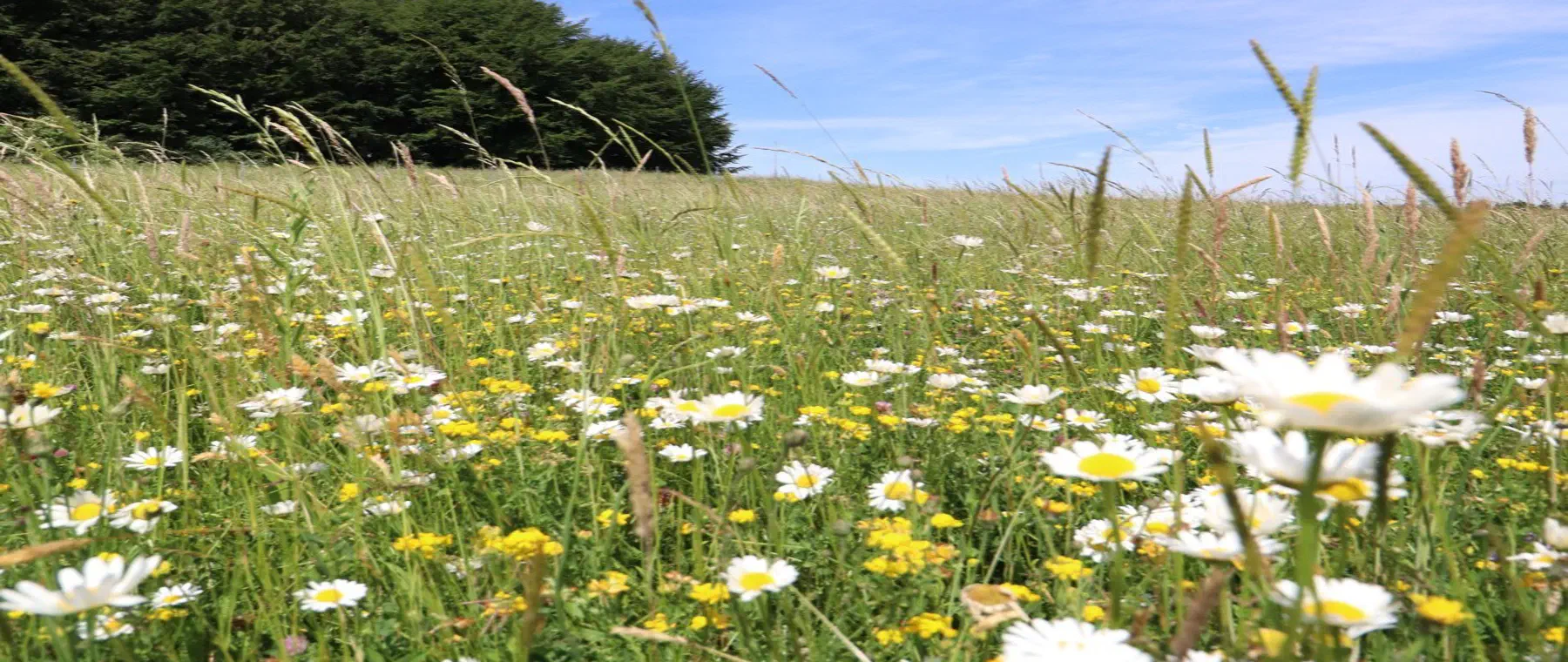
Eco-points and compensation areas
District of Ravensburg
Eco-points immediately available from officially recognised eco-accounts. greeNature solutions, your full-service partner for compensation under the Eco-Account Ordinance (ÖKVO) in Upper Swabia and the Württemberg Allgäu.
The District of Ravensburg at a glance
The Ravensburg district lies in the south-east of Baden-Württemberg between Lake Constance and the Allgäu, and belongs to the Tübingen administrative region. It is among the largest districts in the state by area and is shaped by the Schussen basin and the extensive moraine landscape of Upper Swabia. The district seat is the town of Ravensburg.
Geologically, the district is a creation of the Rhine glacier of the last ice age. End moraine ridges, drumlin fields, kettle holes and meltwater gravels form a fine-grained relief of hills, lakes, ponds and wet hollows that supports an exceptional diversity of habitats.
Ecologically defining are the large bogs and mires: the Wurzacher Ried, awarded the European Diploma, is among the most significant bog areas in Central Europe, along with the Pfrunger-Burgweiler Ried on the border with Sigmaringen and the Altdorfer Wald. Numerous FFH sites and EU SPAs (Natura 2000) run through the district.
The economy is shaped by agriculture (around 60 per cent of the area, with a focus on grassland and dairy farming), a strong industrial and urban area around Ravensburg and Weingarten, and raw material extraction. Transport, energy and settlement projects regularly generate a compensation requirement under the Eco-Account Ordinance (ÖKVO).
🗺️ Associated natural regions
Go to natural region D66 ›
Go to natural region D64 ›
📍 Selected municipalities
🌿 Ecological features
- Wurzacher Ried, a raised bog awarded the European Diploma, one of the most significant bog areas in Central Europe
- Pfrunger-Burgweiler Ried (FFH 8122-342, SPA 8022-401), a large bog and woodland area on the border with the Sigmaringen district
- Altdorfer Wald, a large continuous woodland area with an important water protection and habitat network function
- Schussen basin and Schussen floodplain, a defining watercourse system flowing towards Lake Constance
- Ice-age moraine, drumlin and kettle-hole landscape of the Rhine glacier, with numerous ponds and lakes
- Adelegg with the Schwarzer Grat (around 1,118 m), the district's highest point at the transition to the Allgäu foothills of the Alps
✅ greeNature on the ground
greeNature operates nationwide and manages compensation projects across Baden-Württemberg. In Upper Swabia and the Württemberg Allgäu, we know the requirements of the Eco-Account Ordinance (ÖKVO), the eco-points assessment system used in the biotope value method, and coordination with the lower nature conservation authority (Untere Naturschutzbehörde) at Ravensburg District Office from practical project experience.
Typical measures in the district of Ravensburg
Bog rewetting
Rewetting of drained raised and fen bogs in Upper Swabia, for example around the large mires. Peat retention binds carbon and creates habitat for highly specialised bog species. Such enhancements achieve a high eco-point yield under the biotope value method of the ÖKVO.
Litter meadows and wet meadows
Extensification and adapted mowing of purple moor-grass and wet meadows, and conversion of intensively used grassland into species-rich wet meadows. Habitat for meadow-breeding birds such as the northern lapwing and for rare butterflies.
Watercourse restoration
Removal of bank engineering on the Schussen and its tributaries, creation of floodplain woodland strips, gravel banks and former channels. Improved watercourse structure for kingfisher, thick-shelled river mussel and native fish species.
CEF/FCS species protection
Creation of sun-exposed small water bodies for yellow-bellied toad and great crested newt, habitat structures for the sand lizard on railway embankments and gravel pits, and replacement roosts for bats, tailored to § 44 BNatSchG.
Near-natural forest conversion
Development of site-appropriate deciduous and mixed woodland and enrichment with old growth and deadwood, including in the Altdorfer Wald. Enhancement of structurally poor coniferous plantations into climate-resilient, species-rich stands.
Traditional orchards and hedgerows
Creation and management of traditional orchards and hedgerow lines in the Upper Swabian cultural landscape. Stepping-stone habitats and habitat network for little owl, red-backed shrike and wild bees.
Protected species in the Upper Swabia and the Württemberg Allgäu
Yellow-bellied toad and tree frog
Gravel extraction sites, kettle holes and bog margins in Upper Swabia are home to yellow-bellied toad, tree frog and other amphibians. Newly created, sun-exposed small water bodies are typical CEF measures for impacts on extraction and commercial land.
About this species ›Great crested newt
The great crested newt (Annexes II and IV of the Habitats Directive) inhabits fish-free ponds and bog pools in the Alpine foreland. Creating and connecting spawning waters secures the favourable conservation status (FCS) of the population.
About this species ›Northern lapwing and meadow-breeding birds
Northern lapwing and other meadow birds breed in the wet and litter meadows of the mires. Extensification and rewetting of grassland are among the central enhancement measures here in the biotope value method.
About this species ›Bats
Old-growth stands in the Altdorfer Wald and the orchard belts provide roosts for Bechstein's bat, greater mouse-eared bat and brown long-eared bat. Roost trees and replacement roosts are common CEF measures for clearance and building demolition.
About this species ›Sand lizard
Railway embankments, gravel pits and warm, dry embankments are core habitats for the sand lizard and a frequent target species for road and commercial projects. Relocation and the creation of new stone ridges and sand lenses are typical measures.
About this species ›Black stork
In large, low-disturbance woodland areas such as the Altdorfer Wald, the black stork finds breeding opportunities, and along near-natural streams and mires, its foraging habitats. Retaining old-growth stands and enhancing watercourses benefit the species.
About this species ›Which projects trigger a compensation obligation?
Road and transport infrastructure
The expansion of the B30 between Ravensburg and Friedrichshafen, works on the B32 and B465, and bypasses cause impacts on nature and landscape and generate a compensation requirement under §§ 13 to 15 BNatSchG.
Gravel and raw material extraction
The moraine landscape of Upper Swabia is rich in gravel and sand. Expansions of extraction sites require compensation and replacement measures. Restoration and rehabilitation also open up opportunities for high-value eco-account land.
Wind and solar energy
Wind energy planning, including around the Altdorfer Wald, as well as ground-mounted photovoltaic installations, require species protection assessments under § 44 BNatSchG and compensation under the ÖKVO.
Commerce, industry and settlement
In the urban area around Ravensburg and Weingarten and in the major district towns, commercial and residential development regularly leads to compensation obligations. Landowners can contribute their land as eco-account sites.
From enquiry to monitoring
Contact and enquiry
Tell us your compensation requirement and the natural region. We check availability.
Offer and advice
A transparent offer covering measure types, scope and availability.
Coordination with authorities
Full coordination with the lower nature conservation authority. We handle everything.
Long-term monitoring
Permanent securing of the land, management and documentation across the contract term.
Eco-points in adjoining districts
All about eco-points
in the district of Ravensburg
Request eco-points in the district of Ravensburg
We will promptly prepare a transparent offer with matching eco-points held in stock in the district of Ravensburg.