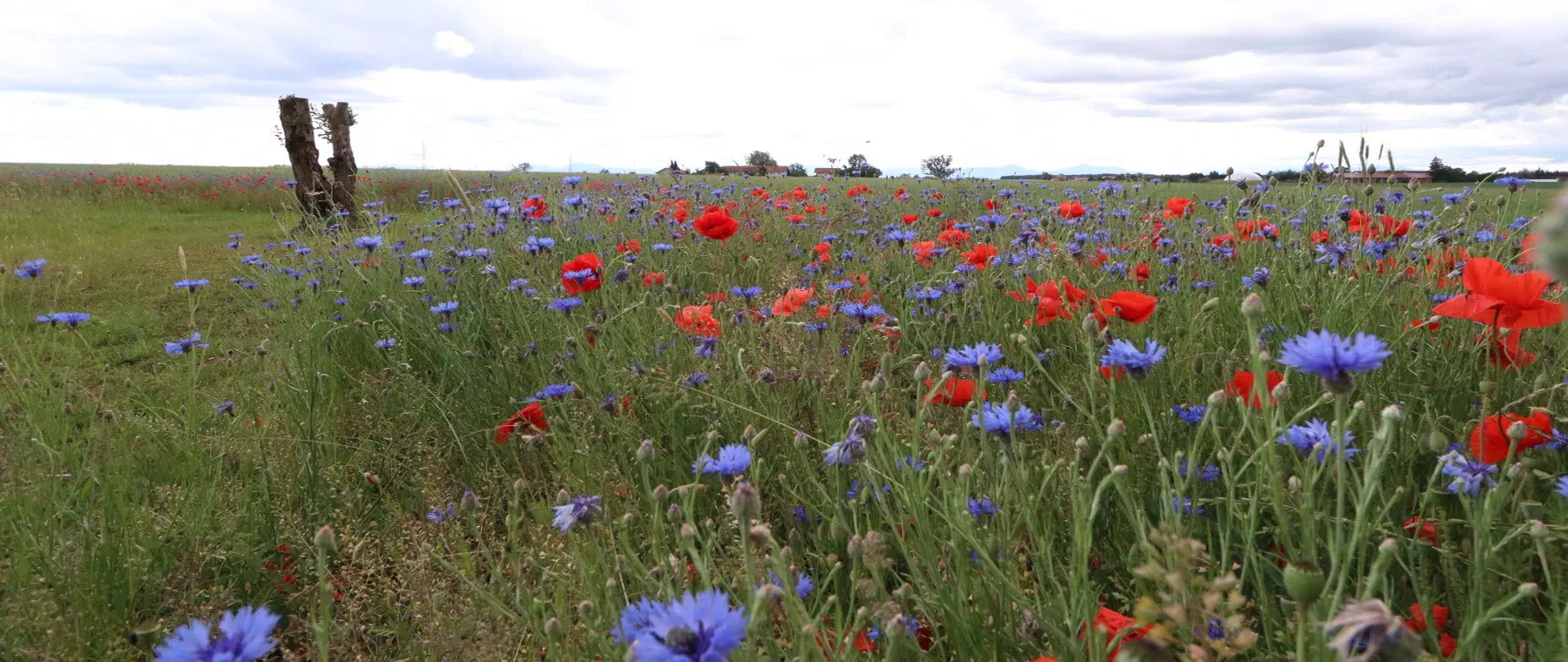
Eco-points and compensation areas
City of Pforzheim
Eco-points and compensation areas for projects in the city of Pforzheim, planned professionally under the Baden-Württemberg Ökokonto-Verordnung (ÖKVO). greeNature supports project developers in the Goldstadt at the northern edge of the Black Forest, from the impact assessment to the recognised compensation measure.
The City of Pforzheim at a glance
Pforzheim is a Stadtkreis in the Karlsruhe administrative region and the regional hub of the Nordschwarzwald region. The city lies at the confluence of the Enz, Nagold and Würm, where the open Gäu landscapes in the north meet the wooded fringe plateaus of the Black Forest in the south.
The Ökokonto-Verordnung (ÖKVO) is decisive for compensation in Baden-Württemberg. The value of impacts and compensation measures is assessed in eco-points using a biotope value method, which reflects the enhancement of a piece of land under nature conservation law.
As a densely built-up Stadtkreis, Pforzheim focuses on inner-city development, conversion and infill development. Suitable compensation areas often lie in the floodplains of the Enz, Nagold and Würm, and in the traditional orchard and woodland edge sites at the transition to the Black Forest.
greeNature handles compensation as a full service, from the impact and compensation assessment through land securing to liaison with the lower nature conservation authority and long-term maintenance.
🗺️ Associated natural regions
Go to natural region D54 ›
Go to natural region D57 ›
📍 City districts
🌿 Ecological features
- Pforzheim is a Stadtkreis almost entirely surrounded by the Enzkreis; to the south, near Unterreichenbach, it borders the Landkreis Calw.
- The City of Pforzheim's Environment Office is responsible as the lower nature conservation authority, not the Landratsamt of the surrounding Enzkreis.
- The confluence of the Enz, Nagold and Würm shapes the city area; the watercourses and their floodplains are habitat for water-bound species and offer starting points for restoration and eco-point generation.
- With the Unteres Würmtal nature reserve, the Mangerwiese-Wotanseiche and the Felsenmeer, several high-value protected areas lie within the city, and impacts near them must be assessed with particular care.
- As a gateway to the Black Forest, the city area extends into the wooded fringe plateaus of the northern Black Forest, so woodland habitats and demanding woodland species must be taken into account.
- The city, shaped by the jewellery and watch industry, has commercial and conversion land whose reuse and redevelopment regularly triggers compensation requirements under the impact mitigation regulation.
✅ greeNature on the ground
greeNature operates nationwide and plans compensation in Pforzheim consistently under the law of the state of Baden-Württemberg. This is based on the Ökokonto-Verordnung (ÖKVO) in conjunction with the impact mitigation regulation under §§ 13 to 15 BNatSchG. We assess the impact using the biotope value method, develop suitable measures in the natural regions of the city area (Neckar- und Tauberland, Gäuplatten in the north and Black Forest in the south), and secure the necessary eco-points through recognised eco-accounts. Because a Stadtkreis offers little open land, we focus on desealing, watercourse and floodplain development on the Enz, Nagold and Würm, and on enhancing traditional orchard and woodland edge sites, aiming for functional compensation as close to the natural region as possible. We handle the species protection assessment under § 44 BNatSchG, for example with CEF measures for the sand lizard or bats during building demolition, independently alongside the eco-point assessment. We handle liaison with the City of Pforzheim's Environment Office as lower nature conservation authority on behalf of the project developer.
Typical measures in the city of Pforzheim
Watercourse and floodplain development
Restoring the Enz, Nagold and Würm with riparian buffer strips, former channels and floodplain woodland, connecting watercourse and wetland habitats within the city and strengthening the eco-point assessment.
Desealing and land recycling
Removal and desealing of no-longer-used transport, commercial and conversion land, followed by greening, an enhancement pathway for eco-points that is readily creditable in the urban context.
Creating and managing traditional orchards
Creating and extensively managing traditional orchards in the Gäu and woodland edge sites of the city area, valuable for insects and birds and creditable with a high eco-point score.
Dry stone walls and sunny embankments
Restoring dry stone walls, railway banks and sunny embankments, effective as habitat and as a CEF measure for the sand lizard.
Near-natural woodland conversion at the Black Forest edge
Developing structurally and deadwood-rich mixed broadleaf woodland in the municipal forest and on the Black Forest fringe plateaus, enhancing woodland habitats and benefiting species such as bats.
Enhancing wet grassland in the Würmtal
Extensifying and rewetting meadows in the Würmtal, suitable as compensation for open-land and wetland functions and as habitat for amphibians.
Protected species in the The Goldstadt at the confluence of the Enz, Nagold and Würm
Sand lizard
Widespread on railway banks, embankments, dry stone walls and fallow land within the city. As a strictly protected species under § 44 BNatSchG, it is often the trigger for CEF measures before an impact begins.
About this species ›Kingfisher
Found on the near-natural stretches of the Enz, Nagold and Würm. It depends on steep bank faces and clear, fish-rich waters, which are promoted through restoration.
About this species ›Bats
Building- and woodland-dwelling species use roosts in the dense urban development and in the woodland at the Black Forest edge. For building demolition and woodland impacts, an assessment under § 44 BNatSchG is required.
About this species ›Skylark
A characteristic species of the open Gäu landscape at the northern edge of the city. Its population suffers from land loss, which makes compensation through extensification and field margin strips worthwhile.
About this species ›Hazel dormouse
Inhabits hedgerows, woodland edges and thickets at the transition to the Black Forest. Its presence requires the preservation and replacement of woody connectivity structures.
About this species ›Amphibians
Wet meadows and floodplain waters in the Würmtal provide spawning habitat. For impacts near watercourses, migration routes and spawning sites must be taken into account under § 44 BNatSchG.
About this species ›Which projects trigger a compensation obligation?
Housing and inner-city development
Infill development, closing building gaps and developing new residential quarters in the densely built-up Stadtkreis regularly generate compensation requirements under the impact mitigation regulation.
Commercial and conversion land
The reorganisation and expansion of commercial and industrial sites in the city, shaped by the jewellery and watch industry, triggers impacts that must be compensated through eco-points.
Transport infrastructure
Expansion and conversion of federal and state roads, as well as measures in the Enz and Nagold valleys, lead to land-based compensation requirements.
Flood protection
Flood protection measures on the Enz, Nagold and Würm affect watercourses and floodplains and are often combined with restoration and eco-point generation.
From enquiry to monitoring
Contact and enquiry
Tell us your compensation requirement and the natural region. We check availability.
Offer and advice
A transparent offer covering measure types, scope and availability.
Coordination with authorities
Full coordination with the lower nature conservation authority. We handle everything.
Long-term monitoring
Permanent securing of the land, management and documentation across the contract term.
Eco-points in adjoining districts
All about eco-points
in the city of Pforzheim
Request eco-points in the city of Pforzheim
We will promptly prepare a transparent offer with matching eco-points held in stock in the city of Pforzheim.